Business
8th Pay Commission: Fitment Factor to Decide Salary Hike; Here's the Expected Range and Impact
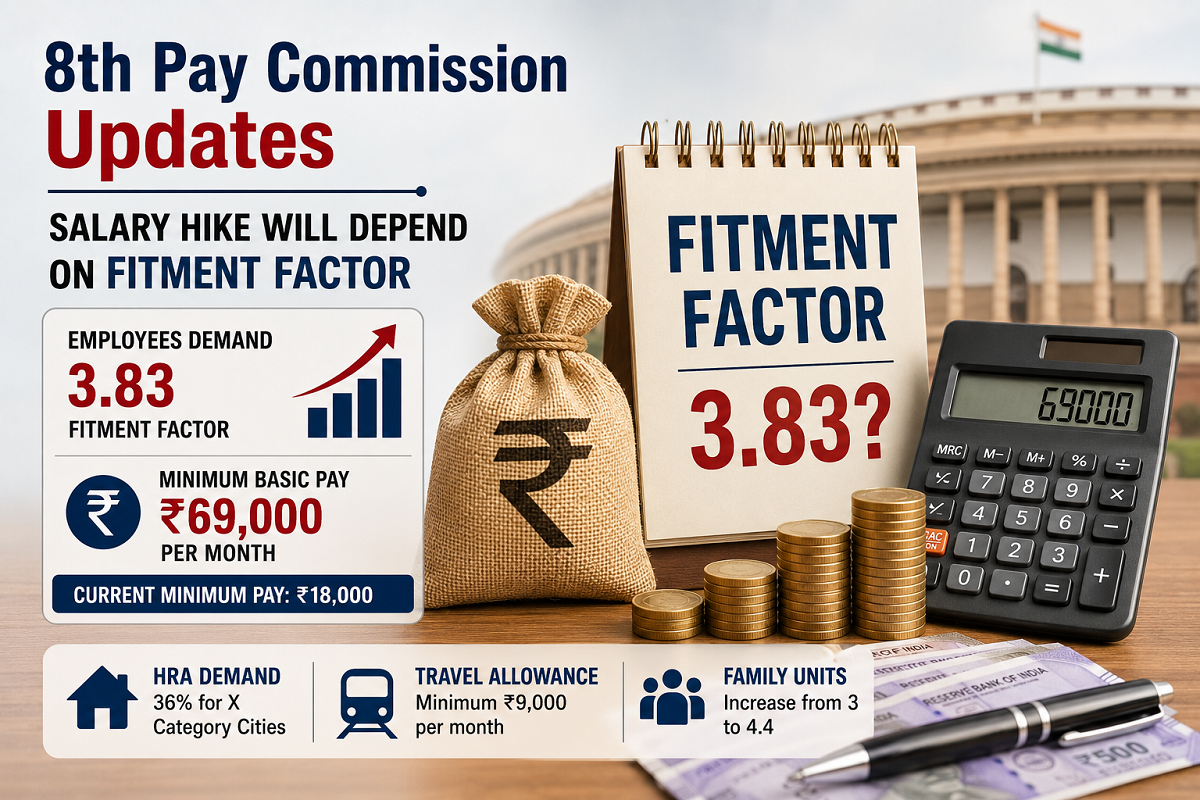
Employees seek a 3.83 fitment factor, but experts believe the final figure may be lower due to fiscal challenges
The 8th Pay Commission has intensified consultations with employee unions, pensioner associations, and other stakeholders as it prepares recommendations on salary revisions, allowances, and pension-related benefits for central government employees. Among all the issues under discussion, the fitment factor has emerged as the most closely watched element, as it will play a decisive role in determining the revised basic pay of government employees.
More than one crore beneficiaries, including nearly 50 lakh central government employees and around 65 lakh pensioners, are expected to be impacted once the recommendations are finalized and approved by the Central Government.
Why the Fitment Factor Matters
The fitment factor is a multiplication formula used to revise the existing basic salary of government employees whenever a new Pay Commission is implemented. A higher fitment factor translates into a larger increase in basic pay, which also affects several other salary components such as Dearness Allowance (DA), House Rent Allowance (HRA), Transport Allowance (TA), and retirement benefits.
During the implementation of the 7th Pay Commission, the fitment factor was fixed at 2.57, increasing the minimum basic salary from ₹7,000 to ₹18,000 per month.
Employee unions are now demanding a much higher fitment factor under the 8th Pay Commission.
Employee Unions Demand 3.83 Fitment Factor
Representatives of central government employees and various staff unions have urged the commission to recommend a 3.83 fitment factor.
If this proposal is accepted, the minimum basic salary could increase to approximately ₹69,000 per month, compared with the current minimum basic pay of ₹18,000.
The demand is based on rising living costs, inflation, and increasing household expenses faced by government employees over the past several years.
However, economists and policy experts believe that the government may adopt a more balanced approach while finalizing the fitment factor.
Expected Fitment Factor May Be Lower
Although employee organizations are pressing for a substantial hike, several experts believe the final fitment factor may remain between 1.82 and 2.57.
One of the major reasons cited is the potential financial burden on the government. Rising crude oil prices, higher expenditure commitments, and fiscal management concerns could influence the final recommendation.
The actual figure will depend on the commission's assessment of inflation, economic growth, government finances, and employee welfare.
Nine Rounds of Consultations Already Completed
The 8th Pay Commission has already completed nine rounds of consultations with regional employee unions, central government staff organizations, and other stakeholders.
The latest meetings were reportedly held in Kolkata on July 9 and 10, where discussions focused on salary structure, allowances, pension reforms, and other service-related issues.
According to people familiar with the process, the commission is expected to finalize its recommendations by June or July next year. Once submitted, the Central Government will examine the report before taking a final decision on implementation.
Demand to Revise Family Unit Formula
Apart from salary revision, the All India NPS Employees Federation has suggested changes to the method used for calculating pay revisions.
The federation has recommended increasing the family unit size from 3 to 4.4, arguing that dependent parents should also be considered while determining salary requirements.
According to the proposal, this change could increase the fitment factor from around 2.05 to 2.10, resulting in a higher revised basic salary for employees.
Higher HRA and Transport Allowance Also Sought
Employee organizations have also requested revisions in House Rent Allowance (HRA) and Transport Allowance (TA).
The major demands include:
- 36% HRA for employees posted in X-category (metro) cities.
- 24% HRA for Y-category cities.
- 12% HRA for Z-category cities.
- Minimum Transport Allowance of ₹9,000 per month for Level-1 employees.
The unions believe these revisions are necessary to match rising housing and transportation costs across the country.
What Employees Can Expect
At this stage, the 8th Pay Commission has not announced any final recommendations regarding the fitment factor or revised salary structure. The commission is still gathering feedback from employee associations and reviewing financial data before preparing its report.
While expectations remain high, the final decision will depend on the commission's recommendations and the Central Government's approval. Until then, employees will have to wait for official confirmation regarding the fitment factor and the extent of salary revision.
Final Take
The fitment factor is expected to remain the biggest deciding factor in the 8th Pay Commission's salary revision formula. Employee unions continue to push for a 3.83 fitment factor, which could significantly increase the minimum basic salary. However, considering the government's fiscal position, the final recommendation may differ from current demands.
With consultations progressing steadily, millions of central government employees and pensioners are now waiting for the commission's report, which will shape the next phase of salary and pension revisions across the country.