In a world where smartphones and digital devices store everything from personal memories to sensitive financial data, security has never been more critical. For years, users have relied on passwords, PINs, and biometric tools like fingerprint and facial recognition to protect their information. But as technology evolves, so do the methods used to safeguard digital identities.
A new breakthrough called VitalID is now pushing the boundaries of security by turning something deeply personal—your heartbeat and breathing patterns—into a unique digital key. This cutting-edge innovation could soon transform how we unlock devices and verify identity in the digital age.
What Is VitalID and How Does It Work?
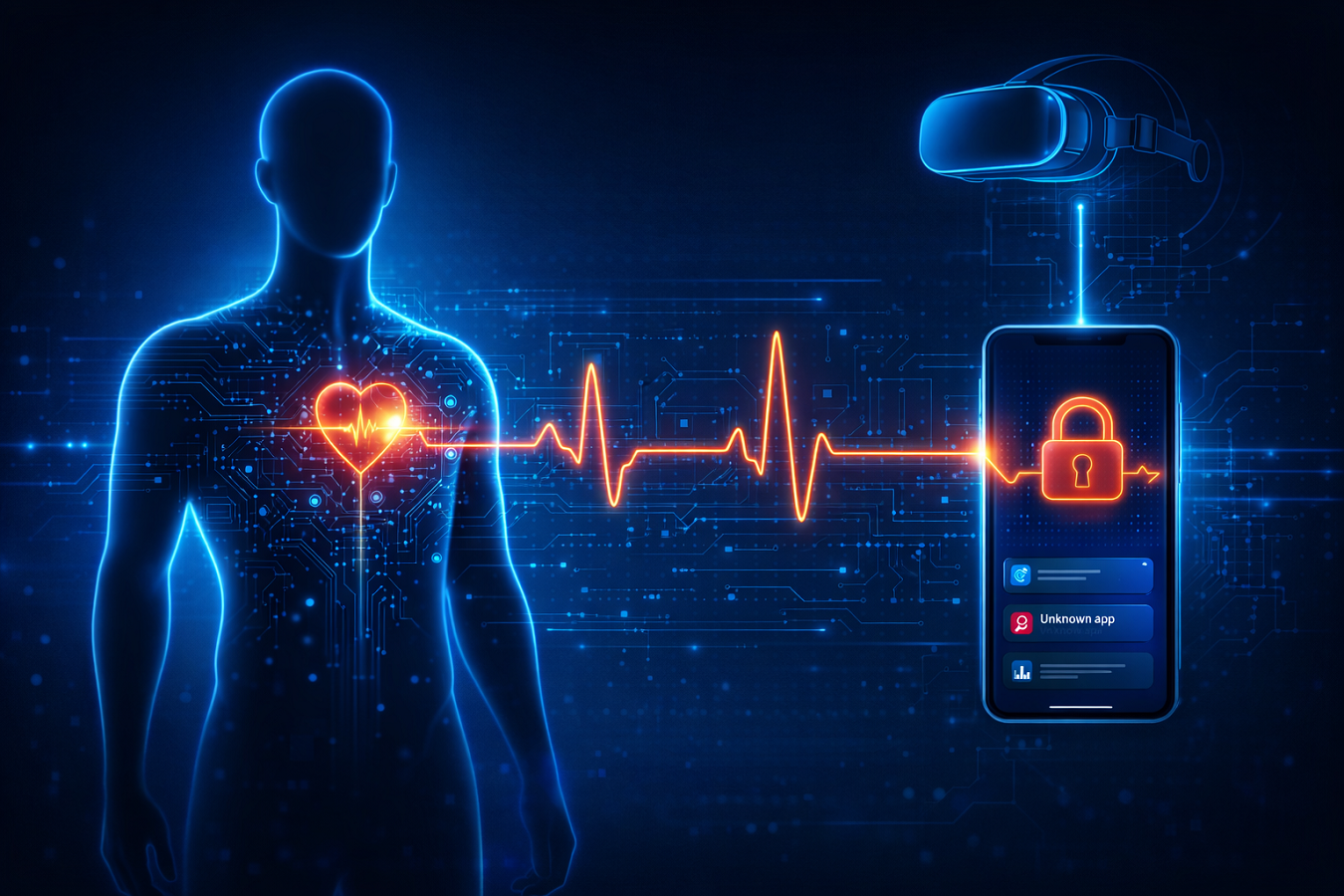
VitalID is an advanced biometric authentication system that identifies users based on subtle vibrations generated by their heartbeat and breathing. Unlike traditional methods that rely on external inputs like passwords or fingerprints, this system taps into internal biological signals that are extremely difficult to replicate.
Here’s how the technology functions:
- The human body produces tiny vibrations as the heart beats and lungs expand during breathing.
- These vibrations travel through the neck and reach the skull.
- Since every individual has a unique skull structure, the vibration patterns differ from person to person.
- This creates a distinct “biological signature” that can be used for authentication.
Modern devices, especially those used in Extended Reality environments, are already equipped with highly sensitive motion sensors. These sensors can detect even the slightest movements, making them capable of capturing these internal vibrations accurately.
Using advanced software algorithms, VitalID analyzes these patterns in real time and verifies the user’s identity—without requiring any additional hardware.
Accuracy and Performance
Early testing of VitalID has shown impressive results. Reports suggest that the system achieves an accuracy rate of around 95%, successfully identifying users while effectively blocking unauthorized access attempts. This level of precision places it among the most promising next-generation authentication technologies.
Why Is This Technology Needed?
The rise of immersive digital environments is one of the key reasons behind the development of VitalID. Technologies like:
- Virtual Reality (VR)
- Augmented Reality (AR)
- Mixed Reality (MR)
are collectively known as Extended Reality (XR), and their adoption is growing rapidly across industries.
Initially popular in gaming, XR is now being used in sectors such as healthcare, education, remote work, and finance. However, traditional login methods often feel clunky or impractical in these environments.
For example:
- Typing passwords inside a VR headset can be inconvenient
- Two-factor authentication (2FA) can interrupt immersive experiences
- Fingerprint or face recognition may not always work seamlessly in XR setups
These challenges have created a strong demand for a more natural, seamless, and secure authentication method—something that works effortlessly in the background without disrupting the user experience.
Key Advantages of VitalID
- Highly Secure: Internal biological signals are extremely difficult to duplicate
- Seamless Experience: No need to type passwords or perform extra steps
- Hardware-Free Integration: Works with existing sensors in modern devices
- User-Friendly: Authentication happens naturally without active input
The Future of Password-Free Security
VitalID represents a major shift toward passwordless authentication. As cyber threats continue to evolve, relying on easily guessable or hackable credentials is becoming increasingly risky. Technologies that use unique biological markers could provide a much stronger layer of protection.
While the system is still in development and testing phases, its potential applications are vast. From unlocking smartphones to securing virtual workplaces, VitalID could soon become a standard feature in next-generation devices.
Final Thoughts
The idea of using your heartbeat as a password may sound futuristic, but it’s quickly becoming a reality. As digital ecosystems grow more complex, innovations like VitalID offer a glimpse into a safer, more intuitive future—where your body itself becomes the key to your digital world.