NEWS
XPLANE: How can India escape cancer? Recognize the painful truth that repeats itself every day.
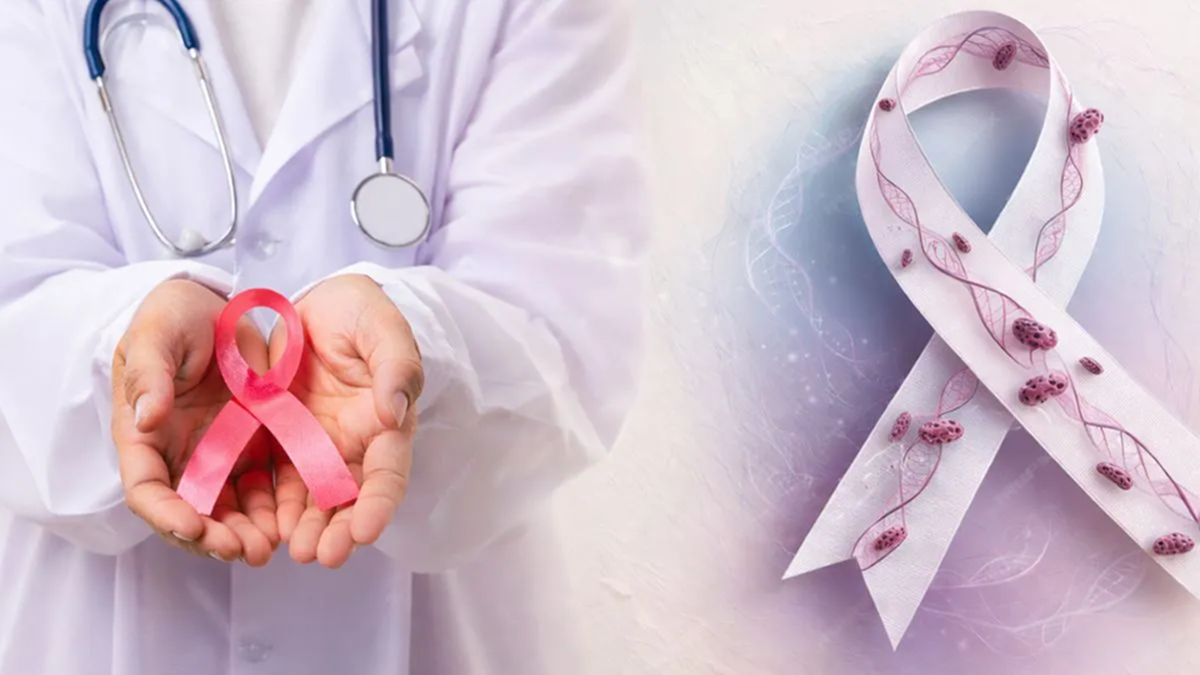
Cancer Disease Treatment: NITI Aayog is creating a database of radiology and pathology images from over 20,000 cancer patients. This imaging biobank will help train AI tools.
How to identify 10 cancers in one blood sample?
Cancer hospitals in India witness the same scenario every day: more than 70% of patients arrive with advanced cancer. Treatment at this stage is expensive and difficult, with the chances of success greatly diminishing. Over the past two decades, India has built some of the world's best cancer centers and adopted modern methods of radiation therapy and surgery, but all these advances are wasted when patients arrive so late that nothing can be done. So how can India escape cancer?
How big is the cancer crisis in India?
According to a report by the American Cancer Society, 15.33 lakh new cancer cases were reported in India in 2024. Meanwhile, cancer deaths reached 8.74 lakh. That's not all; between 2015 and 2024, cancer cases increased by 10.4% and cancer deaths increased by 28.6%. This means deaths are increasing three times faster. This clearly indicates that we are not able to save patients in time.
One in nine Indians is at risk of developing cancer at some point in their lives. In some northeastern states, this risk is over 20%. This figure will increase with increasing age and changing lifestyles.
Why is delay in treatment the biggest problem?
Dr. J.B. Sharma, director of Action Cancer Hospital and Action Institute of Medical Oncology and Immunotherapy in Delhi, explains that in India, cancer is often diagnosed only when symptoms become so severe that daily life becomes difficult. By then, the chance for a cure is lost. This delay not only costs lives but also leads to poverty. More than 75% of families affected by cancer are financially devastated by the cost of treatment.
The 5-year survival rate for lung cancer in India is only 4%, while in Japan it is 33%. This difference is not due to the quality of treatment, but rather the stage at which a patient reaches a doctor.
So how will this picture change?
According to Dr. J.B. Sharma, three major steps are needed for this:
Step 1: The revolution of change will begin from schools
When it comes to cancer prevention, nearly half of cancers are preventable. However, the benefits of raising awareness among adults are limited, as lifestyle habits are ingrained in childhood. Once habits are formed, they are very difficult to change through awareness campaigns.
Therefore, health education should begin in schools, where life skills are given the same importance as math and science. These life skills will protect against not only cancer but also heart disease, diabetes, neurological and blood vessel-related diseases. They should include physical, mental, and social health, drug prevention, diet, vaccinations, and responsibilities to family and society.
Step 2: The Three-Week Rule and the Power of Screening
The average person should remember one thing: if any symptoms persist for more than three weeks, see a doctor. This simple rule can reduce significant delays in cancer detection, but awareness alone is not enough. Screening is our most powerful weapon, but only when it is detected before symptoms appear. Until now, screening was mostly limited to cervical, breast, and prostate cancers. Now, science has opened new avenues.
Step 3: Detection of 10 cancers in one blood sample
The greatest hope lies with the Multi-Cancer Early Detection (MCED) test. This is a blood test that can detect biological signals of 10 types of cancer in a single sample: colorectal, lung, liver, pancreas, ovarian, gastric, esophageal, breast, prostate, and bladder cancer.
In July 2026, Apollo Cancer Centers launched the Shield Multi-Cancer Detection (MCD) test in India. It is designed for people aged 45 years and older. Zydus Lifesciences has partnered with Apollo Hospitals to make it available nationwide. While careful evaluation is needed before it can be implemented nationwide, it is one of the most promising areas of cancer research.
Our model according to India
A single screening program cannot work for a country of 1.4 billion people. India needs to tailor solutions to its own realities. A layered model should include:
- Community health workers should go from village to village and explain to the people.
- Easy to identify through online tools via digital risk assessment.
- With the help of AI, read X-rays and reports and indicate danger signs.
- Reaching remote areas with mobile diagnostic services.
- Strong referral system from primary care to cancer centers.
Imaging Biobank of NITI Aayog
The good news is that the foundation is already being laid. NITI Aayog is building a database of radiology and pathology images from over 20,000 cancer patients. This imaging biobank will help train AI tools to help frontline health workers identify suspicious nodules and refer patients to the right specialist.
National Health Research Policy 2026
The Draft National Health Research Policy 2026 offers an opportunity to accelerate this transformation. It aims to increase health research spending by 6.25 times the current level by 2047. Priority will be given to major diseases such as cancer, tuberculosis, diabetes, heart disease, and mental health. Emerging areas such as AI, digital health, data science, cell and gene therapy will also be focused on.
This policy signals a shift from 'publication-driven' to 'implementation science', meaning that research should not be limited to papers but should also bring about real-life change.
What is the real measure of winning the battle against cancer?
Dr. J.B. Sharma says that India's progress in cancer care shouldn't be measured by the number of advanced treatments available. Real success lies in how many cancers never reach the final stage. This requires collaboration between government agencies, medical colleges, technology companies, and community health providers. Health education in schools, the three-week regimen, multi-cancer blood tests, AI-enabled screening, and a strong research policy can help India win the battle against cancer.
The question isn't whether we can do it. The question is when will we start?