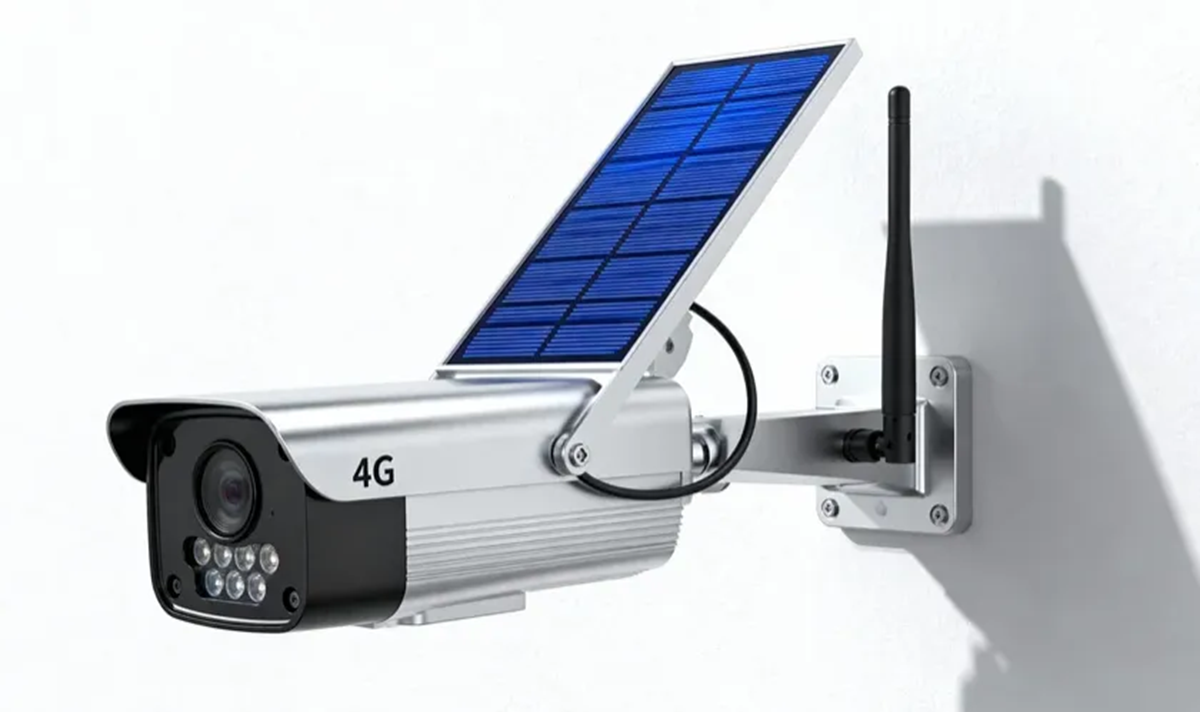
4G solar cameras are convenient for farms because they don't require electricity or Wi-Fi connections. By plugging a SIM card into the camera, live footage and alerts can be viewed on your phone via the mobile network.
Solar Camera
Farm Monitoring Camera: If the farm is far from home and doesn't have electricity or Wi-Fi, installing a standard camera can be difficult. Laying wires, getting a power connection, and repeatedly charging batteries can be a hassle for farmers. In such a situation, a camera with a 4G SIM and solar power can be a very useful option. It charges from a solar panel and allows monitoring of the farm via mobile network on the phone, allowing farmers to keep an eye on their farm from anywhere. This option can be especially useful for farmers whose farm is far from home and it is difficult to visit there regularly to monitor it.
4G solar camera is better
4G solar cameras are convenient for farms because they don't require electricity or Wi-Fi connections. By inserting a SIM card into the camera, live footage and alerts can be viewed directly on your phone via the mobile network. Any movement or unknown person entering the field can be immediately alerted. However, a good network connection is essential at the camera installation site, otherwise live footage or alerts may be delayed. This camera can be especially useful in large or isolated fields, where daily monitoring is not possible. Some cameras also offer the ability to change the camera's direction and view the surroundings via a mobile app.
Must-see features in the camera
When purchasing a farm camera, don't just focus on resolution. Be sure to also look for features like night vision, motion detection, human detection, swivel capability, two-way conversation, and memory card support. Night vision is especially important for detecting animals or thieves at night. For monitoring large areas, a swivel or dual-lens camera may be a good choice, as it can cover the entire field. When purchasing an outdoor camera, it 's important to look for weather -resistant ratings to ensure rain and sun damage. The camera's recording capacity and storage options should also be checked in advance.
Take care of solar panels and batteries
When installing a camera in your field, pay special attention to the backup capacity of the solar panel and battery. The solar panel helps charge the battery during the day, allowing the camera to operate without electricity, even on cloudy days. If the camera has features like 4G, roving, or smart identification, a high-capacity battery and a large solar panel may be more useful, as these features consume more power. Before purchasing a camera, be sure to check the network conditions in your field, the camera's coverage, and the correct installation location to avoid problems later. Also, install the solar panel in a location that receives adequate sunlight throughout the day. Mounting the camera at a higher altitude can also improve surveillance range.