As temperatures begin to fall after the summer months, many households gradually reduce their use of air conditioners and coolers. Once an AC is no longer required, it is tempting to simply press the power button on the remote and leave the appliance untouched until hot weather returns.
However, an air conditioner that will remain unused for several months can benefit from some basic end-of-season maintenance.
Dust accumulated in the filters, moisture left inside the indoor unit and prolonged exposure of the outdoor unit to dirt and weather can potentially create problems when the AC is switched on again. A little preparation before a long period of non-use can help keep the system cleaner and reduce the possibility of unpleasant odours or maintenance issues later.
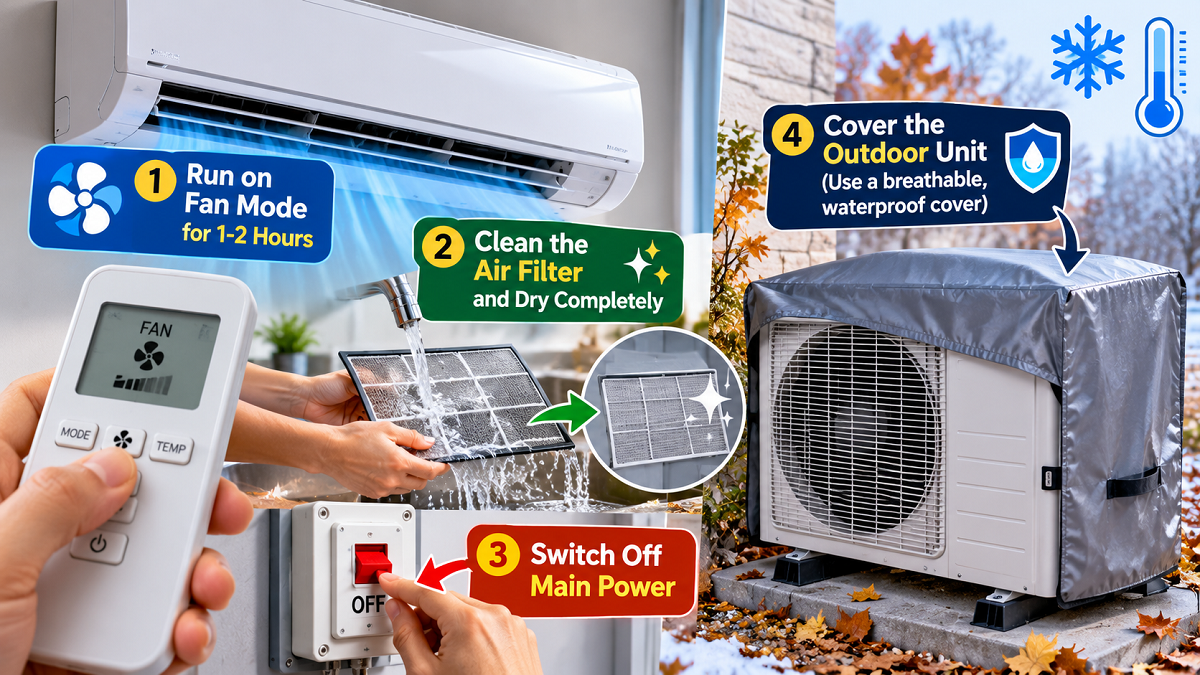
Here are three important steps you can consider before leaving your AC unused for an extended period.
1. Run the AC on Fan Mode Before Switching It Off
Air conditioners produce condensation while cooling a room. Although the system is designed to drain this moisture, some dampness can remain around internal components after regular operation.
Before shutting the AC down for an extended period, running it in Fan Mode can help circulate air through the indoor unit.
The original information recommends operating the fan for approximately one to two hours before the final shutdown.
Unlike cooling mode, Fan Mode does not primarily aim to reduce the room temperature. Instead, the indoor fan circulates air without normal compressor-driven cooling.
This airflow may help dry residual moisture around the indoor unit and cooling coil.
Reducing persistent dampness is useful because a moist and dusty environment can encourage unpleasant smells and microbial growth.
Some modern air conditioners may also have a dedicated self-clean, coil-dry or auto-clean function. If your AC includes such a feature, check the manufacturer's instructions to determine the recommended procedure before long-term storage.
2. Clean and Completely Dry the Air Filters
The air filter is another important component that should not be ignored before seasonal shutdown.
During months of regular operation, filters collect dust and other airborne particles. Leaving a heavily contaminated filter inside an unused AC for months can make the next season's startup less pleasant.
For washable filters, the general process is straightforward.
Turn the AC off safely and open the front panel according to the manufacturer's instructions. Carefully remove the filters and clean them as recommended in the appliance manual.
If the filter is washable, it can usually be cleaned gently with water. Avoid aggressive scrubbing or harsh chemicals unless specifically permitted by the manufacturer.
The most important step comes afterward: allow the filter to dry completely before reinstalling it.
Putting a wet filter back inside the indoor unit can introduce unnecessary moisture.
Not every AC filter is designed to be washed, however. Some models use specialised filters that may require different cleaning or replacement procedures. Always check the user manual if you are unsure.
3. Switch Off the Main Power When Appropriate
Pressing the OFF button on the remote may put the AC into standby rather than completely isolating it from the electricity supply.
If the air conditioner will not be used for several months, the household may consider switching off its dedicated power supply, provided this is consistent with the manufacturer's recommendations and the electrical setup of the appliance.
If you are uncertain about disconnecting or isolating the power supply, avoid handling electrical wiring yourself. Use the dedicated switch or circuit arrangement provided for the appliance, or consult a qualified technician.
Electrical safety should always take priority over DIY maintenance.
Should You Cover the Outdoor AC Unit?
The outdoor unit is continuously exposed to dust, leaves, bird droppings, rain and other environmental conditions.
It may therefore seem logical to seal it completely during the months when it is not being used. However, covering an outdoor AC unit requires some caution.
A tightly sealed or poorly ventilated cover can trap moisture rather than protect the equipment. Persistent trapped moisture may contribute to corrosion or other problems.
If a cover is appropriate for your installation, choose one specifically designed for outdoor AC equipment that provides suitable weather protection without trapping excessive moisture.
It is also advisable to check the AC manufacturer's guidance before covering the condenser unit, as recommendations can differ by model, climate and installation.
Clean the Area Around the Outdoor Unit
Even if you decide not to use a cover, keeping the area surrounding the condenser reasonably clean can help.
Remove accumulated leaves, loose debris and objects that may obstruct the unit. Do not insert tools into the equipment or aggressively pressure-wash electrical components.
If the outdoor unit is heavily contaminated or requires internal cleaning, professional servicing is generally safer than dismantling the equipment yourself.
Three Things to Remember Before Seasonal Shutdown
Before leaving the air conditioner unused for months, focus on three basic tasks:
Run Fan Mode: Operating the fan for some time can help reduce residual moisture inside the indoor unit.
Clean the filters: Remove accumulated dirt from washable filters and ensure they are completely dry before reinstalling them.
Prepare for long-term shutdown: Follow the manufacturer's instructions regarding the main power supply and protection of the outdoor unit.
Small Maintenance Steps Can Prevent Problems Later
Seasonal AC maintenance does not guarantee that the appliance will never require repairs, but it can help prevent avoidable issues.
A clean filter can support airflow when the AC is restarted, while reducing residual moisture may help minimise musty smells. Keeping the outdoor unit clear of excessive debris can also help prepare it for the next cooling season.
When temperatures rise again, inspect the unit before restarting it after months of inactivity. If you notice unusual sounds, leakage, a burning smell, damaged wiring or poor cooling, switch the appliance off and have it inspected by a qualified technician.
Instead of simply turning the AC off with the remote and forgetting about it for several months, spending a little time on proper seasonal maintenance can help ensure a smoother restart when summer returns.