ASTROLOGY
Sarva Pitru Amavasya: Donate These 5 Auspicious Things to Honour Ancestors and Seek Their Blessings
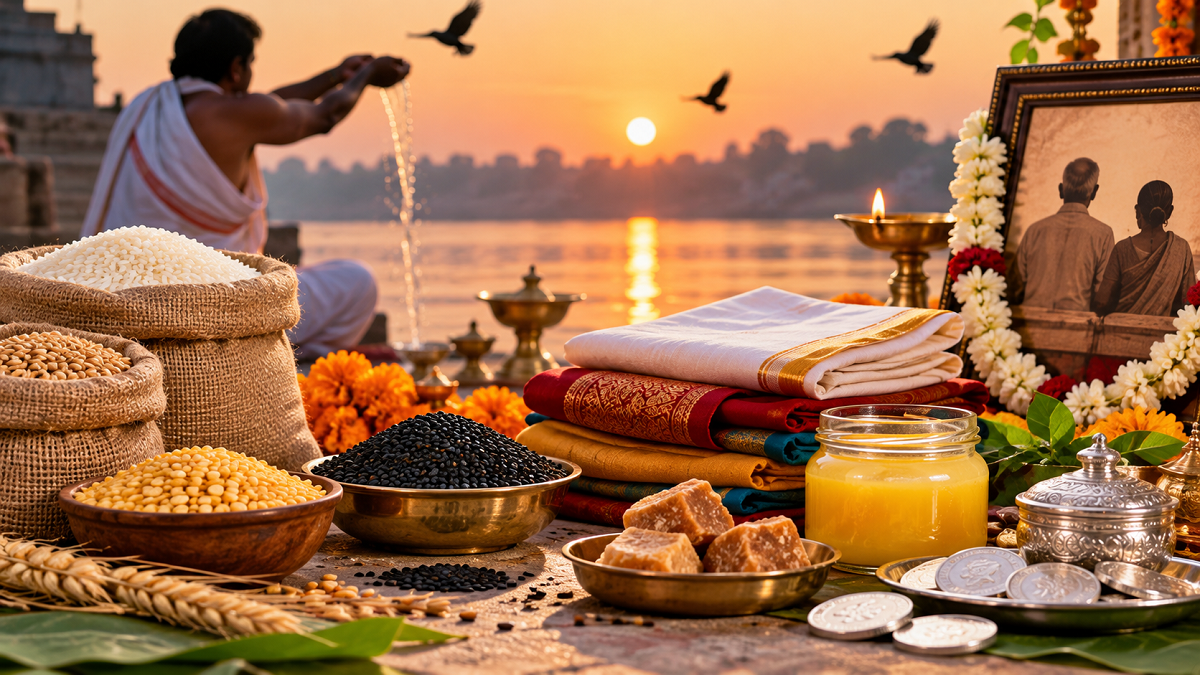
Pitru Paksha Traditions: Remembering departed family members and expressing gratitude to ancestors are important aspects of Hindu religious customs. During Pitru Paksha, many families perform traditional rituals, offer prayers and participate in charitable activities to honour their ancestors.
Among the observances associated with this period, Sarva Pitru Amavasya, also known as Mahalaya Amavasya, holds special religious significance. Traditionally observed on the final day of Pitru Paksha, it provides an opportunity for families to perform Shraddha and Tarpan ceremonies in remembrance of departed relatives.
The occasion is considered particularly meaningful for individuals who do not know the exact lunar death date of their ancestors or were unable to perform the prescribed rituals on an earlier day of Pitru Paksha.
According to Hindu religious beliefs, charitable acts performed with sincerity and devotion on Sarva Pitru Amavasya are associated with spiritual merit and prayers for family well-being.
Several items are traditionally regarded as suitable for donation on this occasion. These include food grains, black sesame seeds, clothing, jaggery, ghee and silver.
Here are five commonly recommended donations and their significance in Hindu traditions.
1. Donate Food Grains to Help Families in Need
Offering food to others, commonly known as Anna Daan, is considered one of the most meaningful forms of charity in Hindu traditions.
During Sarva Pitru Amavasya, devotees may donate essential food items to individuals and families facing financial difficulties.
Commonly donated items include rice, wheat, flour, pulses and other basic groceries.
Food donations are traditionally associated with compassion, generosity and the responsibility to support people who may struggle to meet their daily nutritional needs.
According to religious beliefs, offering food in memory of departed ancestors is considered a virtuous act.
Many families also arrange meals for people in need as part of their Shraddha observances.
Those wishing to participate can donate groceries to local charitable organisations, community kitchens or families requiring assistance.
The important consideration is that the donated food should be fresh, safe and suitable for consumption.
2. Offer Black Sesame Seeds During Ancestral Rituals
Black sesame seeds, known as Kala Til, have a special place in traditional Hindu ceremonies dedicated to ancestors.
They are commonly used during Tarpan, a ritual in which water is offered in remembrance of departed family members.
In several religious traditions, black sesame seeds are associated with purification and ancestral offerings.
For this reason, donating black sesame seeds on Sarva Pitru Amavasya is regarded as auspicious by many devotees.
Some families include sesame seeds in ritual offerings, while others donate them as part of their charitable activities.
The exact method of performing these ceremonies may differ according to regional traditions, family customs and religious guidance.
Devotees who wish to follow a specific ritual procedure may consult a knowledgeable priest or follow the customs practised within their families.
3. Give Clothes to People Who Need Them
Clothing donations are another widely practised form of charity during religious occasions.
On Sarva Pitru Amavasya, many devotees donate garments to people who may not have sufficient clothing for everyday use.
Items such as sarees, dhotis, kurtas, shawls and other essential garments may be donated according to the recipient's needs.
Traditional beliefs associate such acts of generosity with spiritual merit and respect for departed ancestors.
However, the practical value of the donation is equally important.
People planning to donate clothing should ensure that the garments are clean, wearable and appropriate for the weather.
New clothes may be donated, but good-quality reusable garments can also provide meaningful assistance when accepted by the recipient or charitable organisation.
Donations should always be made respectfully, with attention to the dignity and preferences of those receiving them.
4. Donate Jaggery and Ghee as Symbols of Auspiciousness
Jaggery and ghee are frequently used in Hindu religious ceremonies and traditional food preparations.
Both items are considered auspicious in several cultural and religious practices.
During Sarva Pitru Amavasya, some devotees choose to donate jaggery and ghee as part of their charitable offerings.
According to traditional beliefs, these donations are associated with goodwill, spiritual merit and prayers for harmony within the household.
Jaggery is commonly used as a sweetener, while ghee is an important ingredient in many Indian dishes and religious offerings.
Families who wish to donate these items can provide them to people in need or organisations that prepare meals for communities.
It is advisable to ensure that the products are properly packaged, within their expiry dates and suitable for consumption.
Although such donations carry religious significance for believers, they should not be regarded as a guaranteed way to obtain financial prosperity or solve personal difficulties.
5. Donate Silver According to Your Financial Capacity
Silver holds symbolic importance in various Hindu religious customs and ceremonies.
Some traditions consider donating a small silver item on Sarva Pitru Amavasya an auspicious gesture made in remembrance of ancestors.
People who can comfortably afford it may choose to donate a silver coin or another modest silver object.
However, donating precious metals is not a compulsory requirement for observing Sarva Pitru Amavasya.
Religious charity should reflect a person's circumstances and willingness to give.
Individuals should never feel pressured to purchase expensive items or borrow money to participate in a religious observance.
Simple acts of kindness, such as feeding someone in need or providing essential household items, can be equally meaningful expressions of compassion and remembrance.
Why Is Sarva Pitru Amavasya Important During Pitru Paksha?
Sarva Pitru Amavasya is traditionally associated with the conclusion of the Pitru Paksha period.
During these observances, families remember deceased parents, grandparents and earlier generations through prayers, offerings and charitable acts.
Shraddha ceremonies are performed according to family customs, while Tarpan generally involves offering water in remembrance of ancestors.
Many devotees believe that performing these rituals sincerely expresses gratitude toward previous generations and helps maintain a spiritual connection with family heritage.
The occasion is also considered significant for people who are uncertain about an ancestor's death anniversary according to the Hindu lunar calendar.
Although rituals differ across regions and communities, remembrance, gratitude and charity remain common themes.
What Should Devotees Remember While Making Donations?
Religious donations are traditionally associated with sincerity rather than the monetary value of the items offered.
A person does not need to make expensive contributions to observe Sarva Pitru Amavasya meaningfully.
Food, clothing and everyday necessities can provide practical assistance to vulnerable individuals and families.
Devotees should donate according to their financial ability and ensure that the items are genuinely useful to the recipients.
It is also important to respect local customs because religious practices may differ between households and communities.
For those performing Shraddha or Tarpan, the timing and method of the ceremonies should be determined according to the applicable local Panchang and family tradition.
Final Thoughts
Sarva Pitru Amavasya is an important occasion for many Hindu families to remember their ancestors and express gratitude through traditional prayers and charitable activities.
Donating food grains, black sesame seeds, clothing, jaggery, ghee or silver is considered auspicious in various Hindu traditions.
While believers associate these practices with ancestral blessings and spiritual merit, the deeper significance of charity lies in compassion, generosity and helping those in need.
The most meaningful way to observe Sarva Pitru Amavasya is to honour departed loved ones with sincerity while extending kindness and support to others.
Disclaimer: The religious interpretations and benefits described in this article are based on traditional Hindu beliefs. Customs and rituals may vary according to region, family tradition and religious practice.