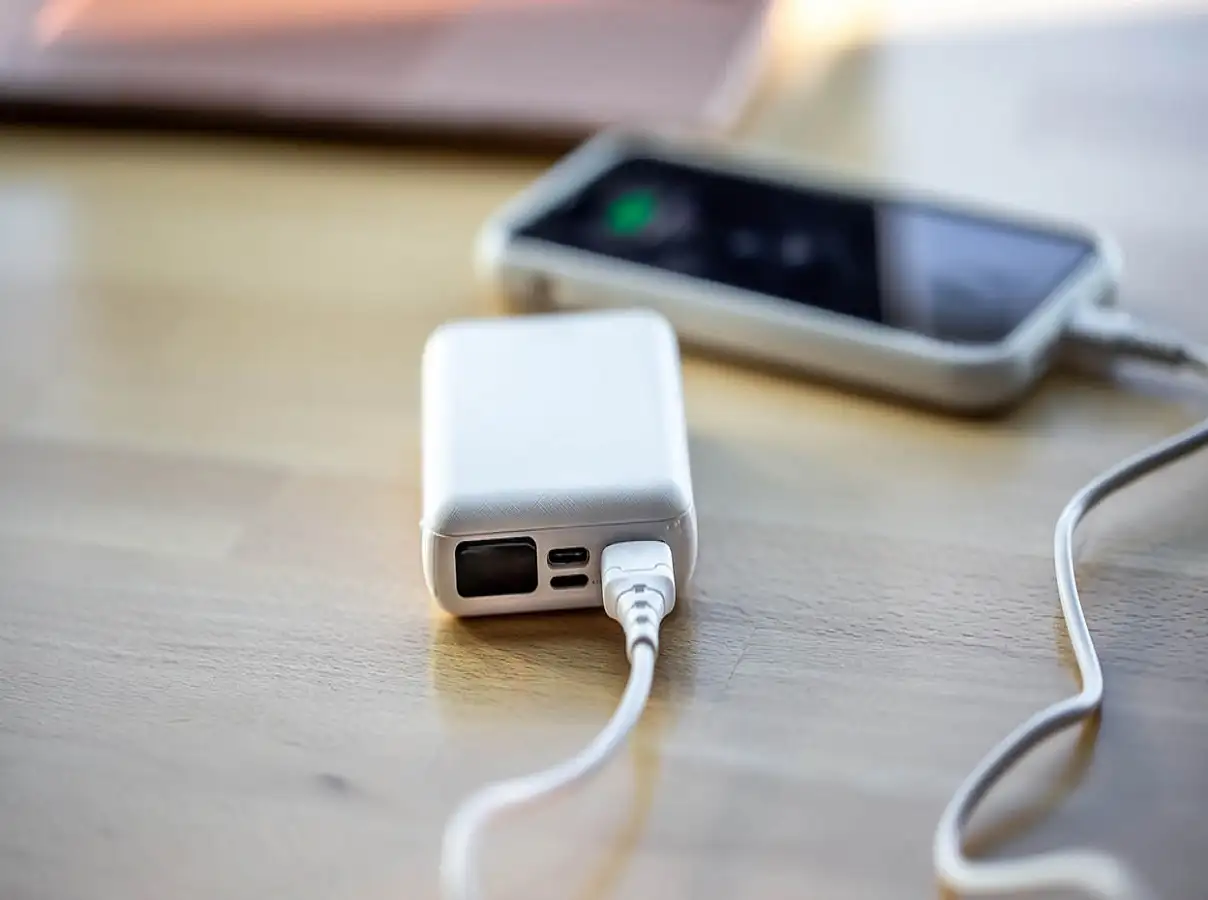
Power banks have become an essential accessory for smartphone users, especially when travelling, working away from a power outlet or spending long hours outside. They provide a convenient way to recharge phones, earbuds and other compatible devices without searching for a wall socket.
However, a power bank is more than a simple charging accessory. Most models contain lithium-ion or lithium-polymer batteries, which store a significant amount of energy in a compact space. While properly manufactured power banks are designed with multiple safety mechanisms, damaged batteries, excessive heat, unsuitable charging equipment or improper handling can increase the risk of overheating and, in rare cases, fire or battery failure.
Users can reduce these risks by following a few basic safety practices.
1. Don't Choose a Power Bank Based Only on Low Price
A very cheap power bank can appear attractive, particularly when it claims an unusually high battery capacity. However, price should not be the only factor when choosing one.
Poor-quality products may use inferior battery cells or inadequate protection circuitry.
Buy from a reputable manufacturer and reliable seller. Check the stated battery capacity, input and output specifications and compatibility with your devices.
It is also worth looking for built-in protections against overcharging, excessive temperature, overcurrent and short circuits.
Be cautious of products with unclear specifications, suspiciously high capacity claims or inadequate manufacturer information.
2. Keep the Battery Away From Excessive Heat
Heat is one of the biggest enemies of lithium-based batteries.
Avoid leaving a power bank in direct sunlight for extended periods. It should also not be stored near heaters, hot appliances or other heat sources.
A closed vehicle can become extremely hot, particularly during summer. Leaving a power bank on a car dashboard or inside a hot parked vehicle can expose its battery to temperatures significantly higher than normal operating conditions.
If the device becomes unusually hot while charging or supplying power, disconnect it and stop using it until it has cooled down. Persistent or extreme overheating can indicate a problem that should not be ignored.
3. Be Careful With Pass-Through Charging
Pass-through charging refers to charging a power bank while simultaneously using it to charge another device.
Some power banks are specifically designed to support this feature, while others are not.
If the manufacturer does not explicitly support pass-through charging, avoid charging the power bank and your smartphone through it at the same time. Doing both can generate additional heat and put more stress on the battery and charging circuitry.
Similarly, if your smartphone is connected to a power bank, prolonged high-performance gaming or other demanding activities can increase heat generation in the phone and charging system.
4. Use a Compatible Charger and Undamaged Cable
Using the correct charging equipment is another important safety precaution.
Follow the power bank manufacturer's recommended input specifications and use a compatible charger and good-quality cable.
A charger with a higher wattage rating does not automatically mean that every power bank will charge faster. Charging speed depends on the standards and power levels supported by both devices.
Inspect charging cables periodically. Stop using a cable if its insulation is torn, the connector has become loose or bent, or the cable and connector become abnormally hot.
Damaged charging accessories can cause unreliable connections and potentially create electrical hazards.
5. Stop Using a Swollen or Damaged Power Bank
Physical changes to a power bank should never be ignored.
If the casing begins to swell, separate or crack, or if you notice an unusual smell, excessive heat or other signs of battery damage, stop using the device.
Do not recharge a swollen power bank and do not connect your phone to it.
Most importantly, never puncture, squeeze, crush, dismantle or attempt to repair a swollen lithium battery yourself. Damaged lithium batteries can become hazardous if physically disturbed.
Keep the damaged unit away from heat and combustible materials and follow local guidance for disposing of it through an authorised e-waste or battery recycling facility. Do not simply throw a damaged lithium battery into ordinary household waste.
6. Avoid Unnecessary Overnight Charging
Many modern, good-quality power banks contain protection systems designed to control charging once the battery reaches its intended level.
Even so, leaving electronic devices connected to power unnecessarily for extended periods is best avoided when practical.
Follow the manufacturer's charging instructions and disconnect the power bank once charging is complete.
It is particularly important not to charge a power bank under pillows, blankets or other materials that can trap heat. Charging should take place in a well-ventilated location and on a stable surface.
7. Store Your Power Bank Carefully
How you carry a power bank also matters.
Avoid storing it loosely alongside keys, coins or other metal objects where they could come into contact with exposed or damaged connectors.
The device should also be protected from crushing, strong impacts and excessive pressure inside bags or luggage.
If a power bank has been dropped heavily or physically damaged, inspect it carefully before using it again.
Small Precautions Can Reduce Battery Risks
A power bank is generally safe when it is well-made, undamaged and used according to the manufacturer's instructions. Problems are more likely when batteries are exposed to extreme heat, physically damaged or used with unsuitable accessories.
Users should pay particular attention to warning signs such as swelling, unusual smells, excessive heat, cracks or deformation.
If any of these symptoms appear, discontinue use rather than continuing to charge the device.
Choosing a reliable product, using compatible charging accessories, keeping the battery away from excessive heat and disposing of damaged units responsibly can help make everyday power bank use significantly safer.