Buying property is a major financial decision, and while most people are familiar with home and car loans, there is often confusion around financing land purchases. The reality is that banks do offer loans for buying plots, commonly known as land or plot loans. However, these loans come with stricter rules and conditions compared to traditional home loans.
If you are considering purchasing land—either to build a home later or as part of long-term planning—it is important to understand how these loans work before applying.
What Exactly Is a Land Loan?
A land loan is a type of financing provided specifically for purchasing a residential plot where the borrower intends to construct a house in the future. Unlike home loans, which are used for ready or under-construction properties, plot loans are linked to the expectation of eventual construction.
Banks typically approve such loans only if the buyer plans to build a house within a specified time frame. This requirement makes land loans more regulated than standard property financing options.
Why Buyers Are Choosing Plots First
In recent years, many buyers—especially in smaller cities—have started preferring plots over ready homes. This approach offers greater flexibility, allowing individuals to design and construct their homes according to personal needs and financial capacity.
Purchasing land first also reduces the immediate financial burden, as buyers can spread construction costs over time instead of taking a large loan upfront. However, this flexibility comes with the need for careful planning and understanding of loan conditions.
Types of Land Eligible for Loans
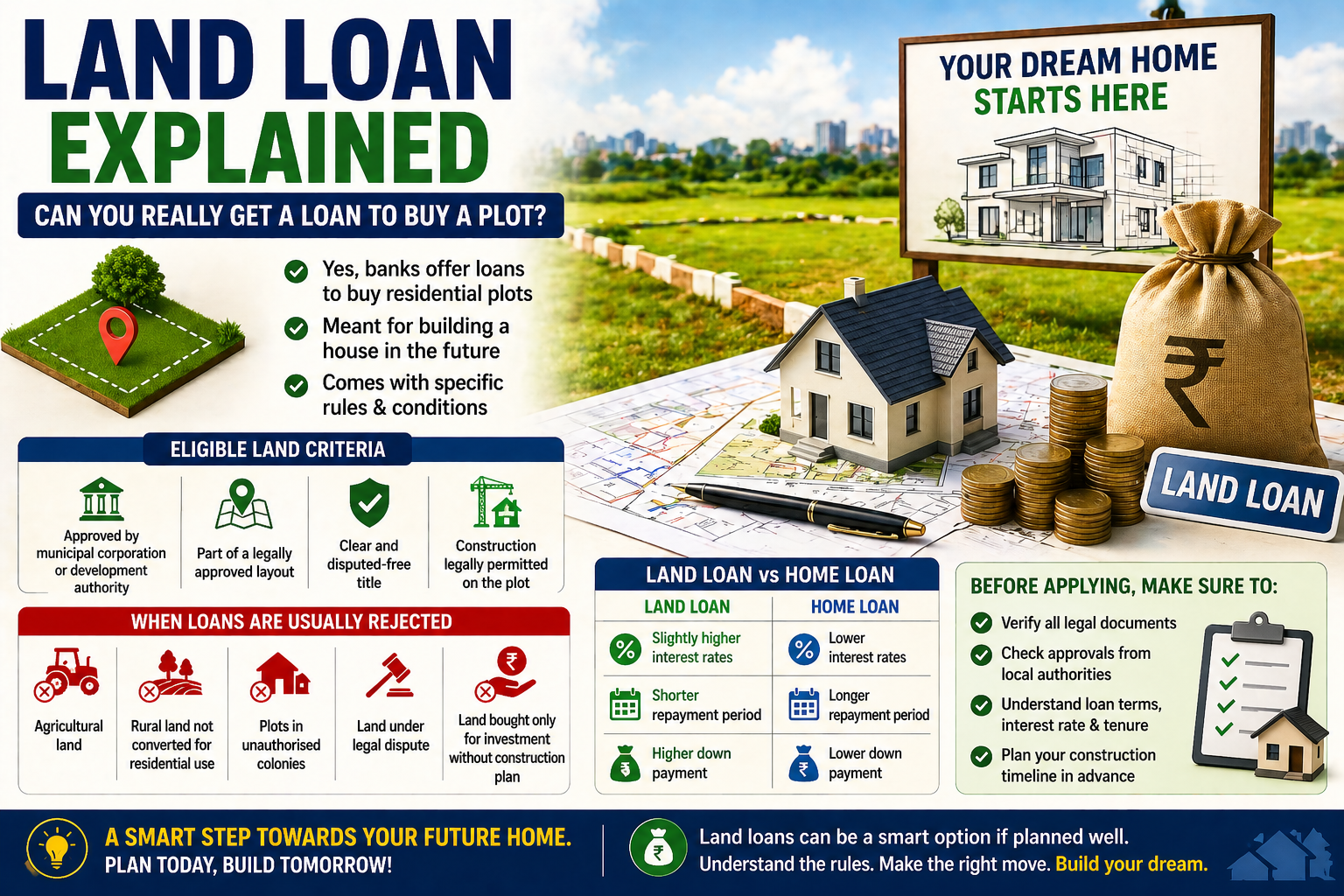
Banks are selective about the kind of land they finance. Generally, only residential plots qualify for loans, and they must meet specific criteria:
- The plot should be approved by a municipal or development authority
- It must be part of a legally sanctioned layout
- Ownership title should be clear and dispute-free
- Construction must be legally permitted on the land
These conditions ensure that the property is safe, legally valid, and suitable for building a home.
When Land Loan Applications Get Rejected
Banks avoid financing high-risk or legally unclear properties. Common reasons for rejection include:
- Agricultural land purchases
- Rural land not converted for residential use
- Plots in unauthorised colonies
- Land involved in legal disputes
- Purchases made purely for investment without construction intent
Such cases are considered risky due to unclear legal status or lack of development permissions.
How Land Loans Differ from Home Loans
Plot loans differ from home loans in several important ways:
- Higher Interest Rates: Banks consider land loans riskier
- Shorter Tenure: Repayment periods are usually shorter
- Higher Down Payment: Borrowers may need to contribute more upfront
In contrast, home loans often come with longer repayment terms and more flexible conditions.
Important Points Before Applying
Before applying for a land loan, it is essential to plan carefully:
- Verify all legal documents and ownership details
- Check approvals from local authorities
- Understand interest rates, tenure, and repayment terms
- Plan your future construction timeline
Proper due diligence can help you avoid legal complications and financial stress later.
Final Takeaway
Land loans are a viable option for those looking to enter the real estate market in a phased manner. While they come with stricter conditions than home loans, they offer flexibility for buyers who want to build their dream home over time.
With the right planning, clear legal checks, and a strong financial strategy, buying a plot through a land loan can be a smart and practical investment decision.
Disclaimer: This article is for informational purposes only. Loan terms, eligibility, and interest rates may vary by bank and applicant profile. Readers are advised to consult financial institutions or legal experts before making any property-related decisions.