LIFESTYLE
NEET-UG Paper Leak Sparks Nationwide Outrage, Raises Questions Over Future of 2.3 Million Students
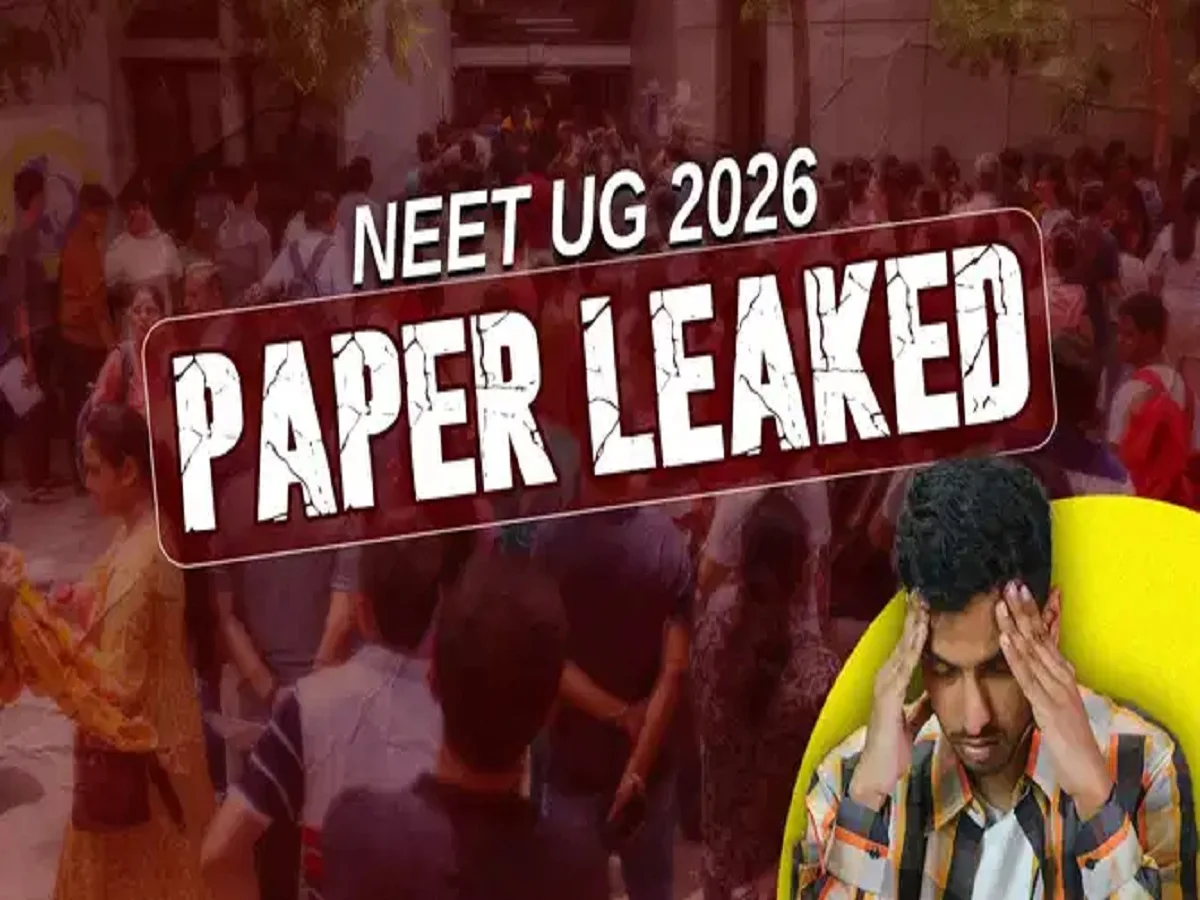
The alleged paper leak in the NEET-UG examination has once again triggered a major debate over the credibility of India’s examination system. The controversy has shaken the confidence of millions of students and parents after the medical entrance exam was reportedly cancelled due to a large-scale leak of question papers.
Nearly 2.3 million candidates are believed to have been affected by the development, making it one of the biggest education controversies in recent years. The incident has not only raised concerns about examination security but has also left lakhs of aspirants emotionally distressed and uncertain about their academic future.
Students who spent months—and in many cases years—preparing for the highly competitive medical entrance examination are now demanding accountability from authorities.
Questions Raised Over Examination Security
Following the controversy, the Director General of National Testing Agency reportedly hinted at the possibility of conducting the examination again. However, students, parents, and educators argue that assurances alone are not enough to restore public trust.
Many are questioning how a paper leak could occur despite claims of “foolproof security arrangements” by authorities.
For thousands of aspirants, the emotional impact has been devastating. Candidates reportedly sacrificed sleep, social life, family time, and personal comfort while preparing for the exam, often studying 10 to 12 hours daily in hopes of securing a medical seat.
Now, many students are asking a painful question: “What was our fault?”
Investigation May Shift to CBI
Until now, the investigation into the alleged paper leak was being handled by Rajasthan’s Special Operations Group (SOG). However, reports suggest that the Central Bureau of Investigation may soon take over the case due to its expanding multi-state links.
According to investigators, the conspiracy allegedly began in Nashik, Maharashtra, where NEET question papers were reportedly sent to a printing facility. Authorities suspect that the first digital copy of the paper may have been created there.
Investigators believe a private courier employee named Shubham may have played a key role in the operation. Reports claim that secure trunks containing exam papers were accessed for nearly 30 minutes.
Instead of using mobile phones to avoid suspicion, investigators suspect that a portable HD scanner was allegedly used to scan the papers discreetly.
One accused individual has reportedly already been detained in Nashik, while Rajasthan SOG has allegedly taken more than 15 people into custody in connection with the case.
Key Names Emerge in Investigation
Investigators say two individuals—Manish Yadav and Rakesh Mandawaria—have emerged as major figures in the alleged leak network.
According to probe agencies, Manish Yadav allegedly arranged access to the leaked paper through contacts connected to the Nashik printing facility. He reportedly passed the paper to a student from Churu, Rajasthan, who is currently studying MBBS in Kerala.
Authorities further claim that the student later forwarded the paper to Rakesh in Sikar, Rajasthan, from where it was allegedly distributed among candidates.
Soon after, the leaked paper reportedly began circulating rapidly across multiple Telegram groups.
What has shocked investigators is the claim that the circulation may have started nearly 10 days before the examination.
Multi-State Connections Surface
The investigation has now reportedly expanded across several Indian states. Officials suspect that the leaked papers may have circulated in Haryana, Bihar, Rajasthan, and other regions before the exam was conducted.
Reports also suggest that one accused attempted to flee toward Dehradun in Uttarakhand to avoid arrest, although official confirmation regarding this is still awaited.
The widening scope of the investigation eventually led to discussions between the NTA, government officials, and investigative agencies, after which the decision to cancel the examination was reportedly taken.
NEET’s Credibility Under Fresh Scrutiny
The latest controversy has once again intensified concerns regarding the transparency and credibility of NEET.
Before NEET was introduced, medical entrance examinations in India were conducted separately by institutions such as All India Institute of Medical Sciences and Jawaharlal Institute of Postgraduate Medical Education and Research, along with various state governments.
NEET was launched in 2013 under the vision of “One Nation, One Medical Exam” to streamline the admission process across India. Initially, the examination was conducted by Central Board of Secondary Education before later responsibilities shifted to the National Testing Agency.
However, repeated controversies over paper leaks, alleged irregularities, and examination management have increasingly raised doubts over the system’s reliability.
For millions of students preparing for competitive exams, the NEET controversy has once again highlighted the urgent need for stronger examination security, transparency, and accountability within India’s education system.