Mumbai is often celebrated as the city of dreams, but for millions who rely on its local trains every day, the experience can sometimes feel overwhelming and unsafe. A recent viral video from a Mumbai railway station has once again brought the harsh reality of overcrowding on the city’s local train network into sharp focus.
The video, widely shared on social media platforms, shows an extremely crowded railway platform, where managing even basic movement appears nearly impossible. The visuals have sparked fresh debates about passenger safety, infrastructure limits, and the preparedness of authorities to handle peak-hour rush.
What Does the Viral Video Show?
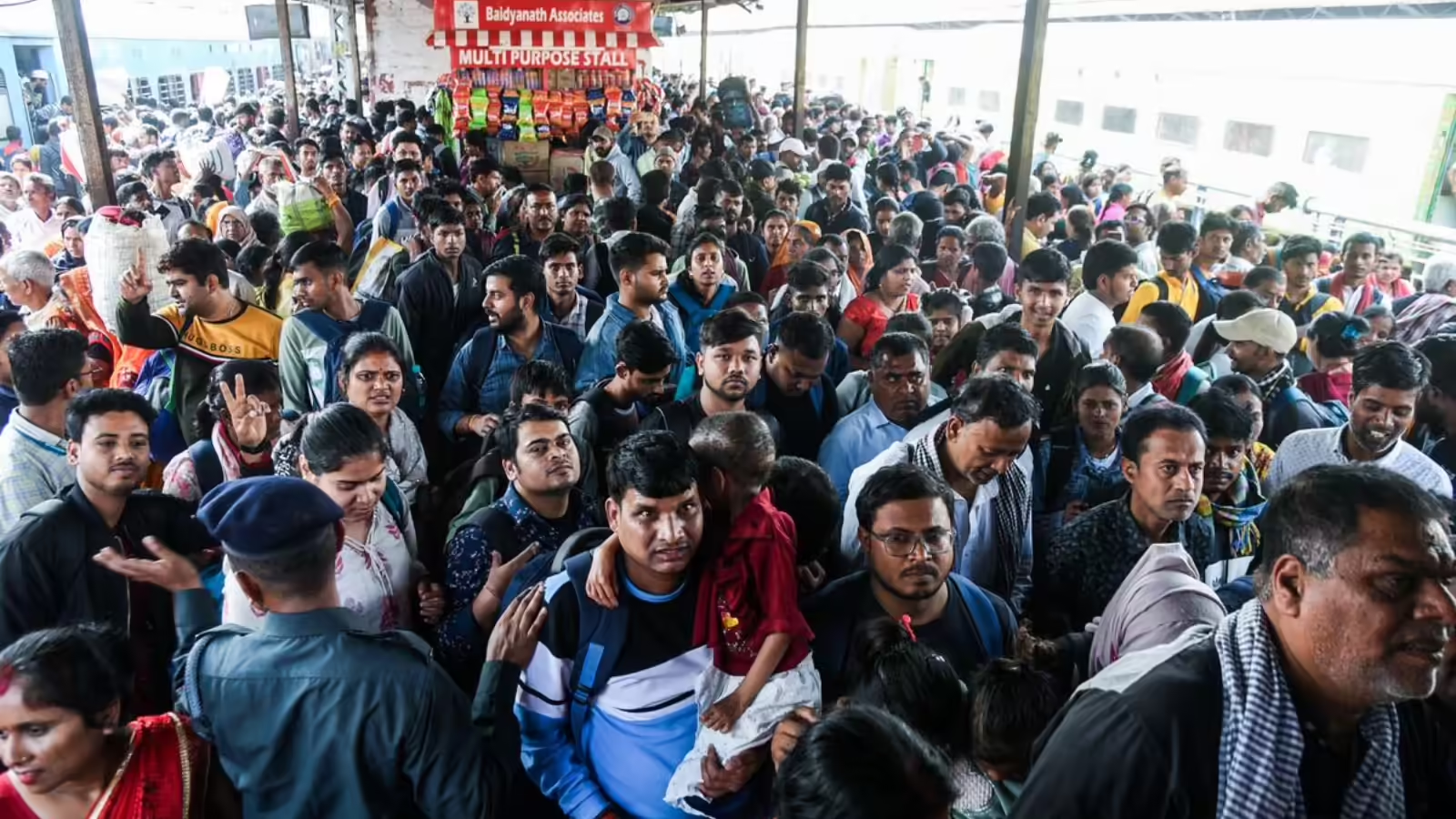
In the viral clip, a major Mumbai railway station platform can be seen packed with commuters, leaving almost no space to stand or walk. As soon as a local train arrives, passengers rush toward the coaches in an attempt to board, creating a chaotic situation.
People of all ages — including elderly commuters and women — are seen struggling to maintain balance amid the surge. Several passengers appear to be hanging near doors or pushing through the crowd, highlighting how dangerous such situations can become within seconds.
What has alarmed viewers the most is the lack of visible crowd control or security presence in the footage. Despite the massive rush, there are no clear signs of systematic entry–exit management on the platform.
Public Reaction: Anger and Concern Flood Social Media
Soon after the video surfaced, social media users reacted strongly. While a few attempted to label it as part of Mumbai’s daily routine, the majority expressed serious concern and frustration.
Many users questioned how such overcrowding is still allowed at busy stations, especially when authorities are well aware of peak travel hours. Some comments highlighted that despite paying taxes and fares, commuters are forced to travel under risky conditions every single day.
Several users also raised a worrying question: Is the system waiting for a major accident before taking corrective action? Others pointed out that while discussions around high-speed and premium rail projects continue, the basic safety of daily local train passengers remains neglected.
Why Does Such Overcrowding Happen?
Experts and regular commuters point to multiple long-standing reasons behind these recurring situations:
Rapid population growth:
Mumbai attracts thousands of people daily for employment and education, placing immense pressure on an already stretched transport system.
Limited increase in train frequency:
While passenger numbers have risen sharply over the years, the number of local train services has not increased at the same pace. Even a short delay due to technical issues can cause massive crowd buildup within minutes.
Outdated station infrastructure:
Many of Mumbai’s older railway stations were designed decades ago, when passenger volumes were far lower. Narrow platforms and limited entry–exit points are simply not equipped to handle today’s rush.
Questions Over Safety and Administration
The viral video has once again raised uncomfortable questions for the railway administration. If such crowd levels are predictable during peak hours, why are additional police personnel or crowd marshals not deployed proactively?
Experts argue that better platform management, staggered boarding systems, improved signage, and controlled entry–exit routes are no longer optional but essential. Without immediate intervention, similar scenes may continue to put lives at risk.
A Wake-Up Call for Authorities
Mumbai’s local trains are often called the city’s lifeline, carrying millions every day. But incidents like this viral video serve as a reminder that capacity expansion, safety planning, and infrastructure upgrades must keep pace with demand.
For commuters, this is not just about inconvenience — it is about daily safety. The viral footage has become a powerful reminder that improving ground-level realities should be as much a priority as ambitious future projects.