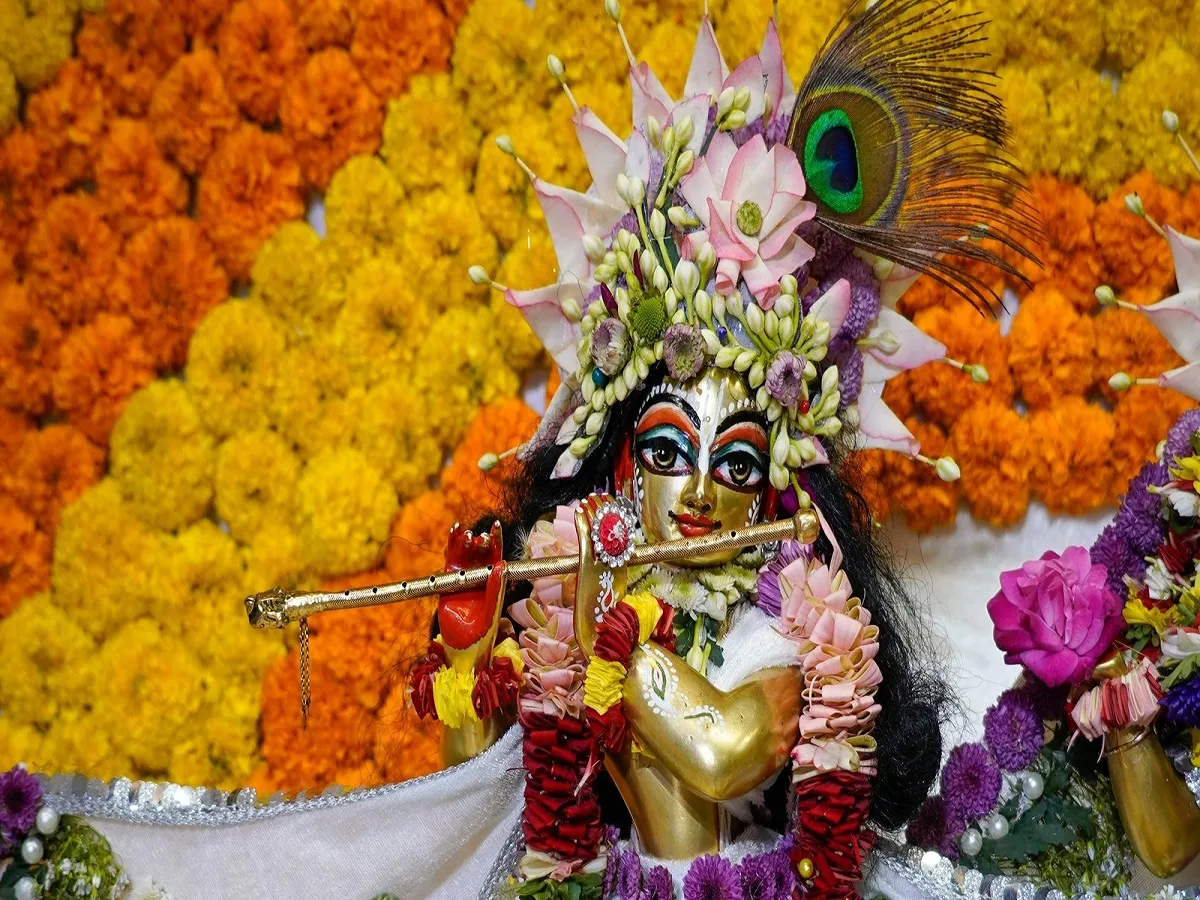
Krishna Janmashtami is one of the most significant Hindu festivals dedicated to Lord Krishna. Devotees celebrate the occasion with great devotion by decorating temples, dressing Bal Gopal in beautiful clothes and ornaments, preparing special offerings, singing devotional songs and performing prayers.
Preparations for Janmashtami often begin well before the festival. Many families decorate a small jhula or swing for Laddu Gopal, prepare his singhasan and arrange a special puja thali. Different regions and families may follow their own customs, but the central theme remains devotion to Lord Krishna and the celebration of his birth.
Traditional religious and astrological beliefs also associate certain objects with Lord Krishna. Devotees often place these items near the idol of Laddu Gopal during Janmashtami puja, believing that doing so creates an auspicious atmosphere and invites Krishna's blessings into the household.
If you are preparing your home temple for Janmashtami 2026, here are three items traditionally considered especially significant for Lord Krishna worship.
1. Place a Flute Near Laddu Gopal
Few things are as closely associated with Lord Krishna as the flute or bansuri. Images and idols of Krishna frequently depict him holding a flute, making it one of the most recognisable symbols connected with him.
According to Hindu traditions, devotees can place a small flute near Laddu Gopal while decorating the temple for Janmashtami. If the idol is designed to hold one, a decorative flute may also be placed in Krishna's hands.
The flute is traditionally associated with sweetness, harmony and Krishna's divine music. Stories about Krishna's life frequently describe the enchanting sound of his flute and its deep connection with Vrindavan, the gopis and his devotees.
For this reason, placing a bansuri close to Laddu Gopal is considered auspicious during Janmashtami celebrations.
Devotees may choose a simple wooden flute or a decorative version depending on the size and style of their home temple. It should be kept respectfully near the deity as part of the Janmashtami decoration.
2. Decorate Krishna's Crown With a Peacock Feather
The peacock feather, or mor pankh, is another iconic symbol associated with Lord Krishna. Traditional depictions of Krishna often show a beautiful peacock feather adorning his crown.
On Janmashtami, devotees commonly decorate Laddu Gopal with colourful clothes, jewellery, a mukut and a peacock feather. Adding a mor pankh to Krishna's crown can therefore be an important part of the traditional shringar.
Some people also keep a peacock feather separately in their home temple.
According to traditional Vastu and astrological beliefs, peacock feathers are associated with positivity and are believed to help protect a home from negative energy. Such claims, however, belong to religious and traditional belief systems and should not be interpreted as scientifically established effects.
For Janmashtami worship, its primary importance comes from its close symbolic association with Lord Krishna.
3. Offer Makhan-Mishri as a Special Bhog
No discussion of traditional Janmashtami offerings would be complete without makhan-mishri.
Lord Krishna's childhood stories are closely associated with his love for butter. His playful attempts to steal butter from pots earned him the affectionate name "Makhan Chor."
Because of this connection, freshly prepared butter mixed with mishri, or sugar crystals, is traditionally offered to Laddu Gopal as bhog on Janmashtami.
Devotees can place the offering in a clean bowl before the deity during the puja. After completing the worship, the bhog can be distributed among family members and other devotees as prasad.
Different households may prepare makhan-mishri in slightly different ways. The important element in religious tradition is offering it with devotion rather than focusing on an elaborate preparation.
How to Prepare Laddu Gopal for Janmashtami Puja
Apart from these three items, families may decorate their home temple according to their customs and available space.
Laddu Gopal is traditionally dressed in fresh clothes and adorned with jewellery and a crown. A decorated swing may be prepared for Bal Gopal, while flowers, diyas and other puja materials can be arranged around the temple.
Devotees may also prepare various sweets and dishes as bhog. Bhajans, Krishna mantras, prayers and readings related to the life of Lord Krishna are commonly included in Janmashtami celebrations.
Since traditions can differ across families and regions, devotees can follow the rituals practised in their household or seek guidance from a knowledgeable priest if they are unsure about specific puja procedures.
Why These Items Hold Special Importance on Janmashtami
The flute, peacock feather and makhan-mishri are not simply decorative elements. Each has a strong connection with the traditional stories and imagery surrounding Lord Krishna.
The bansuri represents Krishna's divine music, the peacock feather is one of the most recognisable parts of his appearance, and makhan-mishri recalls the beloved childhood stories of Bal Krishna.
Keeping these items near Laddu Gopal on Janmashtami is therefore a way for devotees to express their faith and recreate some of the most cherished symbols associated with Krishna.
Ultimately, Janmashtami worship centres on devotion. Whether the celebration is elaborate or simple, devotees believe that offering prayers to Lord Krishna with sincerity and faith is the most meaningful way to observe the festival.