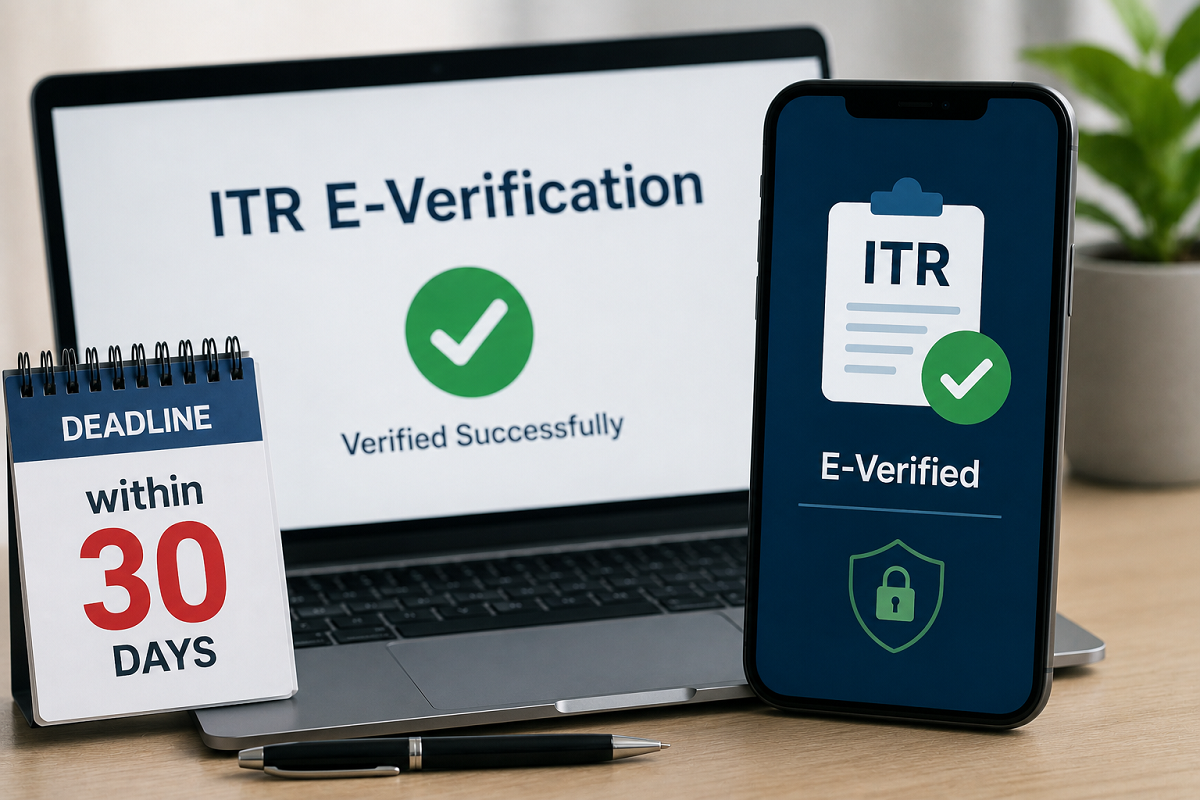
Filing your Income Tax Return is only half the process. Missing the 30-day e-verification deadline could delay refunds and even make your return invalid.
The Income Tax Return (ITR) filing season is currently underway, and taxpayers are rushing to submit their returns before the deadline. However, many taxpayers are unaware that filing the return alone is not enough. Once an ITR is successfully submitted, it must also be electronically verified within the prescribed time limit.
According to the Income Tax Department, every taxpayer is required to complete the e-verification process within 30 days of filing the return. Failing to do so may result in the return being treated as invalid, which can affect tax refunds, return processing and compliance with income tax regulations.
Here's everything taxpayers need to know about the e-verification process and why it is an essential step after filing an ITR.
ITR Filing Deadline for FY 2025-26
For the Financial Year 2025-26, the due date for filing Income Tax Returns is July 31, 2026, for eligible non-audit taxpayers.
Returns can be filed through the Income Tax Department's e-filing portal using PAN credentials. First-time users must register on the portal by providing PAN, Aadhaar and other required details before submitting their return.
Since the e-filing portal often experiences heavy traffic close to the deadline, taxpayers are advised not to wait until the last moment to complete the filing process.
Why E-Verification Is Mandatory
Submitting an Income Tax Return does not complete the filing process. The return becomes valid only after it is verified electronically within the specified period.
If the e-verification is not completed within 30 days, the Income Tax Department may consider the return as not filed. This can delay refund processing and create complications in future tax-related matters.
Taxpayers can also check the status of their ITR verification through the ITR-V section available on the e-filing portal.
How to Complete ITR E-Verification
The e-verification process is simple and can be completed online in a few steps.
Follow these steps:
- Log in to the Income Tax Department's e-filing portal.
- Select the e-Verify Return option.
- Enter your PAN, Assessment Year and Acknowledgement Number if required.
- Go to My Account and choose e-Verify Return.
- A list of pending returns awaiting verification will appear.
- Select the relevant ITR and click e-Verify.
After selecting the return, taxpayers can complete verification using any of the approved methods.
Available Methods for E-Verification
The Income Tax Department provides multiple options for completing the verification process, including:
- Aadhaar OTP
- Electronic Verification Code (EVC)
- Generating a fresh EVC
- Net Banking
- EVC generated through a pre-validated bank account
- EVC linked to a Demat account
- EVC generated through selected bank ATMs
Once verification is successful, a confirmation message along with a Transaction ID is displayed on the screen. A confirmation email is also sent to the taxpayer's registered email address.
Can Someone Else Verify Your ITR?
Yes. If a taxpayer has officially authorized a representative or an authorised signatory, that person can complete the e-verification process on the taxpayer's behalf.
The authorised representative can use any of the approved verification methods, including Aadhaar OTP, Net Banking or EVC-based verification, depending on eligibility.
After successful verification, both the taxpayer and the authorised representative may receive confirmation emails if the verification has been completed through the representative's credentials.
What Happens If You Miss the 30-Day Deadline?
Ignoring the e-verification requirement can have serious consequences.
If the return is not verified within 30 days, the Income Tax Department may treat it as an invalid or unfiled return. As a result, taxpayers may face issues such as:
- Delay in receiving income tax refunds.
- Return not being processed.
- Additional compliance requirements.
- Possible consequences applicable to non-filing under the Income Tax Act.
For this reason, taxpayers should ensure that verification is completed immediately after filing the return instead of waiting until the last date.
Is There Any Relief for Late Verification?
If a taxpayer is unable to complete e-verification within the prescribed time due to genuine reasons, there is still a possibility of obtaining relief.
The taxpayer can submit a Condonation of Delay request to the Income Tax Department, explaining the reason for missing the deadline. If the request is accepted by the department, the delayed verification may be approved and the return can be treated as valid.
However, approval is entirely subject to the Income Tax Department's discretion. Therefore, taxpayers should avoid unnecessary delays and complete the e-verification process within the stipulated 30-day period to ensure smooth processing of their Income Tax Return.