How will the internet reach your home directly from space via satellite without any cables? Learn all about Elon Musk's Starlink technology.
How Starlink Works
In today's world, many tasks are nearly impossible without the internet. It's essential for many of our daily tasks. However, even today, there are many areas in the country, and indeed, the world, where the internet hasn't reached properly because they lack the necessary fiber cables and network.
It may take time for the internet to reach such areas, but Elon Musk's Starlink can easily provide internet access even in these places. This internet connection uses cables laid on the ground and does not require towers; it directly utilizes a satellite network. SpaceX's Starlink operates on satellite technology. Let's explain how Starlink delivers internet to people's homes.
How does Starlink technology work?
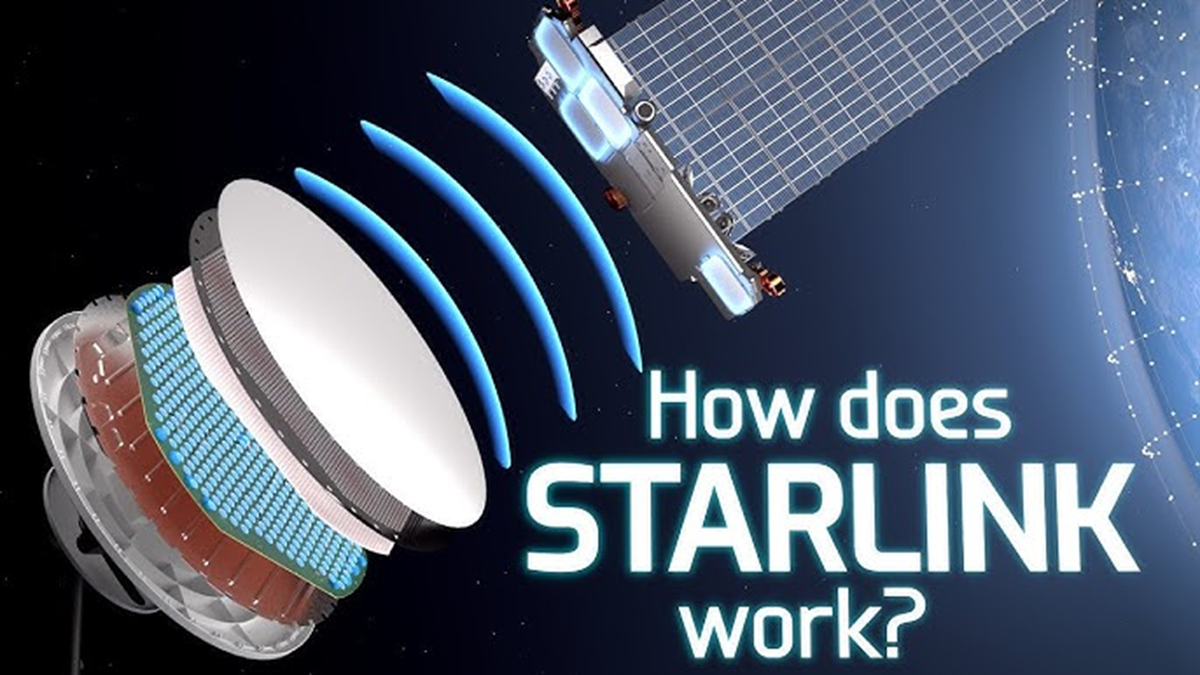
Starlink is SpaceX's satellite internet service. It uses a network of satellites in low Earth orbit. Normal broadband uses optical fiber cables to deliver internet to homes. For mobile internet, phones connect to nearby towers. Starlink's approach is different. A dish antenna is installed at the user's home.
This dish makes contact with the satellite and transmits and receives internet signals. It also comes with a Wi-Fi router, which allows home phones, laptops, and other devices to connect to the internet. The advantage of this is that connectivity is available even in areas where cables and towers are difficult to install.
How does the signal reach from the dish to the satellite and then to the Internet?
When a user opens a website on their phone or laptop, the device's data travels to a Wi-Fi router. The router transmits it to a dish antenna. The dish then sends a signal to a Starlink satellite in the sky. The signal from the satellite then travels to the internet via the network and ground-based infrastructure.
Upon receiving a response from the website or app, the signal travels back through this network to the satellite and then to the user's dish. The dish transmits it to the router, from where the content is displayed on the phone or laptop. This means that in this system, the user's device does not connect directly to the satellite, but the connection is established through the dish and the router. Its performance depends on factors such as the signal reaching the dish and the network infrastructure required for the service.
Why the delay in launching Starlink service in India?
Safety requirements and the spectrum allocation process are major factors hindering Starlink's launch of commercial services in India. Satellite internet companies must adhere to the country's regulations, including legal monitoring and interception if necessary. It is also mandatory to monitor the social traffic of users in India and adhere to established gateway and network systems within the country.
Additionally, the spectrum allocation process remains to be completed. All of this is necessary to ensure internet services operate in India in accordance with Indian regulations and security requirements. Therefore, the launch of Starlink's service hinges on the completion of this process. Elon Musk's company will need to secure all necessary approvals and arrangements before launching in India.