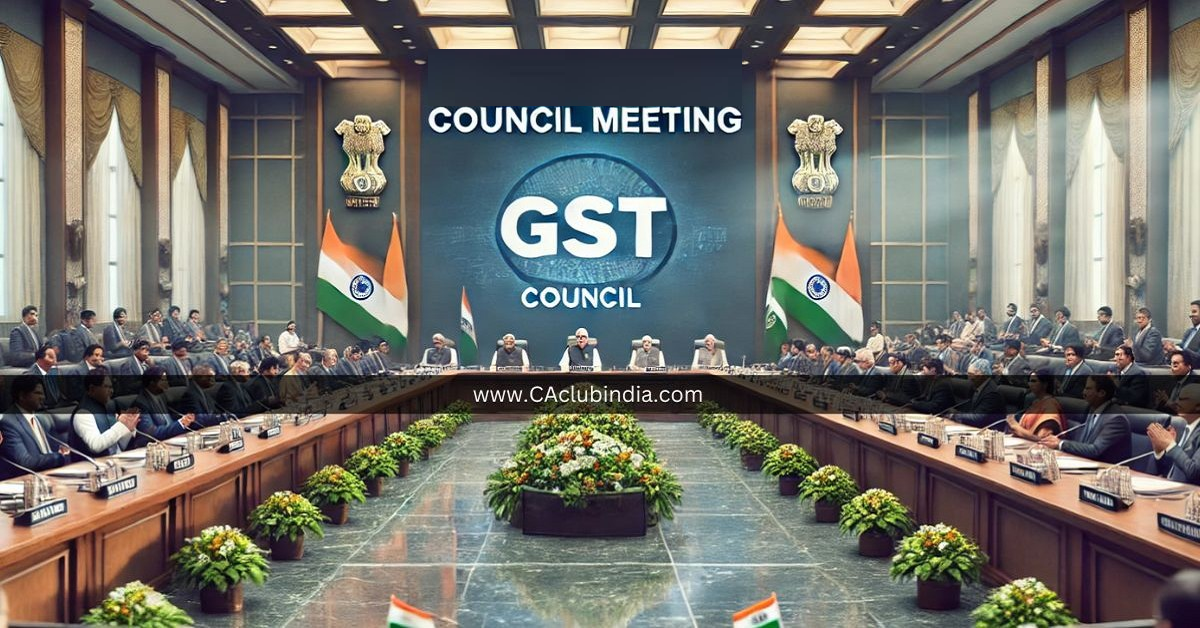
The GST Council will meet on October 7th, where major changes to regulations related to businesses and taxpayers are likely to be discussed. This could include revoking the power of arrest from GST officers.
GST Council meeting
The 57th meeting of the GST Council is scheduled for Wednesday, October 7, 2026, and is expected to discuss major changes to tax-related rules and procedures. These include simplifying tax procedures for businesses, allowing small e-commerce sellers to use platform warehouses for GST registration, protecting input tax credits for genuine buyers, and reducing legal disputes related to undervaluation.
These proposals, introduced as part of the GST 2.0 process reforms, aim to simplify registration and return filing and reduce disputes between taxpayers and the tax department. Let's explore some of the key reforms on the meeting's agenda:
GST officials' arrest powers withdrawn!
Under the new proposal, Section 69 of the CGST Act is being amended. Until now, officers could directly arrest individuals with the approval of the Commissioner, but now, even in cases of serious fraud, arrests cannot be made without a court order. This means that under the new rules, prior court approval may be made mandatory for the arrest of a businessman.
Raising the bar for criminal action
Currently, the minimum threshold for initiating a criminal case under GST is 1 crore rupees. This means that in some serious GST-related cases, if the amount exceeds 1 crore rupees, criminal action can be initiated. In its meeting on Wednesday, the Law Committee is considering raising this tax evasion threshold for initiating criminal action directly to 5 crore rupees. However, even this new threshold offers no relief in cases of fraudulent invoices (simply creating bills without supplying goods).
No arrests in routine tax disputes
Businesses and tax officials may have differing opinions regarding the tax rate, category, or input tax credit (ITC) for goods or services, as tax laws are so complex that the same rule can be interpreted differently by two different people. Unless deliberate tax evasion or fraud is proven, a case will not be considered a mistake. Such simple tax disputes will be exempt from the criminal category.
Big relief for small e-commerce sellers
Another proposal aims to simplify GST registration for small businesses selling goods online. Under this proposal, businesses can use the warehouses of e-commerce platforms like Amazon and Flipkart as their registered address. This rule will completely eliminate the maintenance costs of renting separate shops or offices, paying hefty security deposits, and hiring staff in each state where they supply their goods.
Protection of ITC of genuine buyers
Many times, shopkeepers lose their input tax credit (ITC) after purchasing goods, even after paying the full amount out of their own pocket, because the onward supplier fails to pay the tax to the government. Under the new rule, if the buyer has a valid invoice, their ITC will be protected, and the government will recover it directly from the defaulting supplier.
Ban on notices of less than Rs 10,000
To reduce litigation in courts and departments, it is also being considered to waive notices for cases involving tax demands of less than ₹10,000, as such cases represent approximately 20% of total tax disputes. An amnesty scheme could also be discussed to waive late fees and make penalties more affordable for small taxpayers.