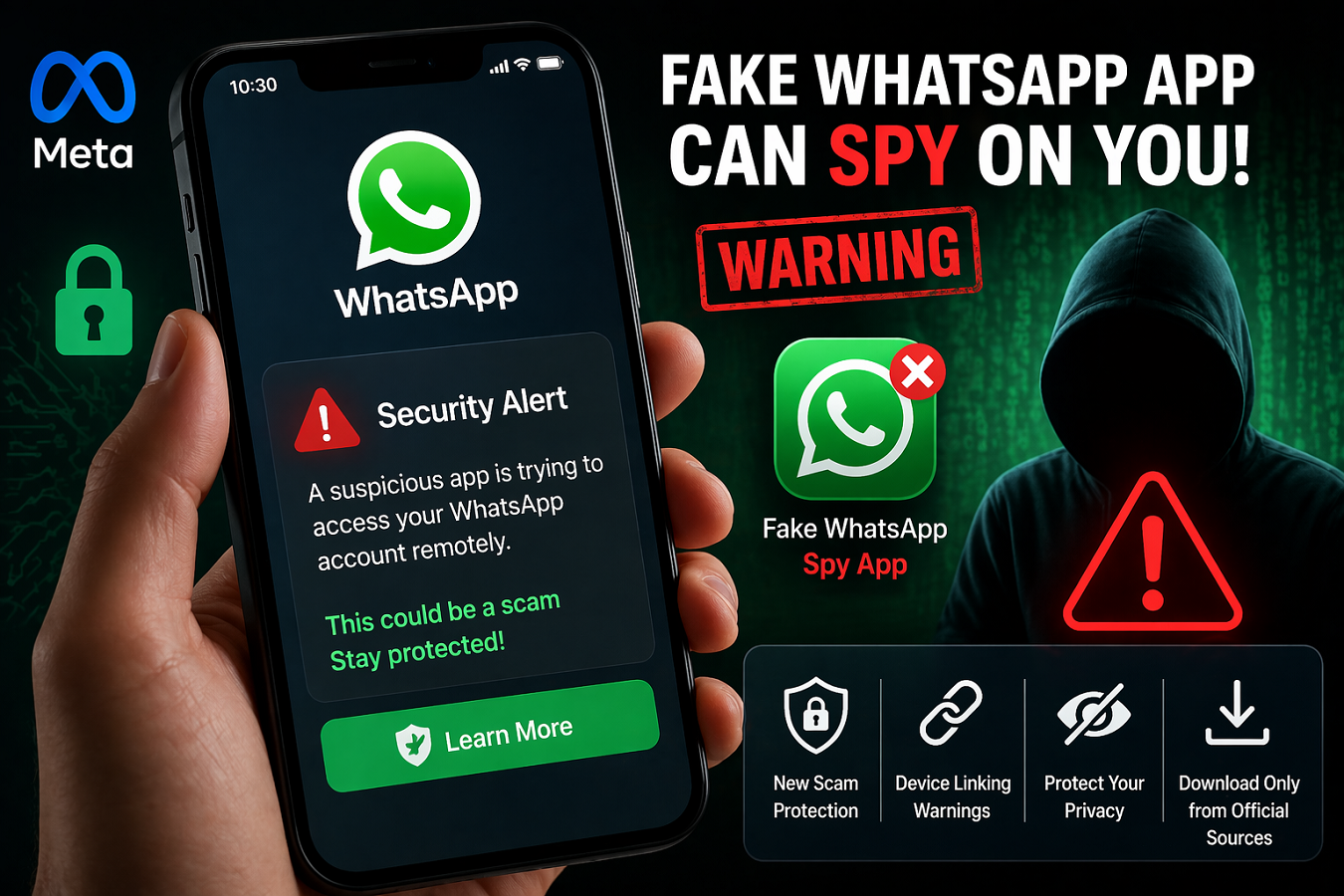
In a significant move to strengthen user safety, Meta has issued a fresh warning about fake versions of WhatsApp being used for surveillance and fraud. Alongside this alert, the company has introduced new security features designed to protect users from scams, unauthorized access, and potential spying attempts.
Fake WhatsApp Apps Used for Surveillance
According to recent reports, a malicious application posing as WhatsApp was used to target around 200 users across Android and iPhone devices. The incidents were reportedly concentrated in Italy, where unsuspecting users were tricked into downloading the fake app through deceptive tactics.
These counterfeit apps were designed to look like the official WhatsApp application but lacked essential security protections such as end-to-end encryption. Once installed, they could potentially grant hackers remote access to a user’s device, exposing chats, personal data, and sensitive information.
Meta clarified that the issue did not stem from any vulnerability in the official WhatsApp platform. Instead, attackers relied on social engineering methods—manipulating users into installing the app under the guise of legitimacy.
New Security Features Introduced
To counter such threats, Meta has rolled out enhanced scam protection tools within WhatsApp. One of the key additions is a device-linking alert system, which notifies users if someone attempts to access their account remotely or link their account to an unknown device.
This feature aims to give users more control and visibility over their account activity, helping them quickly identify and block suspicious access attempts.
Company Response and Legal Action
Meta has stated that it has already taken steps to disconnect affected accounts and limit the spread of the malicious app. Reports suggest that the fake application was linked to a firm associated with surveillance tools, and the company is preparing to take formal action against those responsible.
By issuing warnings and pursuing legal measures, Meta is signaling a stricter stance against entities involved in unauthorized data collection and digital spying.
Official WhatsApp Remains Secure
Despite the alarming nature of the incident, Meta has reassured users that the official WhatsApp app remains secure. Its infrastructure, including encryption systems, has not been compromised.
The platform continues to use strong end-to-end encryption, ensuring that messages are protected and accessible only to the sender and recipient. This means that even WhatsApp itself cannot read user conversations.
How Users Can Stay Safe
Meta is urging users to follow a few basic safety practices to avoid falling victim to such scams:
- Download apps only from trusted sources like official app stores
- Avoid clicking on suspicious links or installing unknown APK files
- Regularly check linked devices in WhatsApp settings
- Enable security notifications and account alerts
- Keep apps updated to the latest version
These simple steps can significantly reduce the risk of unauthorized access and protect personal data.
Rising Threat of Mobile Spyware
The incident highlights a growing concern in the digital world—mobile spyware disguised as legitimate applications. As messaging apps become central to daily communication, they also become attractive targets for cybercriminals.
Fake apps not only compromise privacy but can also lead to identity theft, financial fraud, and data misuse. This makes awareness and cautious behavior more important than ever.
What This Means for Users
Meta’s latest warning serves as a reminder that even widely trusted platforms can be exploited indirectly through deceptive tactics. While the core systems of WhatsApp remain intact, user vigilance plays a crucial role in maintaining security.
With new protective features and proactive alerts, WhatsApp is taking steps to stay ahead of emerging threats. However, users must also remain cautious and informed to ensure their digital safety.
As cyber threats continue to evolve, staying alert and relying on official sources will be key to protecting your personal information in the connected world.