From Digital Claims to Faster Settlements, Here's What Has Changed Under the New Employees' Pension Scheme
India's pension framework for organised sector employees has entered a new phase with the implementation of the Employees' Pension Scheme (EPS) 2026, which officially replaces the nearly three-decade-old EPS 1995. Effective from June 29, 2026, the revised scheme has been introduced in line with the Code on Social Security, 2020, bringing a stronger focus on digital services, faster claim processing, and greater administrative transparency.
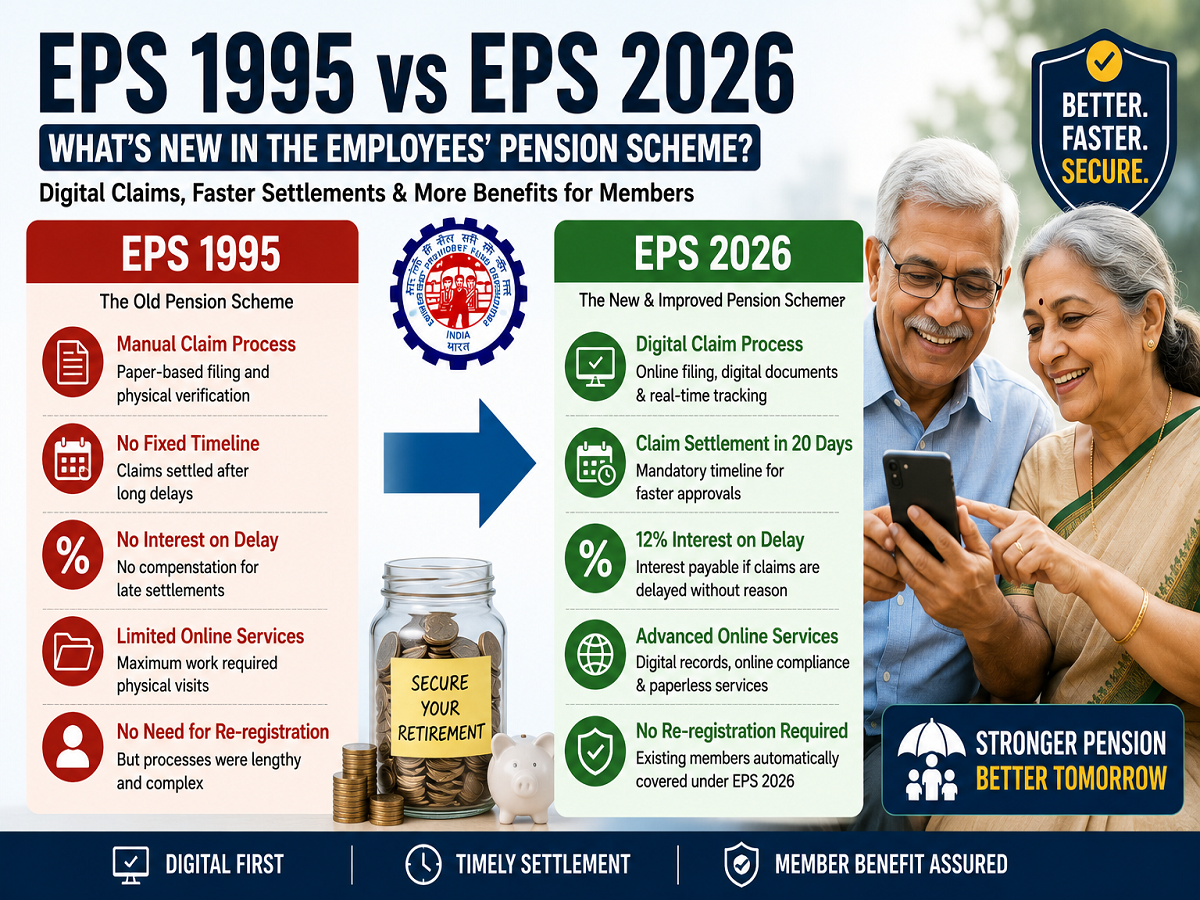
While the new framework modernises the way pension services are delivered, it does not reduce or alter the pension rights already earned by existing members. Employees currently enrolled under EPS 1995 will automatically become members of EPS 2026 without having to complete any fresh registration or documentation.
Here's a detailed look at the major changes introduced under the new pension scheme.
Existing Members Will Be Shifted Automatically
One of the biggest reliefs for employees is that no fresh enrolment is required.
All existing subscribers covered under EPS 1995 will automatically continue under EPS 2026, ensuring uninterrupted pension benefits. Their service history, pension eligibility, accumulated records, and previously earned rights will remain fully protected.
The transition is administrative in nature and does not require employees to submit new applications.
Coverage Now Aligned With the Social Security Code
Under the earlier framework, EPS 1995 applied to establishments covered under the Employees' Provident Funds and Miscellaneous Provisions Act, 1952.
With the introduction of EPS 2026, the scheme has been brought under the provisions of the Code on Social Security, 2020. This alignment is expected to support a more integrated and digitally managed social security ecosystem for employees and employers.
The change primarily affects the legal framework while keeping member benefits intact.
Employer and Government Contributions Continue
The revised pension scheme does not change the existing contribution structure.
Employers will continue contributing 8.33% of pensionable salary towards the Employees' Pension Scheme. For eligible employees covered under the higher pension provisions introduced after September 1, 2014, contributions may continue at the enhanced rate of up to 9.49%, wherever applicable under existing rules.
The Central Government's contribution also remains unchanged at 1.16%, ensuring continuity in pension funding.
Pension Benefits Remain Unchanged
Despite the administrative overhaul, the pension benefits available under the scheme continue without modification.
Members will remain eligible for various pension benefits, including:
- Superannuation pension
- Early retirement pension
- Disability pension
- Widow pension
- Family pension and survivor benefits
The minimum monthly pension of ₹1,000 also remains unchanged under the revised scheme.
This means the reforms focus on improving service delivery rather than changing benefit amounts.
Fully Digital Claim Process Introduced
One of the most significant improvements under EPS 2026 is the complete digitisation of pension-related services.
The revised framework introduces:
- Online pension claim filing
- Electronic record management
- Digital compliance systems
- Online claim tracking
- Paperless document processing
These improvements are expected to reduce paperwork, minimise visits to EPFO offices, and provide greater transparency throughout the claim process.
Pension Claims Targeted for Settlement Within 20 Days
EPS 2026 establishes a defined timeline for claim processing.
Under the new rules, pension claims are expected to be settled within 20 days, making the process significantly faster than before.
The introduction of digital workflows is expected to improve efficiency while reducing delays that previously affected many applicants.
12% Annual Interest for Unjustified Delays
For the first time, the revised pension scheme introduces financial accountability for unnecessary delays.
If a pension claim is not settled within the prescribed timeline without a valid reason, the claimant may become eligible to receive 12% annual interest on the delayed amount.
This provision did not exist under EPS 1995 and is intended to encourage timely processing while safeguarding members' interests.
Previous Rights and Service Records Remain Protected
The government has clarified that the implementation of EPS 2026 does not affect previously earned benefits.
Employees' past service records, accumulated pension benefits, eligibility criteria, and existing entitlements will continue to be recognised under the new framework.
The reforms are designed to modernise administration rather than alter pension rights.
What EPS 2026 Means for Employees
The transition from EPS 1995 to EPS 2026 marks a significant step toward a more technology-driven pension system. Although contribution rates and pension benefits remain largely unchanged, the introduction of digital claim processing, online services, faster settlement timelines, and compensation for unjustified delays represents a major improvement in how pension services will be delivered.
For millions of EPF subscribers across India, the revised framework aims to make pension administration simpler, more transparent, and more responsive, while ensuring that existing rights and retirement benefits remain fully protected.