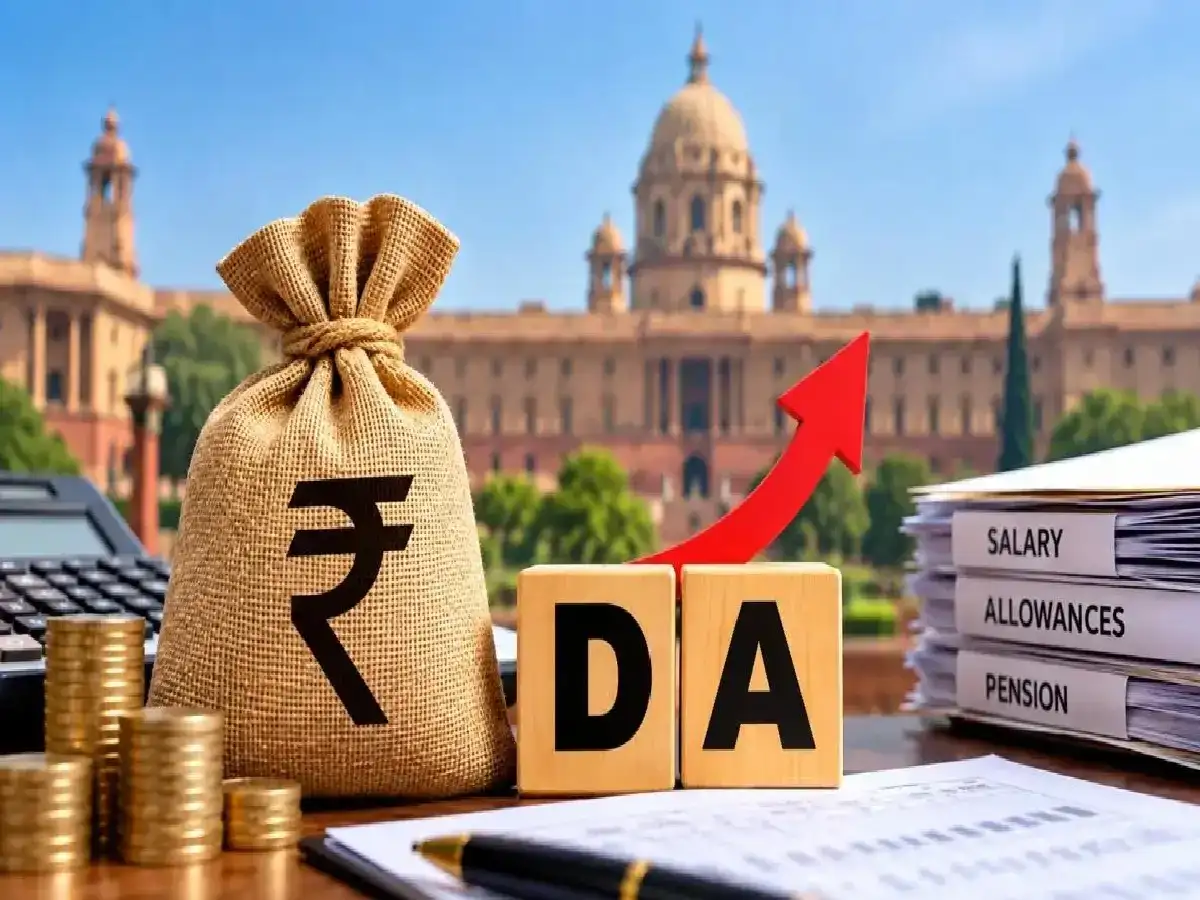
Government employees and pensioners have received a series of Dearness Allowance (DA) and Dearness Relief (DR) updates during 2026, with several state governments announcing increases or clearing pending instalments. The changes are particularly important for employees because DA is designed to help offset the impact of inflation on salaries, while DR provides similar relief to pensioners.
At the central level, the Dearness Allowance rate currently stands at 60% of basic pay following a two-percentage-point increase effective from January 1, 2026. Central government employees and pensioners are now awaiting the next revision due from July 1, 2026. The exact rate of that instalment had not yet been officially announced as of late September.
Meanwhile, states have been taking their own decisions on DA and DR. Since state governments follow their respective pay structures and financial policies, the applicable rate can differ significantly from one state to another.
Punjab Raises DA From 42% to 50%
Punjab is among the states to announce a substantial DA revision in September 2026.
The Punjab government has formally notified an 8-percentage-point increase, taking DA for state government employees from 42% to 50%. The revised rate is effective from September 1, 2026. A corresponding revision has also been notified for pensioners and family pensioners.
The decision is expected to benefit around eight lakh employees and pensioners in the state. However, employee organisations have continued to raise questions about the treatment of older pending arrears.
Andhra Pradesh Clears Two DA Revisions
Government employees in Andhra Pradesh have also received important DA updates.
One revision raised the applicable DA rate to 40.04%, while another government order dated September 11, 2026 increased it further to 41.86% of basic pay, effective retrospectively from January 1, 2025.
The latest 1.82-percentage-point increase is to be paid in cash with the September 2026 salary, payable in October. The related arrears are scheduled to be handled separately under the conditions applicable to different categories of employees.
This means employees should check the relevant government order and their salary statement rather than simply adding the two announced percentages to determine their individual benefit.
Several States Move DA and DR to 60%
A number of states have followed the 2026 pattern of increasing DA or DR by two percentage points, broadly moving eligible employees or pensioners from 58% to 60% under the applicable pay structure.
The changes reported during the year include revisions involving states such as Assam, Arunachal Pradesh, Odisha, Uttar Pradesh, Tamil Nadu and Sikkim, although effective dates and beneficiary categories can differ from state to state.
Employees should therefore verify their state's finance department notification before calculating their revised salary or arrears.
Official treasury records also show DA/DR revisions from 58% to 60% for eligible pensioner categories in states including Jharkhand and Uttarakhand with effect from January 1, 2026, illustrating how revisions are being implemented separately by individual governments.
West Bengal Announces a Much Bigger DA Increase
West Bengal has announced one of the most notable DA revisions of 2026.
The state government's 2026-27 Budget increased DA by 20 percentage points, taking the rate from 18% to 38%, effective from October 1, 2026.
The state has also arranged for October salaries, pensions and family pensions to be released early on October 15, ahead of Durga Puja, along with the revised DA and DR benefits.
The 20% figure here is an increase of 20 percentage points, not a 20% increase calculated on the previous DA amount. That distinction can make a significant difference when estimating the benefit.
Maharashtra Employees Also Get an Arrears Update
Maharashtra has separately been dealing with pending DA and DR liabilities relating to employees and pensioners covered by different pay commission structures.
These arrear-related decisions should not be confused with a fresh across-the-board DA hike. The applicable amount depends on the pay commission, employee or pensioner category, and the period for which dues are pending.
For example, official treasury records show orders concerning Maharashtra DR arrears for pensioners and family pensioners for the period from November 1, 2025 to January 31, 2026.
Employees should check the specific government resolution applicable to their pay structure before assuming that a reported arrear allocation will result in the same payment for everyone.
How Does a DA Increase Affect Salary?
Dearness Allowance is generally calculated as a percentage of an employee's basic pay.
For example, suppose an employee has a basic salary of ₹40,000 and the applicable DA rate rises from 58% to 60%.
At 58%, the DA would be ₹23,200 per month. At 60%, it would increase to ₹24,000. That represents an additional ₹800 per month before considering the impact of applicable deductions or other salary components.
The actual increase will therefore depend on the employee's basic pay and the rules followed by the relevant government.
For pensioners, Dearness Relief works on a similar principle, although the final benefit depends on the applicable pension and government rules.
Central Employees Still Await the July 2026 DA Decision
Central government employees received a two-percentage-point increase effective from January 1, 2026, taking their DA to 60%.
Attention has now shifted to the instalment due from July 1, 2026. Employee representatives have sought an early announcement, but the final rate depends on the applicable CPI-IW data and an official government decision. As of late September, a specific July 2026 increase had not been officially announced.
Employees should therefore be cautious about social-media posts claiming a particular percentage before the government issues its formal order.
What About the 8th Pay Commission?
The DA developments are also attracting attention because work related to the 8th Central Pay Commission is underway.
The commission was constituted in November 2025 and is expected to examine central government pay, allowances and related matters.
However, routine DA revisions and the eventual recommendations of a pay commission are separate processes. Employees should not assume that a state DA increase automatically indicates what the 8th Pay Commission will recommend for central government employees.
For now, government employees and pensioners should check the latest notification issued by their respective state finance department or the central government before calculating revised pay, pension or arrears. With different states announcing changes at different times and under different pay structures, the exact benefit can vary considerably from one employee to another.