
NEWS
“Congress Used Appeasement to Gain Power, But What Did Muslims Really Get?”: PM Modi Slams Waqf Law of 2013, Highlights New Reform
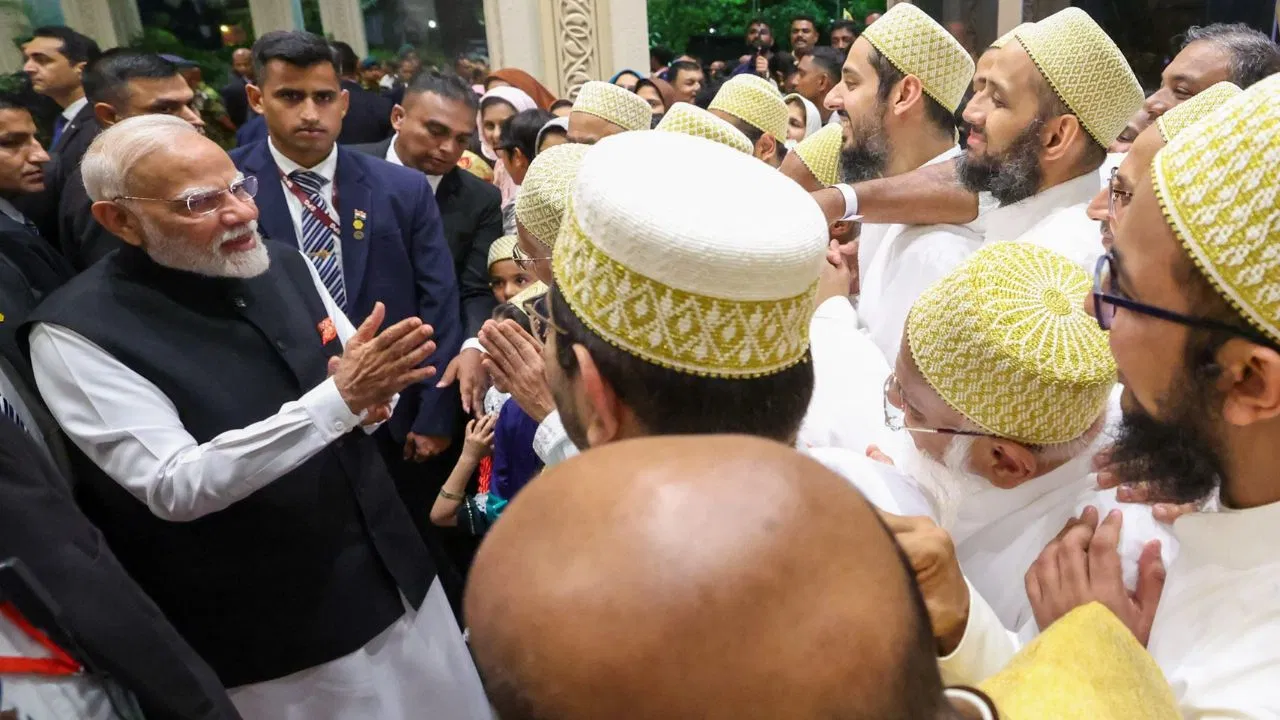
In a powerful address during a televised news channel program on Tuesday, Prime Minister Narendra Modi launched a scathing attack on the Congress party, accusing it of leveraging appeasement politics for power while leaving the common Muslim community behind. He also praised the newly enacted Waqf law, calling it a step forward in social justice and transparency.
“Appeasement Gave Power to Congress, But Neglect to the Common Muslim”
PM Modi raised questions about the real beneficiaries of decades-long appeasement politics:
“Congress gained power through the politics of appeasement. Some fundamentalist leaders gained power and wealth, but what did the ordinary Muslim receive? What did the poor Pasmanda Muslim get? Only neglect, illiteracy, and unemployment. Muslim women were left with injustice like the Shah Bano case.”
“New Waqf Law Ensures Justice for All”
Calling the new Waqf law a landmark move, Modi said:
“I congratulate Parliament for passing an outstanding law that truly serves the Muslim community. It will uphold the sacred purpose of Waqf, while protecting the rights of poor and Pasmanda Muslims, women, and children.”
He stressed that the previous amendment to the Waqf Act in 2013 created an illusion of superiority over the Constitution and enabled land mafia and fundamentalist groups to misuse Waqf properties.
“Old Law Encouraged Land Disputes Across Religions”
PM Modi pointed out how the 2013 Waqf amendment stirred conflict beyond the Muslim community:
- In Kerala, Waqf claims extended to Christian lands
- In Haryana, there were disputes with Gurudwara lands
- In Karnataka, claims were made on farmland
“The old law limited the justice guaranteed by our Constitution. It fueled illegal encroachments and communal tension.”
Democracy Beyond Parliament: Over 1 Crore Public Suggestions
Highlighting the democratic process behind the new legislation, Modi revealed:
- The bill was debated for 16 hours in both Houses of Parliament
- The Joint Parliamentary Committee held 38 meetings
- The discussions lasted 128 hours in total
- Over 1 crore suggestions were received from citizens
“This shows that democracy isn’t confined to Parliament—it thrives on active public participation.”
“Youth Suffered Decades of Fear and Terrorism”
PM Modi also addressed the transformation in Jammu and Kashmir, saying:
“For decades, India suffered from an atmosphere of fear and terror. The youth of Jammu and Kashmir were consumed by bombs, guns, and stone-pelting. Yet the governments of the past failed to act. Today, with strong political will, that has changed. Youth are now part of the development journey.”


