NEWS
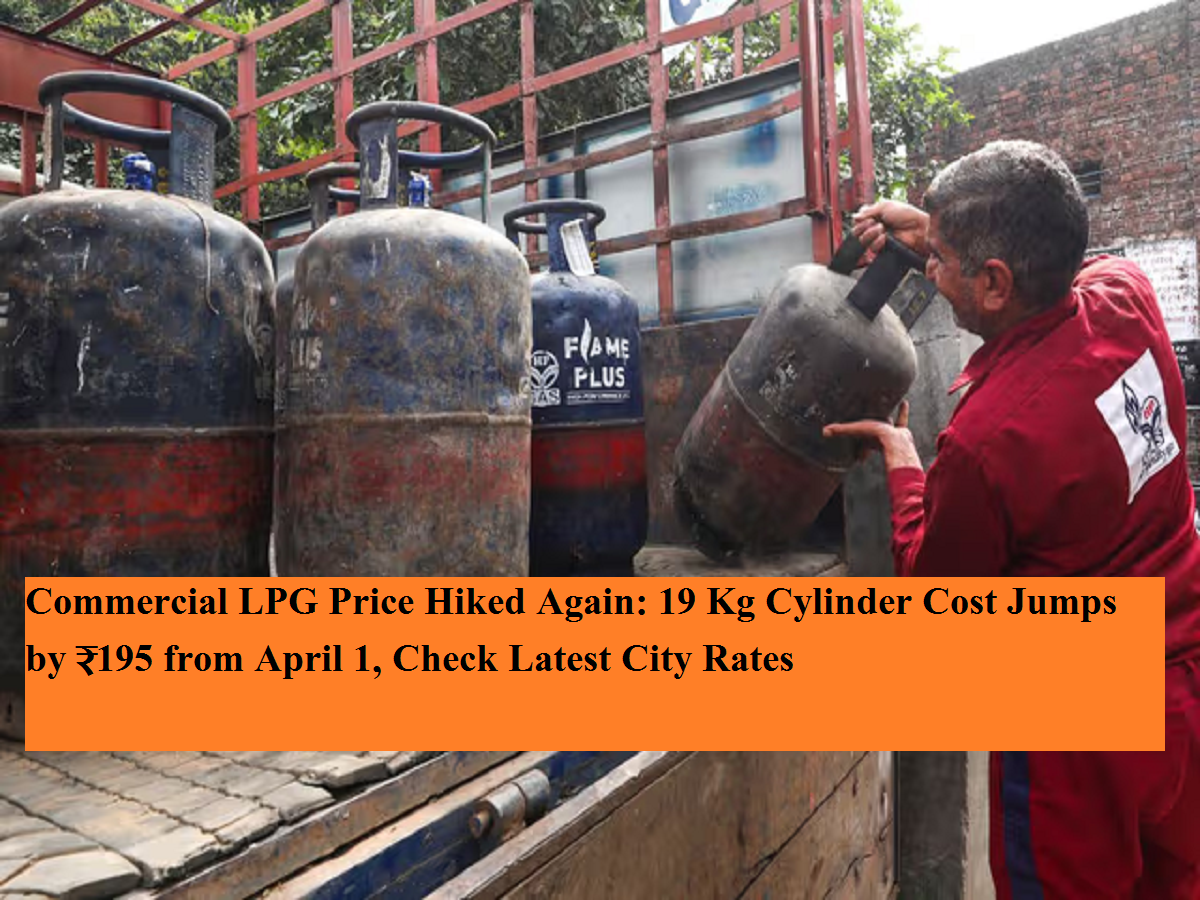
Commercial LPG Price Hiked Again: 19 Kg Cylinder Cost Jumps by ₹195 from April 1, Check Latest City Rates
India has started the new financial year with a fresh inflationary push as commercial LPG cylinder prices have been increased significantly from April 1, 2026. The latest revision has raised concerns among businesses, especially those in the hospitality and food service sectors, as operational costs are expected to rise further.
According to the latest update, the central government has increased the price of commercial LPG cylinders, while keeping domestic cooking gas rates unchanged. This move is likely aimed at balancing consumer relief with rising global energy pressures.
Commercial LPG Prices Rise Sharply Across Major Cities
The price hike primarily impacts the 19 kg commercial LPG cylinders, which are widely used by hotels, restaurants, street vendors, and small businesses. In the national capital, Delhi, the price has been increased by ₹195.50 per cylinder, taking the new rate to ₹2,078.50. Previously, the same cylinder was priced at ₹1,884.50.
Kolkata has witnessed an even steeper rise of ₹218, pushing the cost up to ₹2,208 per cylinder. The increase varies slightly across cities, but the upward trend remains consistent nationwide.
Latest Commercial LPG Cylinder Prices in Key Cities
Here are the revised rates of 19 kg commercial LPG cylinders in major cities:
- Delhi: ₹2,078.50
- Kolkata: ₹2,208
- Mumbai: ₹2,031
- Chennai: ₹2,246.50
- Patna: ₹2,365
- Jaipur: ₹2,031
- Ranchi: ₹2,120
These revised prices are effective from April 1, 2026.
5 Kg Free Trade LPG Cylinder Also Becomes Costlier
Not just the standard commercial cylinders, but smaller LPG cylinders have also seen a price revision. The 5 kg Free Trade LPG (FTL) cylinder now costs ₹549 per refill, marking an increase of ₹51. This segment is commonly used by small vendors and for portable commercial needs, making the hike impactful for micro-businesses as well.
Back-to-Back Price Increases in Recent Months
This is not the first hike in recent weeks. On March 1, 2026, commercial LPG cylinder prices were already increased by ₹114.50. Additionally, domestic LPG cylinder prices were raised by ₹60 on March 7.
With the latest revision, the cumulative increase in commercial LPG cylinder prices has now reached nearly ₹300 within a short span. Such frequent hikes are putting pressure on businesses that rely heavily on gas for daily operations.
Why Are LPG Prices Increasing?
The ongoing geopolitical tensions in the Middle East are being seen as a major factor behind rising LPG prices. Since India imports a significant portion of its LPG requirements, fluctuations in global crude oil prices and supply chain disruptions directly affect domestic rates.
The current conflict situation has impacted global energy markets, leading to increased input costs for oil marketing companies. These costs are eventually passed on to commercial users.
Impact on Businesses and Consumers
While domestic consumers have been spared for now, the increase in commercial LPG prices is expected to indirectly impact the general public. Restaurants, eateries, and food vendors may increase prices to offset higher fuel costs, which could lead to more expensive meals.
Small businesses and vendors are likely to feel the pinch the most, as fuel expenses form a major part of their operational costs. Industry experts believe that if global tensions persist, further revisions cannot be ruled out in the coming months.
What Lies Ahead?
The decision to keep domestic LPG prices unchanged provides temporary relief to households. However, continued volatility in international markets may influence future pricing decisions.
For now, businesses must brace for higher expenses, while consumers may gradually feel the impact through increased service costs.
Conclusion
The latest ₹195 hike in commercial LPG cylinder prices marks another step in the ongoing trend of rising fuel costs in India. With global factors playing a key role, both businesses and consumers should prepare for possible ripple effects in the economy in the coming weeks.