NEWS
AC Technology: How different is an inverter AC from a normal AC? Learn about power consumption and the role of the compressor.
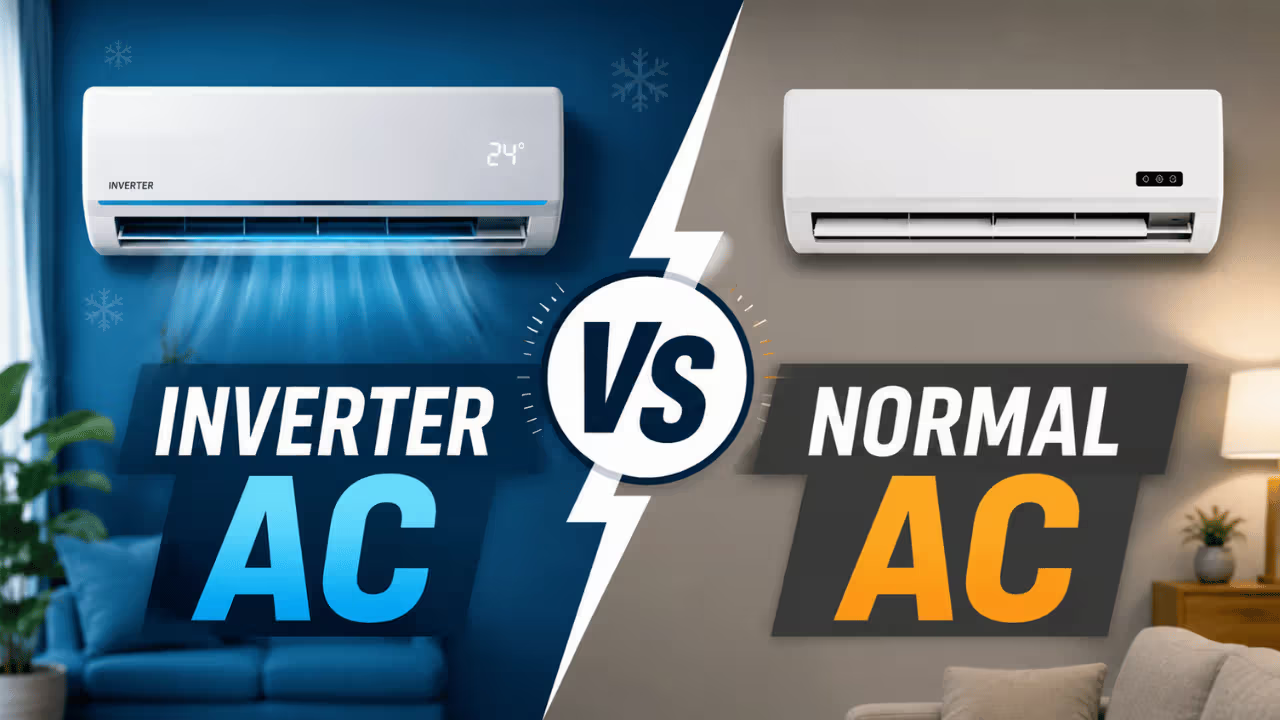
Normal AC vs Inverter AC: Thinking of buying a new AC but confused between a normal and an inverter AC? Which one is better for you? Find out which one has the better technology.
Normal AC or Inverter AC
Normal AC vs Inverter AC: Just like the need for a room heater is felt with the arrival of cold weather in winter, similarly, with the arrival of the summer season, AC is needed in homes. People often go to showrooms to buy a new AC or check it on online sites. The biggest confusion during this is whether to buy a normal or non-inverter AC or an inverter AC. Shopkeepers often list the advantages of inverter AC but the common customer wonders whether this is an AC running on the home's power backup inverter.
Well, that's not the case at all. Inverter refers to smart technology that controls power fluctuations and compressor speed. In today's world of rising electricity prices and scorching heat, choosing the right AC has a direct impact on your pocket. Both types of ACs work to cool the room, but their operation, power consumption, and built-in compressors differ significantly. Let's explain the differences between the two and which option will be best for your home.
Compressor technology and cooling method
The heart of any AC is its compressor, and this is where the difference between the two begins. The compressor of a normal, or non-inverter, AC operates at a fixed speed. Think of it this way: it will either run at full power or shut off completely. Suppose you've set the AC temperature to 24 degrees. A normal AC will run at full speed, cooling the room to 24 degrees, and then its compressor will cut off.
When the room temperature rises slightly, the compressor will suddenly start up again at full power. Inverter ACs, on the other hand, have a variable-speed compressor, which works like a car's accelerator. When the room cools down, the compressor doesn't shut down; instead, it slows down completely. This keeps the room temperature consistent, and you never experience extreme cold or sudden humidity.
Who has what impact on the electricity bill?
Now let's talk about electricity bills. When a normal AC's compressor repeatedly shuts down and restarts, it consumes a lot of power each time it starts. Just like repeatedly raising a heavy vehicle from a standstill into first gear requires a lot of petrol. In contrast, an inverter AC's compressor continues to run at a slower speed once it reaches speed, rather than shutting down, so electricity consumption doesn't suddenly increase.
Experts say an inverter AC saves approximately 30 to 40 percent of electricity compared to a standard AC. If you use your AC for 6 to 8 hours or more daily, an inverter AC can save thousands of rupees on your monthly electricity bill. However, if your usage is limited to just 1 or 2 hours a day, a standard AC will do.
Complete life and maintenance details
Not only do they save energy, but they also differ significantly in terms of comfort and longevity. Because the compressor of an inverter AC is less stressed by the constant switching on and off, its lifespan is longer than that of a standard AC. However, purchasing an inverter AC is usually around 4,000 to 6,000 rupees more expensive than a standard AC.
Additionally, it features advanced PCB circuit boards, which can be a bit expensive to repair. However, its ability to operate without a voltage stabilizer and the savings on your monthly electricity bill make it a good option today.