
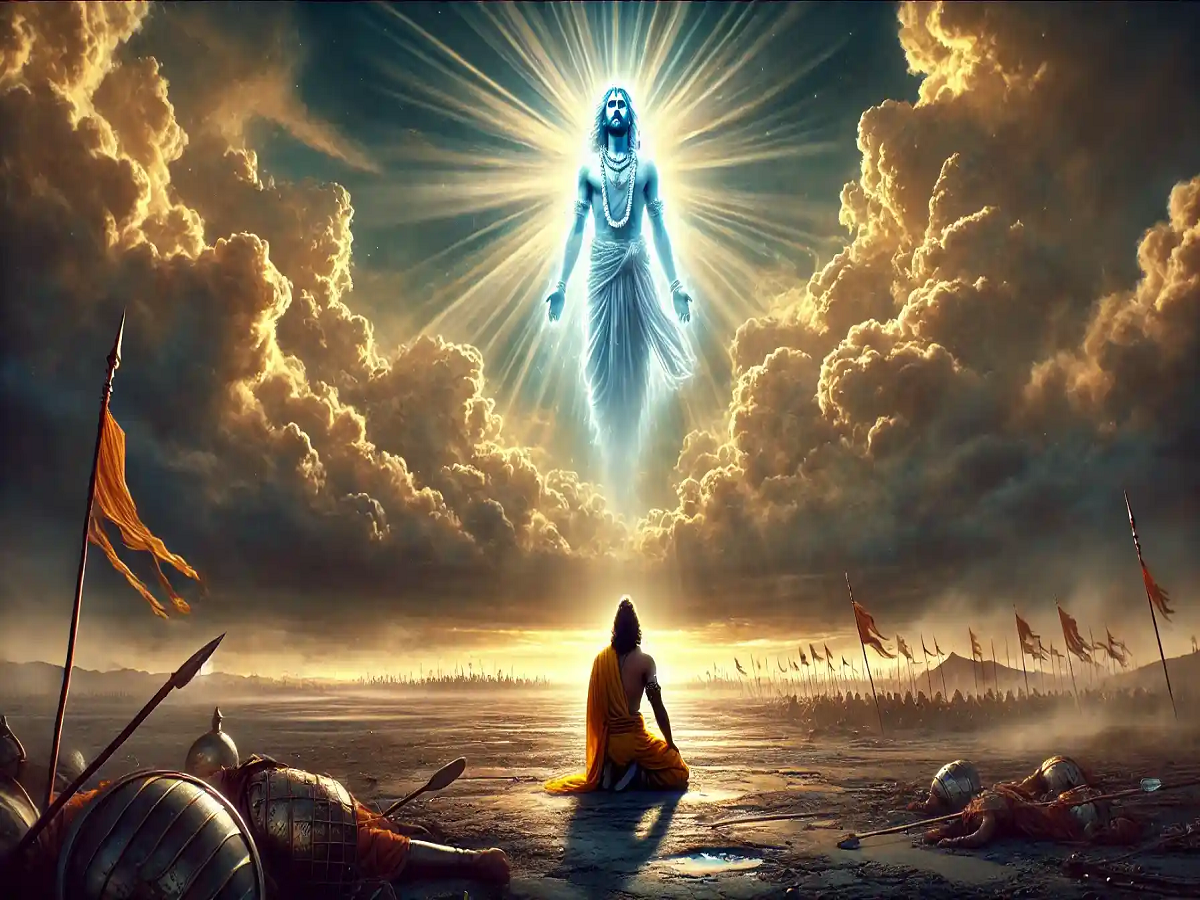
Death is not just an event at the end of life—it is a profound truth woven into the fabric of existence. Every being that takes birth must one day depart. While modern society often avoids conversations around death, ancient Indian wisdom encourages us to face it with awareness rather than fear. The Bhagavad Gita, one of the most revered spiritual texts, offers timeless insights into the meaning of death, the immortality of the soul, and how understanding this reality can transform the way we live.
Rather than promoting sorrow or detachment from life, the Gita teaches clarity, purpose, and inner strength. Let us explore the key lessons it shares about death and immortality.
1. Recognising Death as an Unavoidable Truth
In the second chapter of the Gita, Lord Krishna explains that death is not an exception but a certainty. Just as birth is inevitable, so is death. Lamenting over what cannot be avoided only deepens suffering.
This teaching does not encourage emotional numbness. Instead, it invites acceptance. Everything in this world—relationships, possessions, emotions, and even civilizations—is temporary. Understanding this impermanence helps us live more responsibly and consciously.
Every passing moment moves us closer to our final transition. Therefore, the Gita urges us not to waste life on distractions or excessive indulgence. Instead, it emphasizes focused action, responsibility, and discipline. When we commit ourselves fully to our duties without obsession over outcomes, we align with the path of Karma Yoga, which gradually frees us from the repeated cycle of birth and death.
2. The Soul Is Eternal and Beyond Destruction
One of the most powerful teachings of the Bhagavad Gita is the concept of the Atman, or the soul. Krishna explains that while the physical body undergoes change, decay, and death, the soul remains untouched.
The Atman is not born, nor does it perish. It does not age, weaken, or disappear when the body dies. This eternal essence is unchanging, timeless, and divine. Death, therefore, is not the end of existence but merely the shedding of a physical form.
When this truth is deeply understood, fear begins to dissolve. We realize that death affects only the body—not our true identity. Our connection to the Supreme reality continues beyond physical life, untouched by time or circumstance.
3. Understanding Oneness Leads to Liberation
The Gita further teaches that the soul cannot be harmed by any external force. Weapons, fire, water, and wind have no power over it. This realization leads to a deeper understanding of oneness—the idea that the same divine essence exists within all beings.
When this wisdom is internalized, it gives rise to equality, compassion, and humility. No individual is superior or inferior; all life is animated by the same eternal truth. This awareness naturally reduces ego, hatred, and attachment.
To experience this unity, the Gita recommends a balanced spiritual approach—selfless action, constant reflection on the divine presence, meditation, and mastery over the senses. Through this disciplined way of living, the mind becomes purified, and the soul moves closer to Moksha, or liberation.
Living With Awareness of Death
Understanding death is not about preparing to leave life, but about learning how to live fully. When we accept death, recognize the immortality of the soul, and act without attachment, life becomes meaningful and peaceful.
The Bhagavad Gita reminds us that by living with awareness, purpose, and inner balance, we can walk fearlessly toward the ultimate truth—freedom from suffering and union with the eternal.