
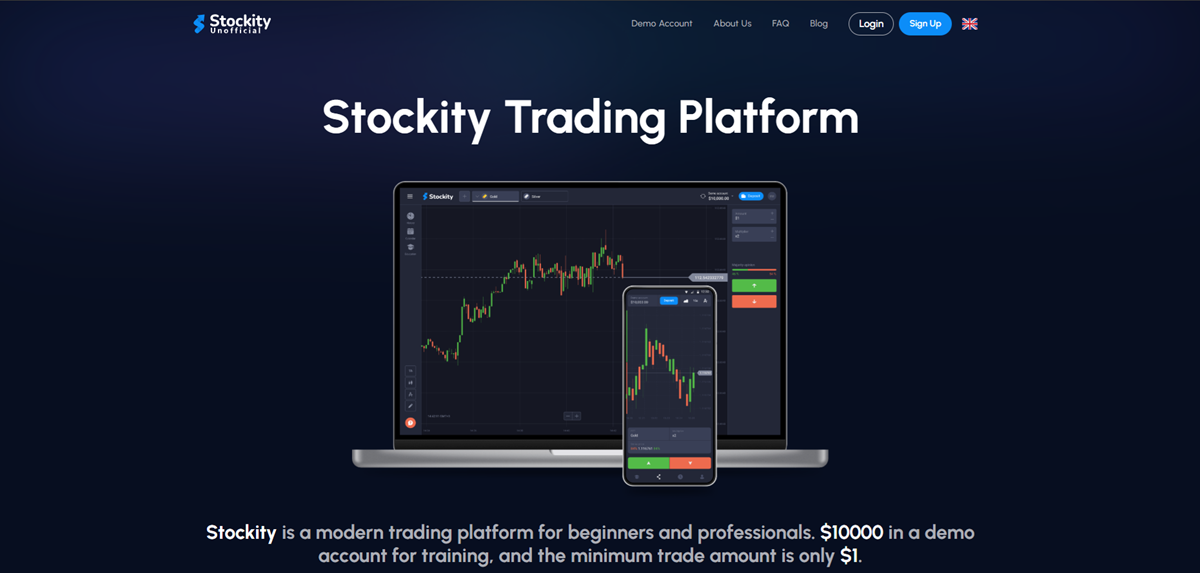
What is Stockity and how does this online trading platform work? Learn the essentials about a demo account, trading risks, security, and platform testing.
Digital trading platform Stockity
Digital finance has grown rapidly in India. After mobile banking, UPI, and investment apps, a growing number of people are now seeking information about online trading platforms. The easy availability of smartphones and the internet has made access to market-related information much easier than before.
Platforms like Stockity also stand out in this digital trading space. It's an online trading platform where users can monitor market movements, view price charts, and explore available trading features.
However, any online trading platform should not be used solely based on its easy interface or mobile availability. Trading involves financial risk, and it is equally important for Indian users to understand the nature, rules, and regulatory status of the platform.
What is Stockity?
Stockity is a digital trading platform accessible via the web and mobile devices. Its interface is designed to provide a single, seamless view of essential market information.
Online trading platforms typically offer users access to price charts, various available assets, trade-related settings, and a record of their activity.
Compared to professional trading terminals of yesteryear, many online platforms today emphasize a more visual and simple interface. This means that even new users can quickly understand the functions of the various sections of the platform.
It's important to understand here—a simple interface doesn't mean trading is easy or risk-free. Market prices can fluctuate due to a variety of factors, and the outcome of any trade is never predetermined.
What is the benefit of Demo Account?
A demo account can be a useful feature for new users learning online trading. Stockity also offers a demo mode, where virtual funds can be used to understand the platform's functionality. The biggest advantage is that users can learn how charts work, where different options are located on the trading screen, and how market prices move without risking real money.
A demo account can be used to understand strategies and become familiar with the platform. However, a major difference between demo trading and real-money trading is the psychological pressure involved. Losses with virtual money do not result in actual financial losses, whereas when trading with personal money, emotions such as fear, greed, and hasty judgment can influence decisions. Therefore, good results on a demo account should not be considered a guarantee of future profits.
Why is mobile trading becoming more popular?
A large number of people in India primarily use smartphones to access the internet. This is why almost every digital service, from banking to investing, is becoming mobile-first. Platforms like Stockity can also be used from a variety of devices. The advantage of mobile access is that users can monitor market activity from anywhere. However, this convenience can also sometimes be a disadvantage.
Having a phone at hand can lead some users to make hasty trades without adequate analysis. Trading doesn't require being present in the market at all times. In many situations, not taking a trade is a viable option. Therefore, the convenience of mobile phones should not be used as a reason for making hasty decisions.
Can the market be predicted by looking at charts?
Price charts play a crucial role in any trading platform. Charts show how an asset's price has changed over time. Traders use these charts to understand trends and market activity. However, it's impossible to predict future results based on past price movements.
Economic news, corporate information, global events, interest rates, investor sentiment, and many other factors can influence market direction. Therefore, technical analysis or any single indicator should not be viewed as a technique that will always deliver accurate results. Trading is about probability, not certainty.
Why is Risk Management important for new traders?
In trading, it's not enough to simply consider the potential profit. It's essential to first assess the potential loss. This is the foundation of risk management. A common mistake new traders make is rapidly increasing their trading amount after the first few successful trades. Conversely, some people try to quickly recoup losses by investing more money in the next trade after a loss. This is often referred to as "chasing losses," and it can exponentially increase risk.
The amount used for trading should be such that a loss would not impact daily financial needs. It's not wise to use funds for high-risk activities, such as household expenses, EMIs, children's education, medical needs, or emergency funds.
How to check any platform?
The mere availability of a website or app online does not automatically prove that it is authorized or regulated for a particular financial activity in India. Therefore, whether it's Stockity or any other foreign or domestic online platform, users should verify their own information before depositing money. It's important to understand the company running the platform, where it's registered, its terms and conditions, how withdrawal rules work, and what regulations apply to the financial product in India.
Information available from official sources like SEBI and RBI can be useful for Indian investors. Relying solely on social media posts, Telegram groups, YouTube videos, or influencer recommendations is not a good idea, especially when it comes to foreign trading platforms.
Beware of claims like Guaranteed Profit
There is no standard trading model in the financial markets that guarantees a profit on every trade. Therefore, if an individual or online group makes claims such as "100 percent guaranteed return," "daily fixed income," or "loss impossible," such claims should be viewed with suspicion. In many cases, fraudsters contact users using the name of a genuine trading platform or a well-known brand.
They may offer trading signals, account management, or guaranteed returns via WhatsApp or Telegram. Users should never share their passwords, OTPs, or other sensitive information.
It's better to learn first, then decide.
The primary goal of anyone starting online trading shouldn't be to make money quickly, but rather to understand how the markets and platforms actually work. Understanding basics like market trends, volatility, risk-reward, position sizing, and emotional discipline can be helpful. A demo account can be a great starting point. Keeping a record of your trades is also a good practice. This helps you understand whether a decision was made based on analysis or simply on emotion.
What is important to understand about Stockity?
Platforms like Stockity demonstrate that technology has made trading and accessing market data much easier than ever before. Viewing charts via web and mobile, understanding platforms in demo mode, and exploring market movements is now much simpler. But easy technology doesn't eliminate market risk.
Before using any online trading platform, it's important to familiarize yourself with its terms and conditions, the financial products it offers, the potential risks, and the regulations applicable in India.
Most importantly, trading should not be considered a guaranteed source of income. Digital platforms are merely tools. The final outcome depends on the user's understanding of the market, their risk tolerance, and their responsible decision-making.