
LIFESTYLE
Smart Vision Glasses: What if you can't see? Now you can recognize the world by 'hearing,' AIIMS has provided special smart glasses.
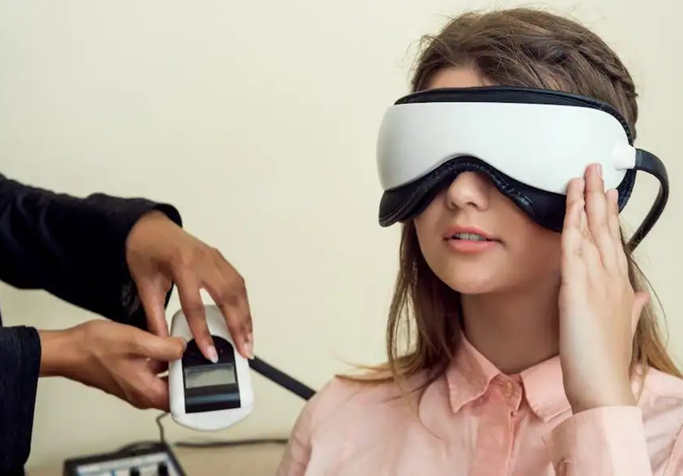
Text-to-Speech Technology: Today is the era of AI, and things that were previously impossible have become possible. Let us tell you about one such achievement.

How do AI glasses help the blind?
How AI Glasses Help Blind People In India: Taking a significant step towards mainstreaming people with disabilities through technology, AIIMS on Monday distributed AI-based smart vision glasses to 53 blind and severely visually impaired people. These special glasses convert surrounding visuals into sound, allowing users to "hear" the world around them. The device is capable of reading printed text, identifying objects, recognizing faces, indicating obstacles on the path, and assisting in navigation. Let us tell you how it works and how it will benefit the visually impaired.
Makes everyday life easier
Equipped with real-time object recognition and text-to-speech technology, these glasses simplify everyday tasks, whether reading medicine labels, recognizing notes, or finding your way to a door. The beneficiaries included 28 children from a blind school in Amar Colony and 25 adults associated with the Dr. RP Centre, AIIMS. These included patients from the Low Vision and Rehabilitation Clinic who have irreparable vision loss.
What do the experts say?
This device, costing approximately ₹35,000, was provided free of charge under 'Project Drishti,' an initiative supported by Rotary, Vision Aid, and other partners. According to Dr. Praveen Vashisht of the Community Ophthalmology Department at AIIMS, this initiative is being implemented as a structured research project. Beneficiaries will be followed up on monthly for a year to assess changes in their quality of life. The study results will be documented and published to facilitate further research.
A big problem in India
Nearly 10 million people in India suffer from blindness or severe visual impairment. While many cases are treatable, some patients suffer from conditions such as advanced glaucoma, diabetic retinopathy, age-related macular degeneration, or optic nerve damage, for which surgery is not a solution. In such cases, rehabilitation becomes the path to independent living. Developed by SHG Technologies, these smart glasses are now in their fifth version. While earlier models were relatively bulky and button-based, the new edition is lightweight, sensor-based, and equipped with more advanced AI capabilities. Experts believe that such AI-based assistive technology is not a substitute for clinical treatment, but a strong complement to it, empowering visually impaired individuals to become self-reliant.