NEWS
Singapore's 19th-century cooling system technology is back in the news to combat the rising heat. Learn all the details.

Singapore Cooling Technology: Such systems have been installed in at least eight different districts in Singapore.
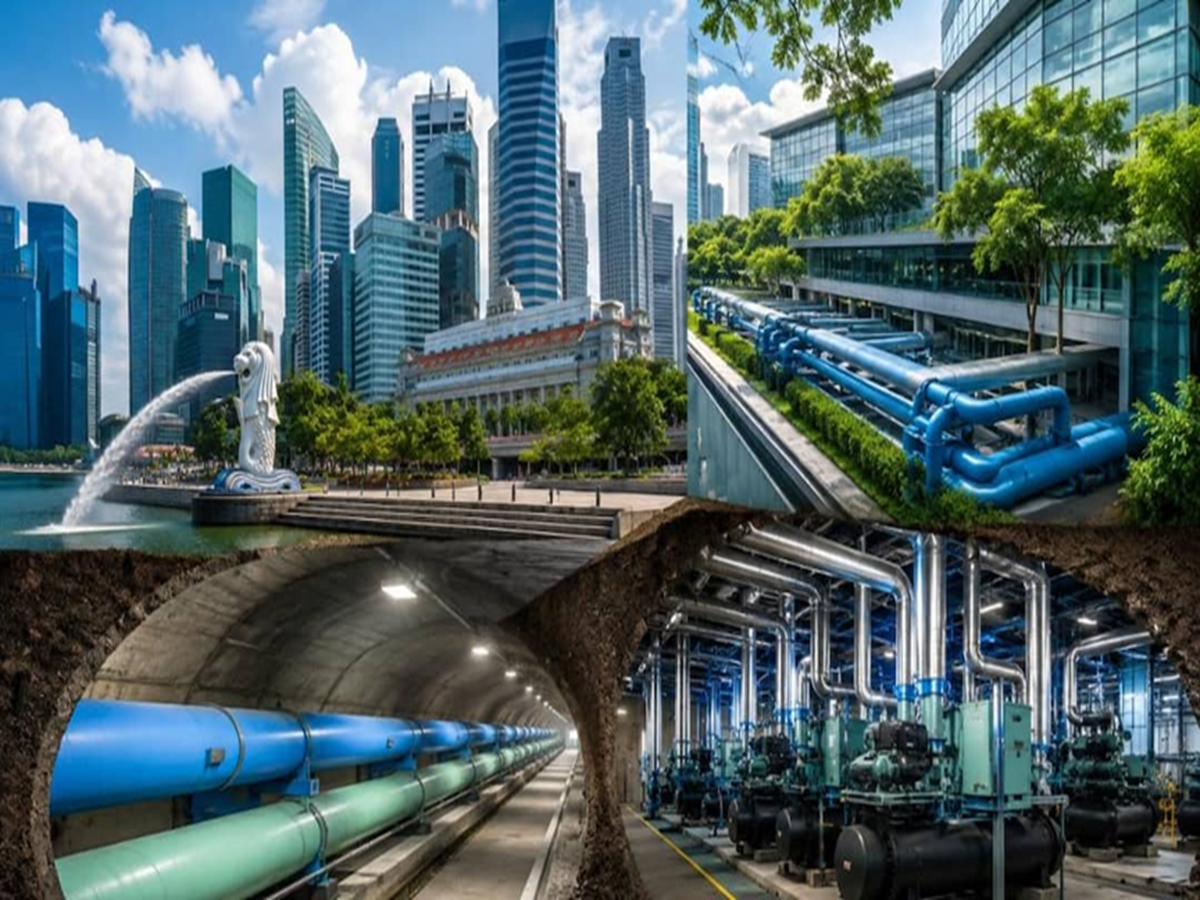
Singapore Cooling Technology: Beneath Punggol, in Singapore's northeastern region, a unique underground system is operating, delivering chilled water to buildings through a nearly 5-kilometer pipeline network. This system, based on outdated technology rather than modern technology, is rapidly spreading in Singapore, which is projected to be the world's second-richest country by GDP per capita in 2025.
What is a District Cooling System?
This technique is called district cooling. Water is cooled at a central plant and then circulated through underground pipes to surrounding buildings. This water helps cool the air inside the buildings and then returns to the plant to be cooled again.
Its biggest advantage is that it consumes less electricity than conventional air conditioning, which is very important for a country like Singapore that imports most of its energy.
Rapidly expanding network and large projects
In Singapore , such systems have been installed in at least eight different districts. Marina Bay's district cooling plant, which opened in 2006, is considered the world's largest underground cooling network. Many new buildings are now being connected to this system, and new projects are underway.
Large companies like ENGIE are also active in this area. Two of their systems in Punggol are cooling approximately 8,000 government housing units.
Rising heat and power consumption a big challenge
Temperatures in Singapore are rising at almost twice the global average, driving demand for air conditioning. While air conditioning provides relief, it also increases electricity consumption and carbon emissions, creating a kind of "energy cycle."
In view of this problem, the government has advised to keep the temperature in government buildings and houses around 25 degrees Celsius.
Big investments and climate strategy
The Singapore government has committed nearly 100 billion Singapore dollars (approximately US$77 billion) in long-term investments to combat climate change. District cooling is considered part of this comprehensive plan.
This technique dates back to the 19th century.
Interestingly, this technology's roots go back to the 19th century. The earliest district cooling system, using an ammonia or brine solution, was built in Denver, USA, in 1889.
According to energy experts, this technology can reduce power consumption by 30% to 50%, although it involves a huge cost to develop it.
The challenges are no less.
This system also has its limitations: it requires significant amounts of water to operate, which could lead to water scarcity and competition with large consumers like data centers.