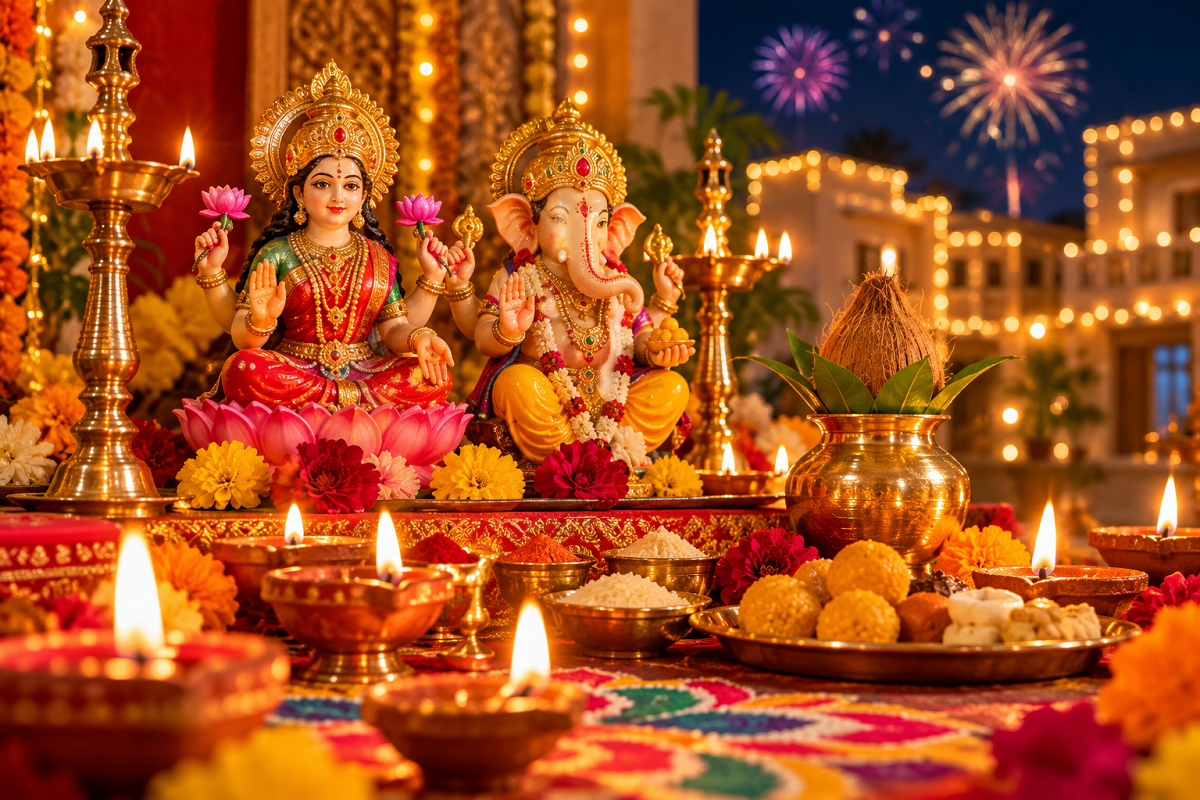
Lighting a diya is an important part of worship in many Hindu households. From morning prayers to evening aarti, devotees traditionally light a lamp as a symbol of purity, knowledge, hope and spiritual illumination. The flame is also traditionally associated with the removal of darkness and ignorance.
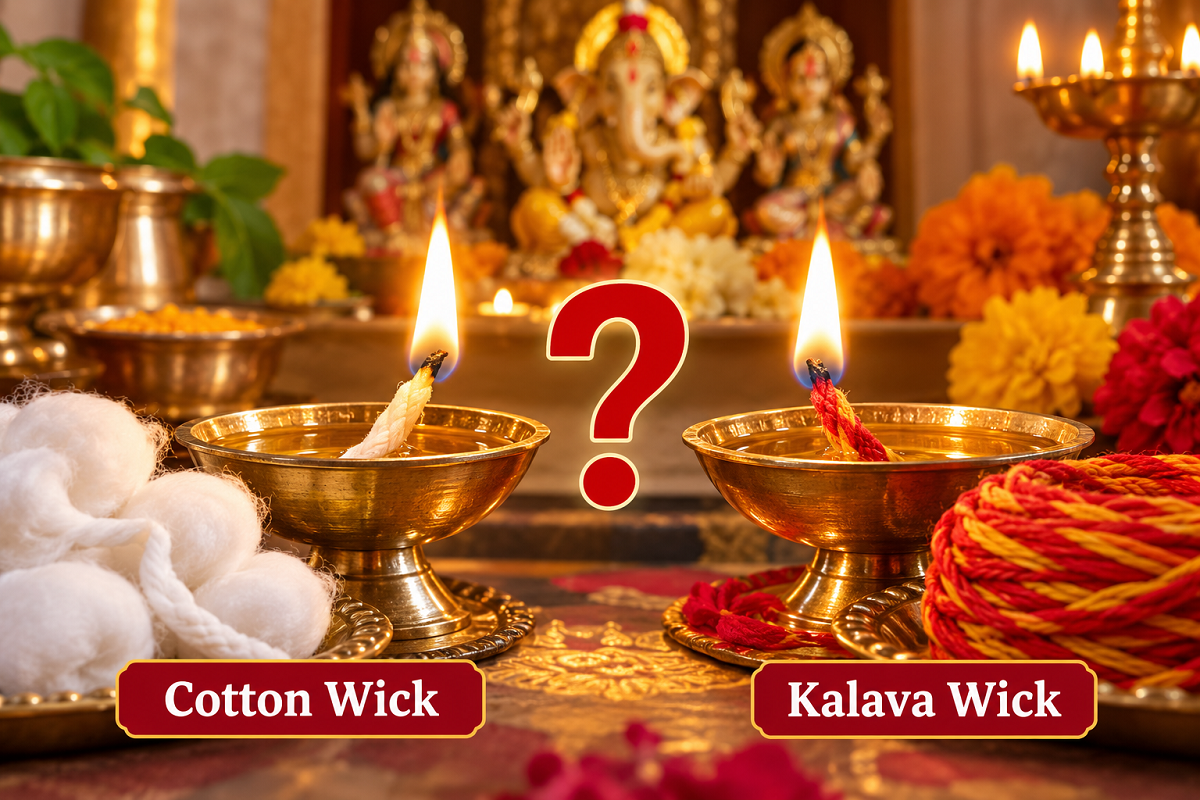
While people often pay attention to whether a diya should be filled with ghee or oil, another common question concerns the wick. Should you use an ordinary cotton wick, or can a wick made from Kalava or Mauli be used instead?
Both are found in different religious practices, but their traditional uses may vary. Cotton wicks are commonly preferred for everyday worship, while Kalava or Mauli wicks are associated with certain special rituals and family traditions. Here's what religious traditions generally say about the two.
Why Are Cotton Wicks Commonly Used in Puja?
Cotton wicks are among the most widely used options for lighting diyas in Hindu homes and temples. Cotton is traditionally considered clean and suitable for religious purposes, which is why these wicks are commonly used during daily prayers, aarti and other routine forms of worship.
A cotton wick can generally be placed in either a ghee diya or an oil lamp, depending on the family's religious practice and the type of puja being performed.
In traditional belief, the steady light of a diya represents knowledge, positivity and the victory of light over darkness. For this reason, lighting a clean cotton wick during morning or evening prayers remains a common practice in many households.
For people looking for a simple wick for everyday puja, cotton is generally considered the most practical and widely accepted choice.
What Is a Kalava or Mauli Wick?
Kalava, also known as Mauli, is the sacred thread commonly used during Hindu religious ceremonies. Priests often tie this thread around the wrist during pujas, religious ceremonies and other auspicious occasions.
In some religious and regional traditions, Kalava may also be used to prepare a wick for a diya.
Unlike an ordinary cotton wick, however, a Kalava wick is more commonly associated with specific rituals, fasts, special prayers or ceremonies performed for a particular religious purpose.
Some traditional beliefs also associate the lighting of such a wick with prayers for protection, fulfilment of wishes or relief from obstacles and negative influences. These are matters of religious belief and should not be treated as scientifically established effects.
Practices involving Kalava wicks can also differ significantly between communities, regions and families.
Which Wick Is Better for Everyday Worship?
For regular worship at home, a clean cotton wick is generally considered sufficient.
It can be used for morning and evening prayers and for routine worship of deities such as Lord Shiva, Lord Vishnu, Lord Ganesha and Surya Dev, among others.
There is usually no need to replace a regular cotton wick with a Kalava wick for everyday puja unless a particular religious tradition or ritual calls for it.
More importantly, devotees generally give priority to cleanliness, devotion and following the appropriate method of worship rather than focusing only on the material used for the wick.
When Can You Use a Kalava Wick?
A Kalava or Mauli wick may be used when it forms part of a particular puja, vrat or traditional religious ceremony.
For example, if a family tradition, priest or prescribed puja method specifically calls for a Kalava wick, devotees may follow that practice. Since Hindu customs can vary from one region and family to another, there is no single rule that applies universally.
People performing a special religious ceremony may therefore prefer to follow their established family custom or seek guidance from a knowledgeable priest.
Do Different Deities Require Different Types of Wicks?
Some traditional practices recommend particular types or arrangements of wicks for the worship of specific deities. However, such customs are not necessarily followed everywhere.
For general household worship, a clean cotton wick is widely used and is usually considered appropriate.
It is also worth distinguishing religious belief from scientific evidence. There is no established scientific evidence showing that simply changing the material of a diya wick will alter the outcome of a prayer or produce a particular spiritual result. Such claims belong to the sphere of faith, custom and religious tradition.
Important Safety Tips While Lighting a Diya
Regardless of whether you use cotton, Kalava or another traditionally accepted wick, fire safety should always come first.
Use a clean diya and place it on a stable, heat-resistant surface. Keep curtains, paper, clothing and other flammable objects away from the flame. A burning diya should also be kept where children or pets cannot accidentally knock it over.
Some religious customs recommend allowing a diya to burn until its flame goes out naturally. However, this practice should never take priority over safety. If leaving the lamp burning creates a fire risk, it should be extinguished carefully.
Cotton or Kalava: Which Should You Choose?
For everyday home worship, a clean cotton wick remains the simplest and most commonly used option. A Kalava or Mauli wick can be reserved for special prayers or rituals where its use is part of the prescribed tradition.
Ultimately, the choice may depend on the type of puja, regional customs and family practices. Rather than assuming that one wick is universally more powerful than another, devotees can follow the traditions associated with their household or particular religious ceremony while keeping cleanliness and safety in mind.