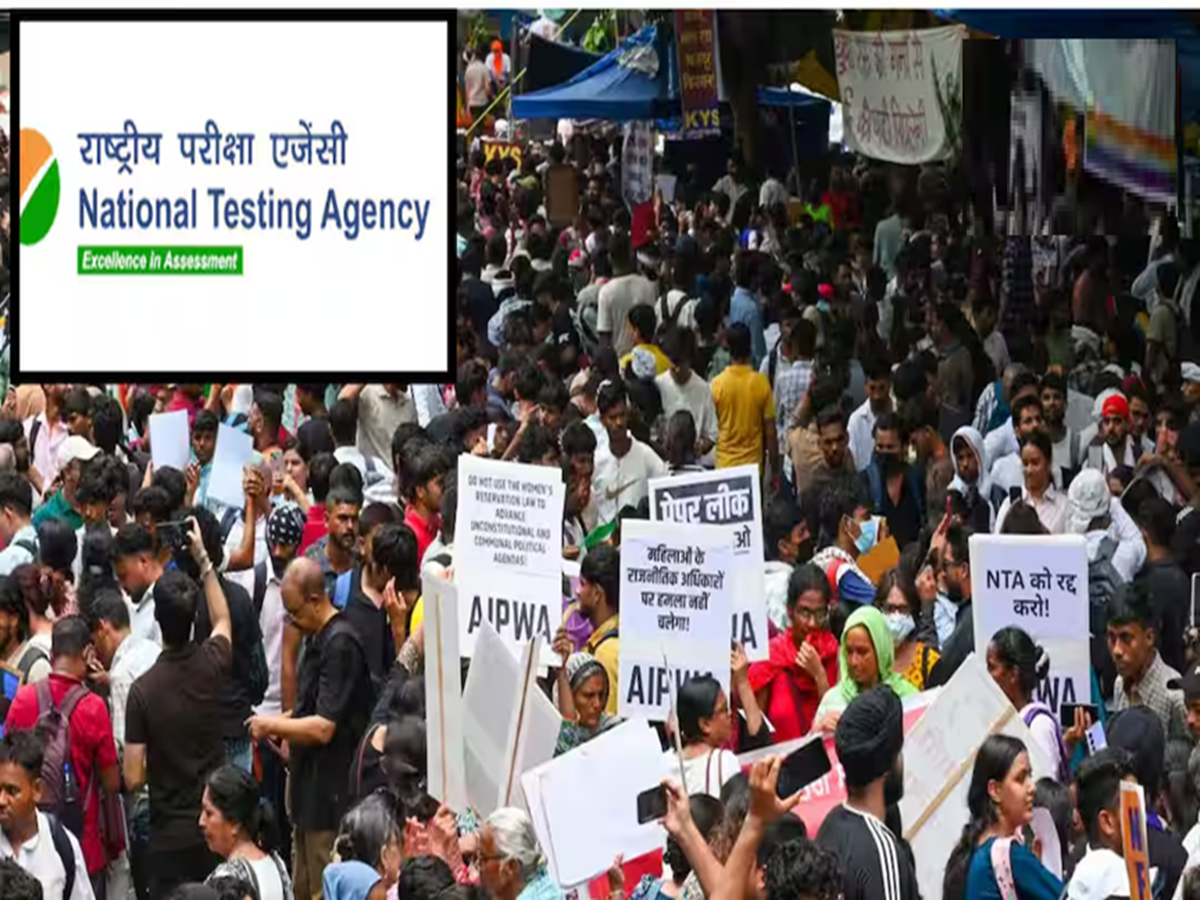
NTA no longer wants to remain just an examination conducting body, but wants to establish a professional and institutional system for examination security, cyber security and monitoring of the entire examination system.
NTA action after NEET paper leak
The credibility of the country's major entrance exams, including the NEET-UG, has been repeatedly questioned over the past few years. In particular, the NEET paper leak scandal dealt a serious blow to the National Testing Agency's (NTA) credibility. Against this backdrop, the NTA has now taken a major step toward strengthening its organizational structure.
The agency has invited applications for three senior positions: General Manager (Vigilance, Investigation, and Forensic), General Manager (Information Security/CISO), and General Manager (Test Center Network and Operations). These three positions clearly indicate that the NTA no longer intends to remain merely an exam-conducting body, but rather to establish a professional and institutionalized system for exam security, cybersecurity, and oversight of the entire exam system.
What is the work of GM-Vigilance?
The most important position is that of General Manager, Vigilance, Investigation, and Forensics. This officer's job will not only be to investigate a paper leak, but also to assess risks before the exam, monitor suspicious networks, identify coaching mafias and organized cheating gangs, gather evidence through digital forensics, and coordinate with agencies like the CBI, IB, ED, cyber cells, and state police. This means that for the first time, the NTA is developing a dedicated internal investigation and intelligence apparatus.
Another important position is that of the Chief Information Security Officer. Over the past few years, the examination process has become increasingly digital. Therefore, it has become equally important to protect not only question papers but also servers, data, candidate information, and IT systems from cyberattacks. The CISO's responsibilities include 24x7 cyber monitoring, ensuring the proper functioning of CERT-In and the DPDP Act, security audits of third-party technology companies, and ensuring the cybersecurity of the entire system.
The third position, GM - Test Center Network and Operations, will focus on the quality, security, and operations of test centers. The number of test centers will be expanded to smaller cities and districts. Monitoring center facilities will also be a key role for this position. The goal is to minimize test-day disruptions and operational glitches.
Will this really make a difference?
These appointments can certainly strengthen the NTA's institutional capacity. Until now, the biggest accusation against the agency has been that it lacked a robust investigation system or cyber expertise to ensure exam security, and that it had to rely on external agencies after incidents. If experienced officers are appointed to these positions and are given adequate authority, resources, and independent decision-making, exam security could be significantly improved.
However, simply recruiting new recruits isn't the answer. The real test will be their effective implementation. Without accountability at every level, from question paper preparation to printing, transportation, digital systems, exam centers, and the verification process, simply appointing senior officials won't guarantee a complete end to paper leaks.