NEWS
No PUCC, No Fuel: NCR Vehicles Without Valid Pollution Certificate to Be Denied Fuel From October 1
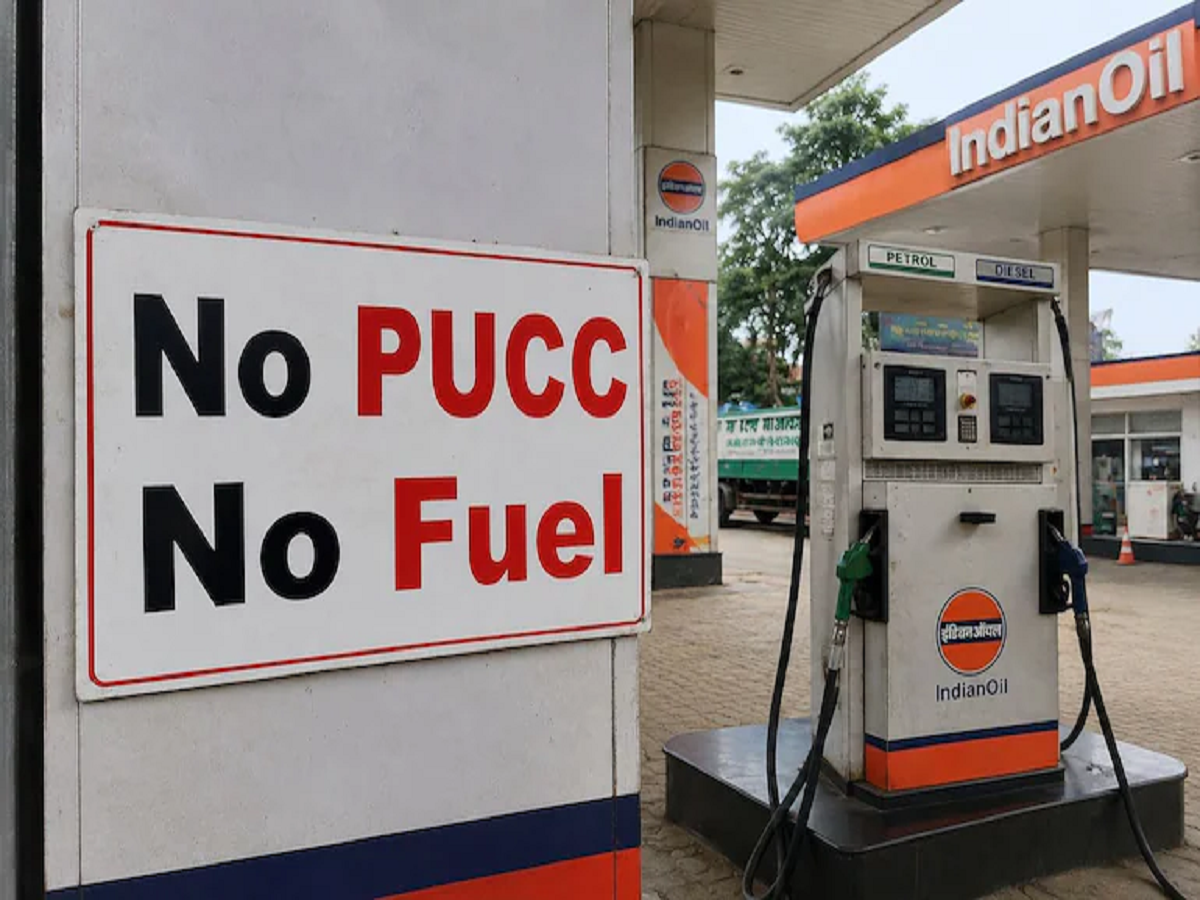
In a major step aimed at improving air quality across the National Capital Region (NCR), the Uttar Pradesh government has announced a strict new rule that will prevent vehicles without a valid Pollution Under Control Certificate (PUCC) from purchasing petrol, diesel, or CNG at fuel stations. The regulation is scheduled to come into effect on October 1, 2026, and forms part of a broader strategy to significantly reduce pollution levels in the NCR region.
The move comes as authorities intensify efforts to tackle worsening air pollution through stricter enforcement, technological monitoring, and large-scale environmental initiatives.
What Is the New Rule?
Under the upcoming "No PUCC, No Fuel" policy, vehicles operating in NCR districts of Uttar Pradesh will be required to possess a valid Pollution Under Control Certificate in order to purchase fuel.
From October 1 onward, petrol pumps across the NCR region will verify whether vehicles have a valid PUCC before allowing fuel refills.
Vehicles failing to meet the requirement may be denied:
- Petrol
- Diesel
- CNG
The measure is intended to encourage vehicle owners to comply with emission standards and ensure that polluting vehicles are identified and addressed.
Government Targets Major Reduction in Pollution
The Uttar Pradesh government has set an ambitious goal of reducing pollution levels in the NCR region by approximately 30–35 percent during 2026.
The decision was reviewed during a high-level meeting chaired by Chief Secretary S.P. Goyal, where officials assessed various action plans related to air quality improvement and pollution control.
Authorities emphasized coordinated efforts among departments to achieve measurable environmental outcomes.
Focus Areas of the Anti-Pollution Drive
According to officials, the government is concentrating on multiple pollution sources simultaneously.
Key focus areas include:
- Vehicular emissions
- Industrial pollution
- Road dust management
- Construction and demolition waste
- Expansion of green cover
- Prevention of crop residue burning
- Public awareness campaigns
Officials believe that addressing these major contributors collectively will help improve air quality across the NCR region.
Millions of End-of-Life Vehicles Identified
The review meeting highlighted progress under the "Naya Safar" initiative, which focuses on removing old and highly polluting vehicles from roads.
Authorities reported that approximately 26.19 lakh End-of-Life (EOL) vehicles have been identified across four NCR districts.
Between January and April 2026:
- 37,156 old vehicles were scrapped.
- 460 vehicles were seized for violations.
The government plans to continue enforcement against aging and non-compliant vehicles in the coming months.
ANPR Cameras to Be Installed at Fuel Stations
To support the implementation of the new fuel policy, authorities will deploy technology-based monitoring systems.
Automatic Number Plate Recognition (ANPR) cameras will be installed at approximately 1,041 fuel stations across the NCR region.
These cameras will help verify vehicle details automatically and assist in enforcing the "No PUCC, No Fuel" regulation efficiently.
Push for Cleaner Public Transportation
The government is also focusing on expanding electric public transport.
A target has been set to operate 975 electric buses across:
- Ghaziabad
- Noida
- Greater Noida
- Meerut
Currently, around 100 electric buses are already in service within these cities.
The initiative is expected to reduce dependence on conventional fuel-powered public transport and contribute to cleaner urban mobility.
Strengthening Air Quality Monitoring
To improve pollution tracking and data collection, authorities are establishing a network of Continuous Ambient Air Quality Monitoring Stations (CAAQMS).
Key developments include:
- 43 monitoring stations planned across NCR-Uttar Pradesh.
- 25 stations already operational.
- Remaining 18 stations expected to be installed by October 2026.
These facilities will provide real-time data to support policy decisions and pollution-control measures.
Action Against Industrial Pollution
Industrial emissions remain another major focus area.
Officials identified 725 pollution-prone industrial units in the region.
Among them:
- 613 industries have already installed Continuous Ambient Air Quality Monitoring Systems linked to the Central Pollution Control Board (CPCB).
- 665 industries have been identified for installation of Air Pollution Control Devices (APCDs).
The installation process is being carried out in phases.
Massive Road Redevelopment Project Underway
Road dust is considered one of the key contributors to urban air pollution.
To address this issue, authorities are implementing a large-scale road redevelopment program covering:
- Ghaziabad
- Noida
- Greater Noida
- Meerut
The project includes:
- Redevelopment of approximately 1,792 kilometers of roads.
- Estimated expenditure of ₹3,666 crore.
- Completion of 143.8 kilometers of redevelopment work so far.
In addition, officials have assessed the requirement for 108 mechanical road-sweeping machines, with procurement already underway for 50 units.
Digital Monitoring System Being Developed
The government is also working on an integrated digital monitoring platform.
The proposed system will combine:
- Online portals
- Mobile applications
- GPS tracking systems
- Centralized dashboards
This technology-driven approach aims to improve transparency, strengthen enforcement, and provide real-time monitoring of pollution-control measures.
Final Thoughts
The introduction of the "No PUCC, No Fuel" policy marks one of the most significant anti-pollution initiatives in the NCR region. Beginning October 1, 2026, vehicles without a valid Pollution Under Control Certificate may no longer be able to purchase petrol, diesel, or CNG in NCR districts of Uttar Pradesh.
Combined with stricter action against old vehicles, expanded electric transport, enhanced monitoring infrastructure, and industrial pollution controls, the government hopes to achieve substantial improvements in air quality and create a cleaner environment for millions of residents.