A significant transformation could be on the horizon for India’s largest medical entrance examination. The National Testing Agency (NTA) has indicated that it is prepared to conduct the National Eligibility cum Entrance Test Undergraduate (NEET UG) in a computer-based format starting in 2027, marking one of the biggest changes in the exam’s history.
The proposed move comes amid growing concerns about examination security and repeated controversies surrounding paper leaks and irregularities. By transitioning from the traditional pen-and-paper system to a digital testing platform, authorities aim to strengthen transparency, improve efficiency, and enhance the overall credibility of the examination process.
If approved, millions of aspiring medical students across India could soon be taking the country's premier medical entrance exam on computer screens instead of filling out OMR answer sheets.
NTA Informs Supreme Court About Its Readiness
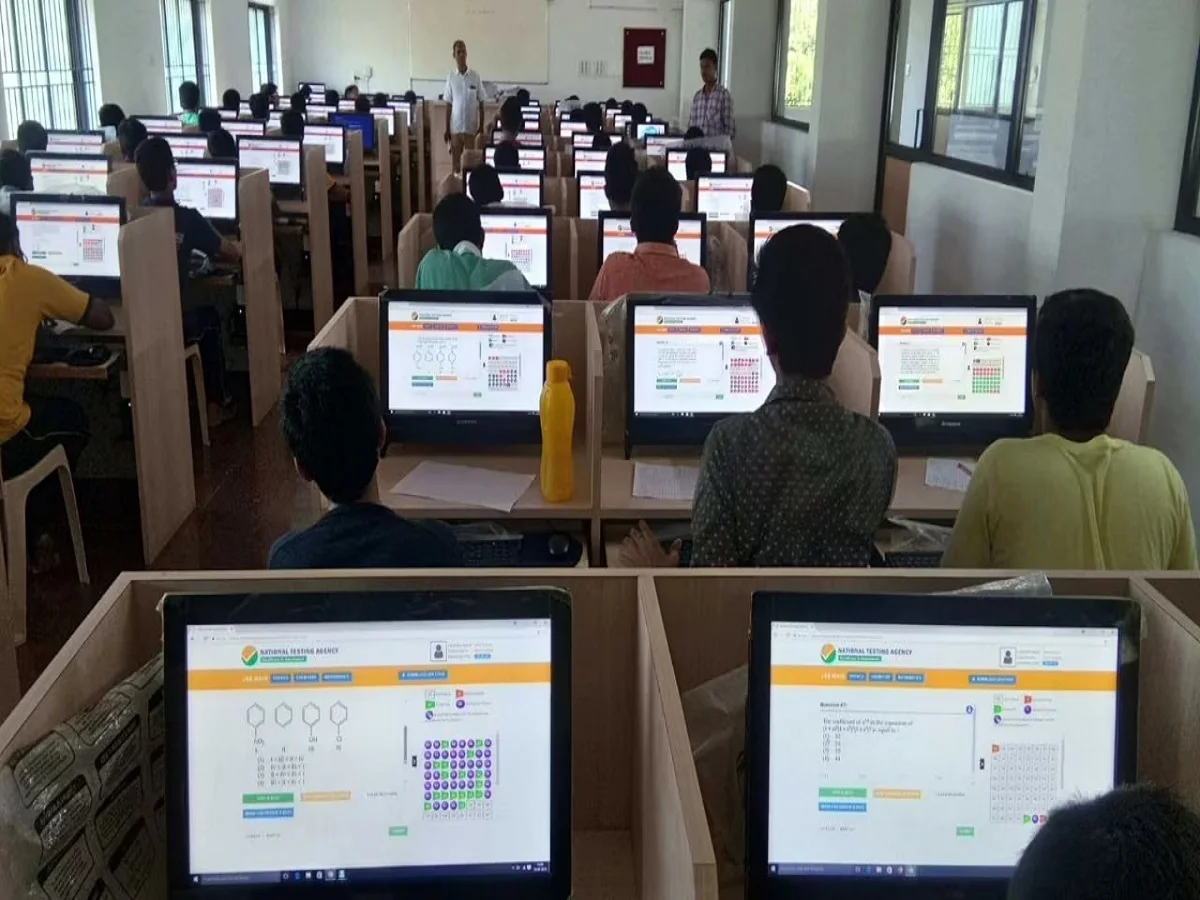
During recent proceedings, the National Testing Agency informed the Supreme Court that it is technologically prepared to conduct NEET UG through a Computer-Based Test (CBT) mode from 2027 onward.
However, officials clarified that the final decision has not yet been made. The proposal will require further consultation with the central government and the Ministry of Health and Family Welfare before any formal implementation is announced.
The agency also noted that a high-level expert committee has recommended shifting the examination from the current offline format to a more secure online system.
Notably, many major competitive examinations conducted by NTA are already held through CBT mode, providing the agency with substantial experience in managing large-scale digital assessments.
What Could Change for Students?
If NEET UG adopts the computer-based format, candidates will no longer use traditional OMR sheets to mark answers.
Instead, students will:
- Read questions directly on a computer screen.
- Select answers digitally.
- Submit responses electronically at the end of the examination.
- Receive a more streamlined testing experience.
The change could significantly reduce errors related to OMR filling, answer-sheet handling, and manual processing.
A digital system may also help accelerate the evaluation process, potentially allowing authorities to announce results more quickly than under the current model.
Why Authorities Are Considering the Change
In recent years, NEET UG has faced repeated scrutiny over allegations of paper leaks, security breaches, and examination-related irregularities. These controversies have prompted calls for stronger safeguards to protect the integrity of one of India's most competitive entrance examinations.
According to education officials, moving to a technology-driven testing system could offer several advantages.
Potential benefits include:
Improved Security
Digital examinations can significantly reduce the risk associated with physical question paper transportation, storage, and distribution.
Lower Risk of Paper Leaks
Since questions are delivered electronically through secure systems, opportunities for unauthorized access may decrease compared to traditional paper-based examinations.
Greater Transparency
Computer-based assessments provide detailed digital records, helping authorities maintain greater accountability throughout the examination process.
Faster and More Accurate Evaluation
Automated response processing can reduce human error and shorten the time required for result preparation.
Challenges That May Need Attention
While the transition offers several advantages, experts believe it may also create challenges for certain groups of students.
Candidates from rural areas or regions with limited access to computers may initially find the new format difficult to adapt to. Students accustomed to traditional pen-and-paper examinations may require additional practice and digital literacy training.
To address these concerns, education authorities may need to introduce mock tests, awareness campaigns, and extensive practice opportunities before implementing the new system nationwide.
Ensuring adequate examination infrastructure across all states will also be crucial for a smooth transition.
A New Era for Medical Entrance Exams
The proposed shift to CBT mode represents a major modernization effort for India's medical entrance examination system. If approved, NEET UG would join a growing list of national-level exams that rely on digital testing platforms to improve efficiency and security.
Although the final decision is still pending, the announcement signals the government's intention to strengthen examination integrity through technology-driven reforms.
For aspiring medical students, the coming months could provide greater clarity on whether NEET UG 2027 will mark the beginning of a completely new testing experience—one where computer screens replace OMR sheets and digital systems become the backbone of India's medical entrance process.