
NEWS
Meta Removes Controversial Instagram AI Image Feature Following User Backlash Over Privacy Concerns
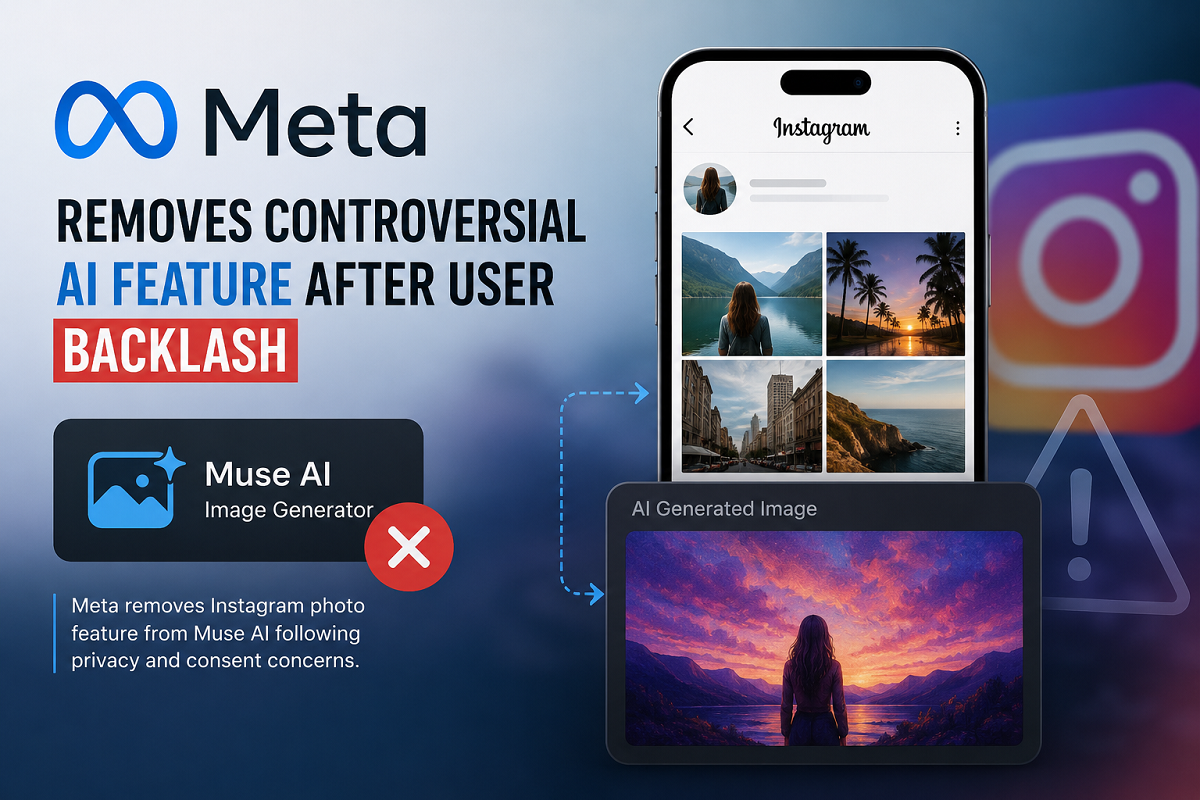
Meta Withdraws Muse AI Tool That Used Public Instagram Photos After Widespread Privacy Criticism
Meta has rolled back a controversial feature from its recently introduced Muse AI image generator after facing strong criticism from users and privacy advocates. The removed feature allowed AI-generated images to be created using photos from public Instagram profiles, triggering concerns over consent, data privacy, and the use of publicly available content for artificial intelligence.
The decision comes after widespread online criticism and growing scrutiny from regulators, with the company acknowledging that the feature did not meet user expectations. Authorities in India are also reviewing complaints related to the functionality and its potential implications for user privacy.
Meta Pulls Back AI Feature After Public Concerns
Meta recently introduced Muse AI, an advanced image-generation model developed by its Superintelligence Labs. The platform was designed to help users create AI-generated visuals using prompts and creative inputs.
One of the newly launched capabilities allowed users to generate AI images inspired by photos from public Instagram accounts simply by tagging those accounts. While Meta described the feature as an innovative creative tool, it quickly became the center of controversy.
Many users questioned whether public social media photos should be used by AI systems without obtaining explicit permission from the account owners.
Privacy and Consent Became the Biggest Concerns
The feature immediately sparked criticism from digital rights groups, cybersecurity experts, and Instagram users who argued that public availability of images should not automatically imply permission for AI-based reuse.
Critics raised several issues, including:
- AI-generated content based on personal Instagram photos without direct consent.
- Potential image scraping from publicly accessible profiles.
- Lack of transparency regarding how images were processed.
- Broader concerns about data privacy and responsible AI development.
The controversy spread rapidly across social media platforms, with many users urging Meta to reconsider the feature before wider deployment.
Meta Responds by Removing the Feature
Following increasing criticism, Meta announced that it had decided to discontinue the controversial functionality.
In its response, the company said it carefully reviewed user feedback and acknowledged that the feature failed to align with people's expectations regarding privacy and responsible AI usage.
Meta clarified that its original objective was to provide creators with a new AI-powered design experience rather than compromise user privacy. However, after evaluating public concerns, the company chose to remove the capability from Muse AI.
The company has not indicated whether a revised version of the feature could return in the future with additional privacy safeguards.
Indian Authorities Monitoring the Issue
The controversy has also drawn attention from Indian authorities.
Government officials are reviewing complaints and public feedback related to the feature to determine whether it complies with existing legal and regulatory frameworks governing digital platforms and user data.
If necessary, the matter may be examined under applicable laws concerning privacy, data protection, and online platform accountability. No final regulatory decision has been announced so far.
Muse AI Remains Meta's Flagship AI Project
Muse AI continues to be one of Meta's most ambitious artificial intelligence initiatives. Developed by the company's Superintelligence Labs, the model is intended to compete with leading AI image-generation platforms by offering advanced creative capabilities for users.
Despite the removal of the disputed Instagram-based feature, the broader Muse AI platform remains available, and Meta is expected to continue expanding its AI ecosystem while refining its privacy policies.
Industry observers note that balancing innovation with responsible handling of user data will remain a major challenge for AI companies as image-generation technology becomes more sophisticated.
Growing Debate Over AI and Personal Content
The Muse AI controversy highlights a broader conversation taking place across the technology industry. As AI tools become increasingly capable of generating realistic images using publicly available online content, questions surrounding user consent, copyright, and digital privacy are becoming more significant.
Technology companies worldwide are facing increasing pressure to implement clearer policies regarding how publicly shared content can be used to train or power AI systems. Users are also demanding greater transparency and stronger controls over how their personal data and images are utilized.
Meta's decision to withdraw the feature demonstrates how user feedback can influence product development, particularly when privacy concerns become central to public debate. The company is now expected to focus on improving Muse AI while addressing concerns around transparency, consent, and responsible AI innovation.