Honing Rod: A blunt knife isn't always safe. A dull edge can require more pressure to cut. The increased pressure can cause the knife to slip unexpectedly.
How to sharpen a knife at home?
How to Sharpen a Kitchen Knife at Home: As you chop vegetables, fruits, and other items daily in the kitchen, the knife's edge gradually dulls. Initially, it's not noticeable, but after a while, the same knife becomes difficult to use to cut even tomatoes or onions. People often consider replacing knives or having them sharpened externally when the edge dulls. However, this isn't always necessary. Knowing the right method can significantly improve a knife's sharpness at home.
It's important to keep in mind that a blunt knife isn't always safer. A dull edge can require more pressure to cut. Increased pressure can cause the knife to slip and increase the risk of injury to your hands or fingers. Therefore, keeping a knife sharp is crucial not only for convenience but also for safe work.
Why does the edge of a knife become dull?
Regular use of a knife gradually dulls its edge. But excessive use isn't the only culprit. Cutting on hard surfaces like glass, stone, or marble can dull the edge quickly. Storing knives in a drawer with other utensils without proper protection can also affect the blade. Similarly, washing in a dishwasher can dull the knife's edge due to the hot water, intense agitation, and contact with other utensils.
Sharpen with a whetstone.
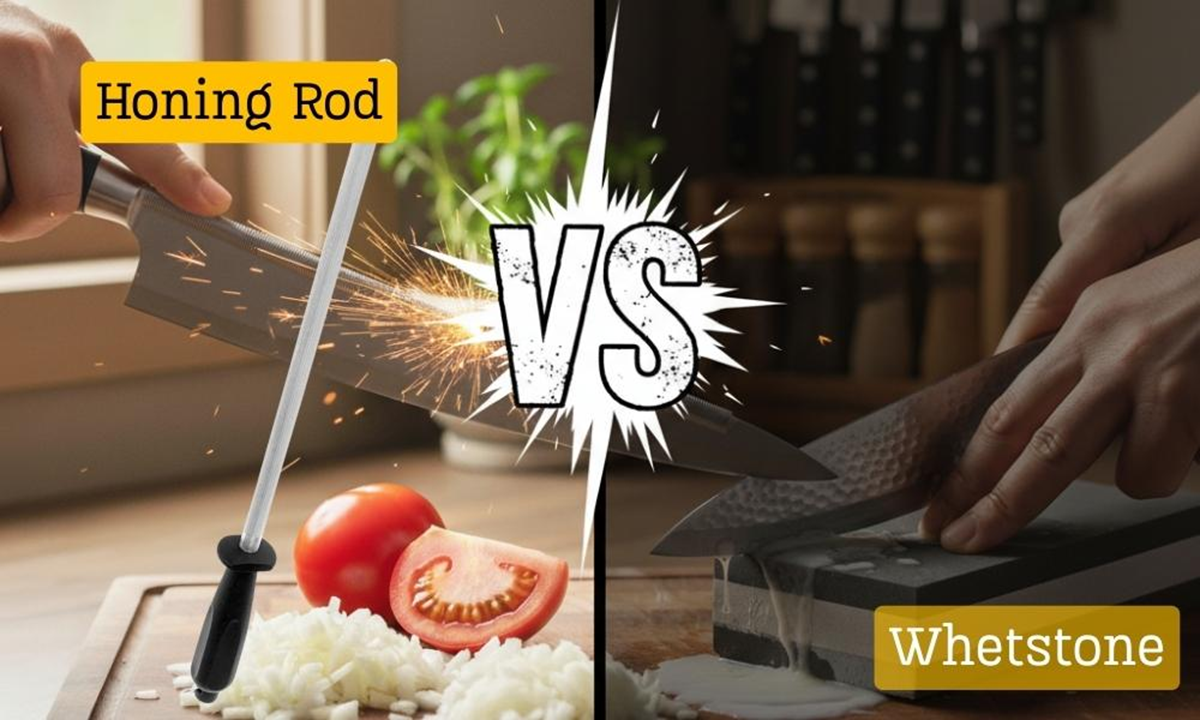
If the knife is significantly blunted, a whetstone can be a good option. Before use, soak the stone in water according to the manufacturer's instructions. Then, hold the knife's edge is held at an angle of approximately 15 to 20 degrees to the stone and slowly moved forward.
Repeat this process on both sides of the blade. It may take some time and practice, but it can be effective in sharpening an extremely blunt knife. Beginners should pay special attention to keeping the knife steady and maintaining the correct angle.
You can use a ceramic mug.
If you don't have a sharpening stone at home, a simple ceramic mug can be helpful. Turn the mug upside down and look at the rough, unglazed surface on the bottom. The knife's edge can be gently sharpened on this surface, just like on a sharpening stone. However, this should not be considered a substitute for a regular sharpening tool. It should only be used as a home remedy when necessary.
Maintain a sharp edge with a honing rod.
A honing rod is often used to sharpen knives, but its function is slightly different. It doesn't actually remove much metal to create a new edge, but rather helps to straighten and sharpen the knife's existing edge. If the knife isn't too blunt and only has a slight bend, a honing rod can be useful. Holding the rod upright, move the knife at a constant angle with light pressure.
Sandpaper can also be an option.
Fine sandpaper can also be used if needed. Place approximately 1000 to 2000 grit sandpaper on a flat surface and gently run it over the blade at a consistent angle. This isn't the best way to sharpen a knife regularly, but it can help restore a slight edge when the proper tools aren't available.
Avoid these mistakes to prevent your knife from dulling quickly.
It's also important to take proper care of your knives after sharpening them. Avoid using glass, marble, or stone surfaces for cutting vegetables. A wooden or high-quality plastic cutting board is a better choice. Instead of tossing knives in a drawer with other utensils, store them in a safe place like a knife block or magnetic strip. Washing your knives by hand and drying them promptly can also help maintain their sharpness and overall condition.