NEWS
How can a train hundreds of meters long stop with just a single pull of a chain? Learn its technology.
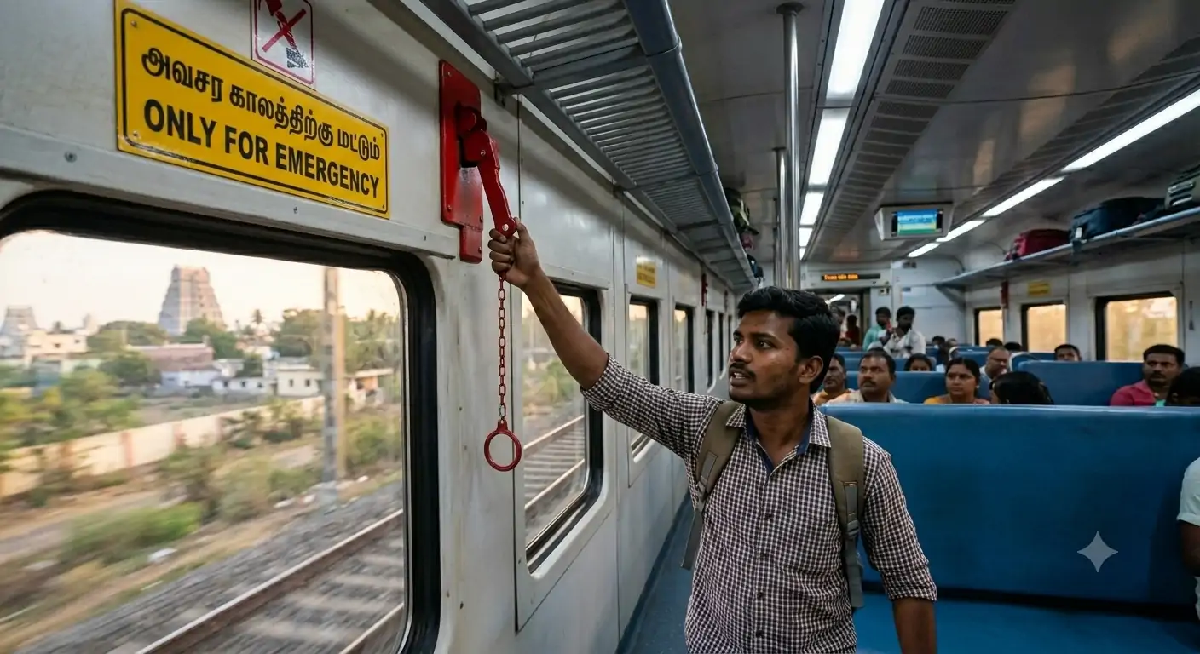
Train Chain Technology: How does a train weighing thousands of tons, traveling at 100 mph, stop with just a small pull of a chain? What technology is behind this? Read the full story to find out.
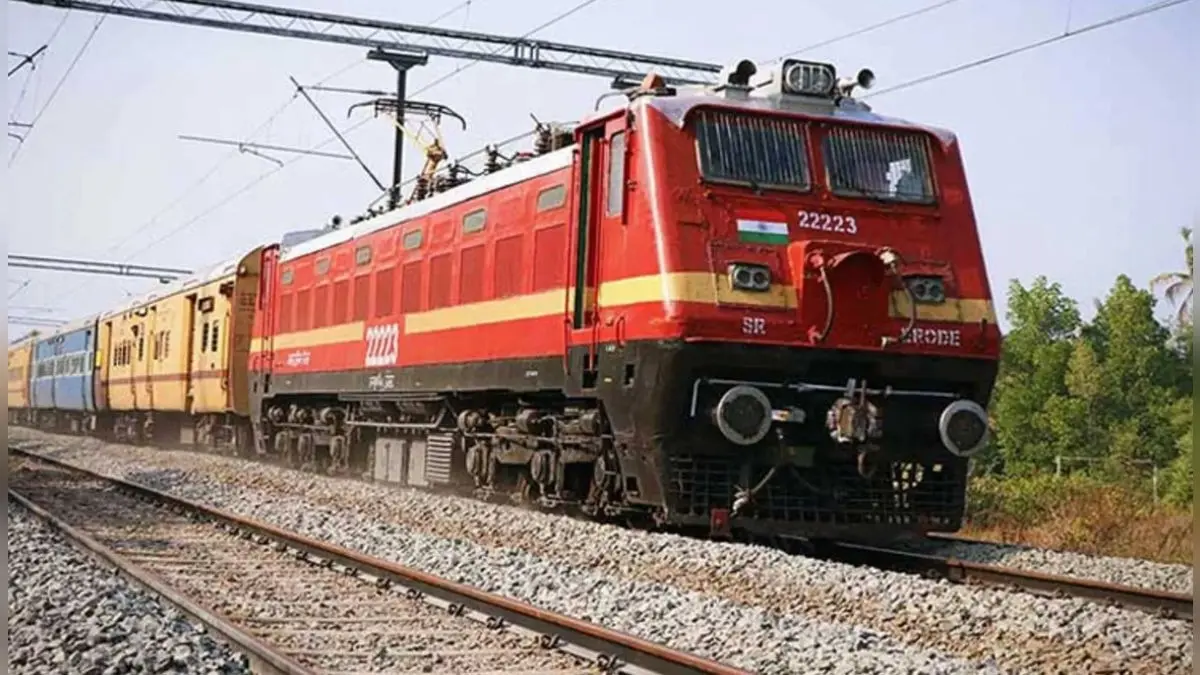
Train Emergency Chain Technology
Train Chain Technology: There are very few people in the country who have never traveled by train. Sometimes, someone gets off the platform to buy something and the train starts moving, in such a situation, the train has to be stopped to allow that person to board the train. To stop the train, a red chain has to be pulled; only then the train stops. But have you ever wondered how a huge train weighing thousands of tons and running at a speed of 100 kilometers per hour, stops just by pulling a small chain?
So let me tell you that the system behind this is based on physics and mechanical engineering. Even in today's modern trains, this emergency system is considered the most reliable for passenger safety. If someone loses their luggage, suddenly falls ill, or a major accident is imminent, this single chain can control the entire train in seconds. Let us explain what happens to the train wheels as soon as the chain is pulled, causing the entire train to stop.
How do you get instant brakes?
We often think that applying the brakes requires pressure, as we do in our cars or bikes. But the Indian Railways' air brake system works exactly the opposite. From the train's engine to the last coach, a thick pipeline called the brake pipe runs. When the train is about to move, high-pressure air is continuously pumped into this pipe. This air pressure pushes the brake shoes that hold the wheels away from the wheels, allowing the wheels to rotate freely and the train to continue running.
Now, as soon as a passenger pulls the alarm chain in any compartment, a small mechanical valve beneath that compartment opens. As this valve opens, high-pressure air in a pipe begins to rapidly escape, a loud hissing sound you've likely heard at a station or on a train at some point. As the air pressure in the pipe drops, the brake cylinders activate, and with the help of a spring, the brake shoes adhere directly to the wheels.
How does the loco pilot get the signal?
Many people think that pulling the chain applies the brakes only to that particular coach. But doing so could derail the train. In fact, the brake pipes are connected throughout the train. Therefore, if air is released from one location, the pressure in the entire pipeline immediately decreases, and all coaches are braked simultaneously. At this moment, the needle on the pressure gauge in front of the loco pilot seated in the engine suddenly drops, and a buzzer sounds in the cabin.
This immediately alerts the driver that someone has pulled the chain. The loco pilot then immediately cuts off engine power and assumes control, ensuring the train can safely stop without any jolts. In modern LHB coaches, this system has become even faster and smoother, allowing even high-speed trains to be easily controlled and stopped within just a few hundred meters.
How do we know in which compartment the chain is pulled?
After the train stops, the biggest question is which coach of such a long train with 20-24 coaches was the one from which the chain was pulled. If the guard or RPF personnel went into each coach to inquire, hours would be wasted, and the culprit could escape. The railway has a solution for this too: not only does a loud sound of air escaping from the coach where the chain is pulled, but small emergency flashers installed on both sides of the coach also start glowing.
In old coaches, a red iron lever, located in the upper corner of the carriage, would rotate outward. Guards and policemen would peek outside and immediately spot the light or lever and rush straight to the carriage. Until railway staff reset the valve from outside with their key or lever, the pipe would not refill with air, and the train would not move even an inch.