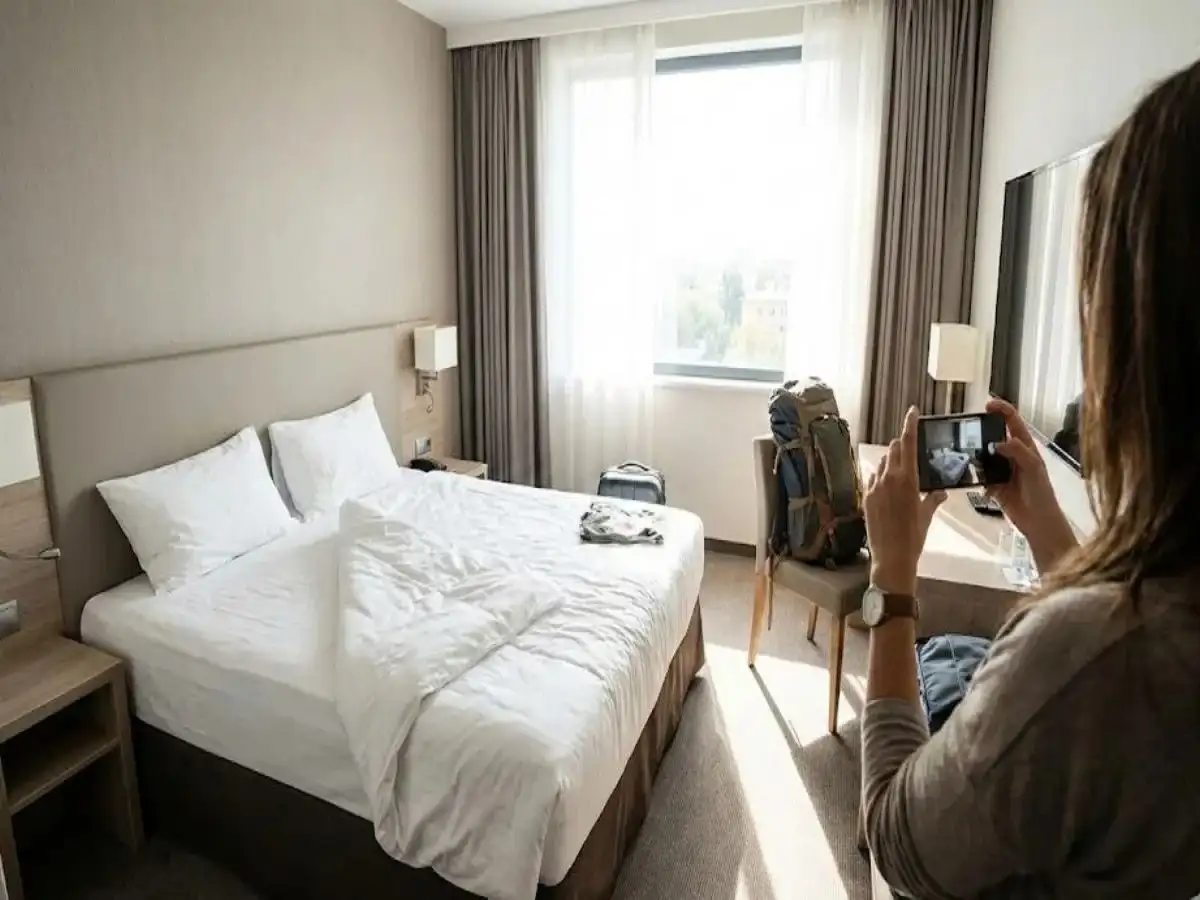
Hotel Room Safety Tips: After a tiring journey, most travellers want to enter their hotel room, drop their luggage and relax. However, spending just a few minutes checking the room before settling in can help identify security concerns, maintenance problems and missing amenities early.
Whether you're staying at a luxury hotel, business property or budget accommodation, basic checks involving the door lock, windows, electrical outlets, bathroom and emergency exits can make your stay more comfortable and secure.
You don't need to inspect every corner obsessively. A quick, systematic check is usually enough to spot obvious problems and give hotel staff an opportunity to resolve them before you unpack.
Here are nine things worth checking shortly after entering your hotel room.
1. Test the Main Door Lock
Start with the most important security feature: your room door.
Close the door completely and make sure it latches properly. Test the internal deadbolt, chain or secondary security latch if one is provided.
A door that does not close or lock correctly should be reported immediately. Don't assume it will be fine simply because the electronic key worked when you entered.
If hotel staff cannot fix a faulty lock promptly, ask whether another room can be provided.
2. Check Windows and Balcony Doors
If the room has accessible windows or a balcony, make sure their locks and latches work correctly.
Close each one properly and check whether it can be securely locked from inside.
This is particularly important on lower floors or where balconies can potentially be reached from neighbouring areas.
Families travelling with children should pay additional attention to balcony access and windows. If a lock appears damaged or unsafe, notify hotel management rather than attempting to repair it yourself.
3. Look Around the Room Before Unpacking
Take a quick look around the room before spreading your belongings across the bed, desk and cupboards.
Check whether anything appears damaged, unusually placed or inconsistent with what you would normally expect in a hotel room.
If you notice an unfamiliar electronic device or another object that genuinely seems suspicious, don't dismantle or tamper with it.
Contact hotel management and ask them to inspect it. If you have a serious safety or privacy concern that isn't adequately addressed, consider requesting another room or contacting the appropriate authorities where warranted.
4. Check Electronic Devices for Obvious Problems
Hotels commonly provide televisions, clocks, lamps, smoke alarms and other electronic equipment.
There's no need to take apart normal hotel fixtures, but you can visually check whether anything appears damaged or unusually modified.
Most unfamiliar-looking objects will have an ordinary explanation, so avoid jumping to conclusions. If something genuinely concerns you, ask hotel staff what it is rather than trying to open it yourself.
You should also avoid interfering with smoke detectors or other fire-safety equipment.
5. Test the Bathroom Facilities
A bathroom problem is much easier to resolve before you've unpacked and settled into the room.
Turn on the taps and shower briefly to check that water is available and drains correctly. Flush the toilet and look for obvious leaks around the sink, toilet or shower area.
Also check whether the bathroom floor is excessively slippery or whether fixtures appear loose or damaged.
If there is significant leakage, poor drainage or another maintenance issue, report it promptly. This can help prevent inconvenience and reduce the risk of slips or water damage.
6. Switch On the Lights, Fan and Air Conditioner
Take a minute to test the basic room facilities.
Switch on the main lights, bedside lamps, fan and air conditioner or heating system, depending on the property and weather.
Finding out at midnight that the AC doesn't work is much more inconvenient than reporting the problem immediately after check-in.
If the room has a thermostat or central climate-control panel, check whether it responds normally. Don't attempt to repair electrical or air-conditioning equipment yourself.
7. Inspect Charging Points and Electrical Sockets
Travellers often need to charge several devices, including smartphones, laptops, smartwatches and power banks.
Before plugging in expensive electronics, visually inspect the socket.
Do not use an outlet if it appears broken, loose, burnt, discoloured or otherwise damaged. Sparks, unusual heat or a burning smell are also reasons to stop using the outlet immediately and notify hotel staff.
Avoid overloading a single socket with multiple high-power devices, particularly when using your own travel adapters.
8. Find the Emergency Exit
One of the most overlooked hotel safety checks has nothing to do with the room itself.
After settling in, locate the nearest emergency staircase and fire exit. Hotels commonly display an evacuation map on or near the room door.
Take a few seconds to understand where your room is in relation to the nearest exit. It can also be useful to identify an alternative exit if one is shown.
During an emergency involving smoke or fire, visibility may be poor and lifts may not be appropriate to use. Knowing the evacuation route beforehand can save valuable time.
9. Report Suspicious or Unsafe Items Instead of Handling Them
If you discover an object that appears genuinely suspicious, potentially dangerous or seriously out of place, avoid unnecessary handling.
Don't open, dismantle, move or attempt to investigate an unknown device yourself.
Instead, leave the immediate area if you believe there is a genuine safety concern and notify responsible hotel personnel. Depending on the nature and seriousness of the situation, local authorities may need to be contacted.
Check the Room Before Fully Unpacking
Another practical reason for performing these checks immediately is that changing rooms is much easier before you've unpacked.
If the lock doesn't work, the bathroom has a serious leak, the AC has failed or another significant problem is discovered, hotel staff may offer a repair or room change.
Keeping your luggage together until the basic inspection is complete can save considerable time.
Keep Valuables Secure During Your Stay
Once you've checked the room, think about how you'll store important belongings.
Avoid leaving passports, cash, jewellery and expensive electronics openly visible when you leave the room. If the hotel provides an in-room safe, follow the property's instructions for using it.
For especially important documents or high-value items, ask the hotel what secure-storage options are available.
You should also keep your room key or access card secure and avoid publicly sharing your room number.
A Two-Minute Check Can Make Your Stay Easier
Hotel stays are generally routine, and most travellers won't encounter serious problems. The purpose of a room check is not to make guests suspicious of everything around them.
It is simply a practical habit.
Check the door and window locks, test essential facilities, inspect electrical sockets, identify the emergency exit and report anything genuinely unsafe or unusual.
Spending a few minutes on these steps immediately after check-in can help you address problems early and enjoy the rest of your stay with fewer surprises.