A blood test report can contain dozens of numbers, abbreviations and reference ranges that may be difficult to understand without medical guidance. One of the most commonly noticed values is hemoglobin, usually written as Hb or Hgb.
Hemoglobin is an iron-containing protein found inside red blood cells. Its main role is to carry oxygen from the lungs to tissues throughout the body and help transport carbon dioxide back toward the lungs.
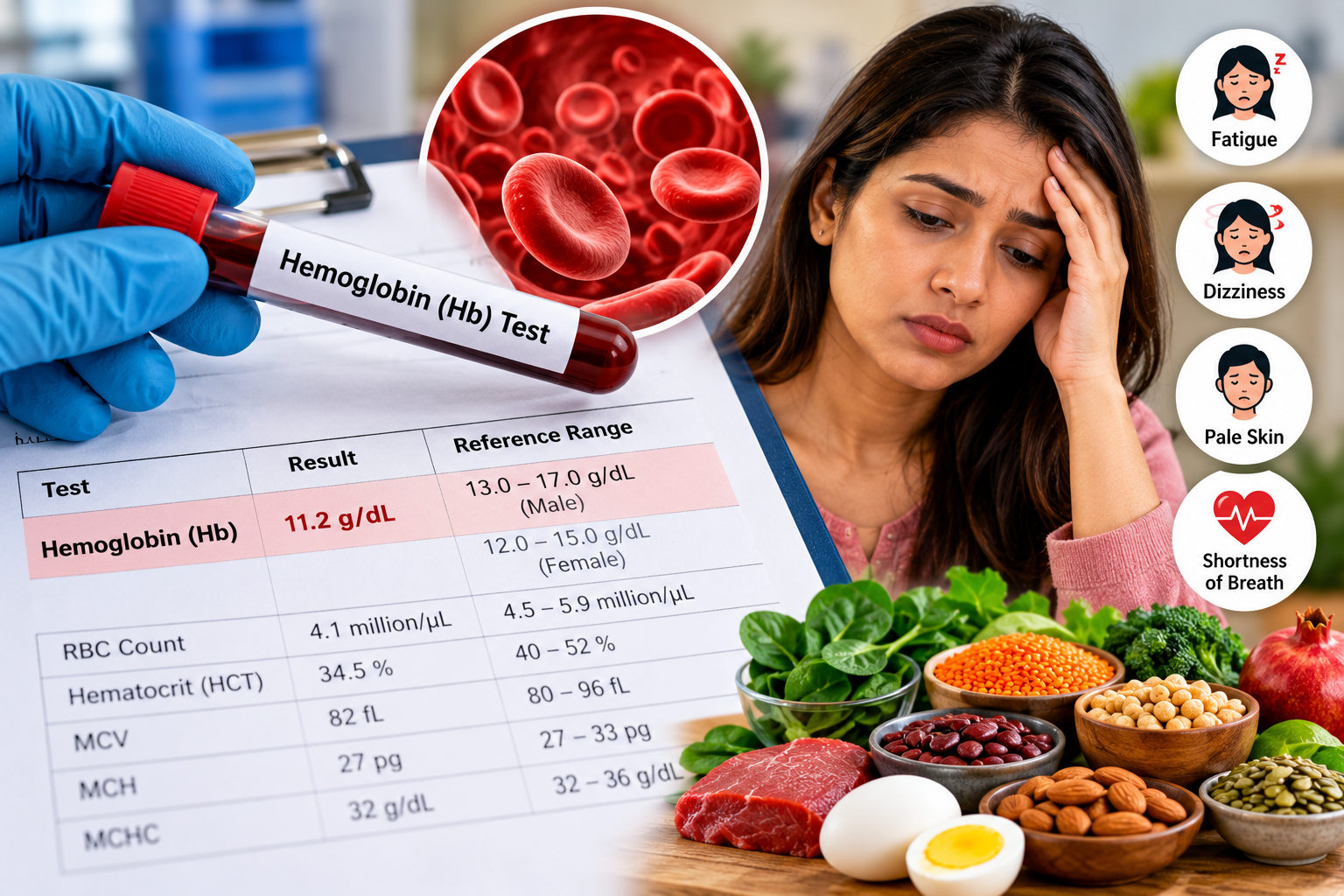
When hemoglobin falls below an appropriate level, a person may have anemia. Depending on its severity and underlying cause, low hemoglobin can be associated with tiredness, weakness, dizziness, headaches, shortness of breath, pale skin or reduced ability to perform physical activities.
However, an Hb number should not be interpreted in isolation. Age, sex, pregnancy, altitude, laboratory methods and individual medical circumstances can influence how a result is assessed.
What Does the Hb Number on Your Blood Report Mean?
Hemoglobin is commonly reported in grams per decilitre, written as g/dL.
There is no single Hb cutoff that applies identically to every person. Reference and anemia thresholds can differ according to age and physiological conditions such as pregnancy.
The ranges cited in the source article are presented below as a general reference. They should not replace the reference interval printed on your laboratory report or interpretation by a qualified healthcare professional.
Hb Levels for Children Aged 6 to 59 Months
According to the thresholds cited in the source:
- 10–10.9 g/dL: Mild anemia
- 7–9.9 g/dL: Moderate anemia
- Below 7 g/dL: Severe anemia
Children with a low hemoglobin result should be evaluated appropriately because nutritional deficiencies are only one possible explanation.
Hb Levels for Children Aged 5 to 11 Years
The cited ranges classify hemoglobin as:
- 11–11.4 g/dL: Mild anemia
- 8–10.9 g/dL: Moderate anemia
- Below 8 g/dL: Severe anemia
A child's blood-test results should always be considered alongside age, growth, diet, symptoms and medical history.
Hb Levels for Children Aged 12 to 14 Years
The source provides the following ranges:
- 11–11.9 g/dL: Mild anemia
- 8–10.9 g/dL: Moderate anemia
- Below 8 g/dL: Severe anemia
Parents should avoid starting iron supplements solely on the basis of an Hb number unless advised by a healthcare professional.
Hb Levels for Women Aged 15 and Above
For non-pregnant women aged 15 years or older, the source cites:
- 11–11.9 g/dL: Mild anemia
- 8–10.9 g/dL: Moderate anemia
- Below 8 g/dL: Severe anemia
Low hemoglobin in women can have several possible causes. Menstrual blood loss and iron deficiency are common considerations, but other nutritional or medical conditions may also be responsible.
Hemoglobin Levels During Pregnancy
Pregnancy requires separate consideration because physiological changes can affect blood volume and hemoglobin concentration.
The source cites these ranges for pregnant women:
- 10–10.9 g/dL: Mild anemia
- 7–9.9 g/dL: Moderate anemia
- Below 7 g/dL: Severe anemia
Anemia during pregnancy should be discussed with the healthcare professional providing antenatal care. Pregnant women should not independently alter iron or other supplement doses without appropriate advice.
Hb Levels for Men Aged 15 and Above
For males aged 15 years and older, the ranges cited in the source are:
- 11–12.9 g/dL: Mild anemia
- 8–10.9 g/dL: Moderate anemia
- Below 8 g/dL: Severe anemia
Again, these numbers are general reference thresholds from the supplied information. The laboratory's reference range and clinical assessment remain important.
What Symptoms Can Occur With Low Hemoglobin?
Some people with mild anemia may have few noticeable symptoms. As hemoglobin falls or anemia develops more rapidly, symptoms can become more apparent.
Possible symptoms include persistent tiredness, weakness, dizziness, headaches, shortness of breath and becoming unusually tired after routine physical activity.
Symptoms alone cannot confirm anemia. A blood test and appropriate medical evaluation are required.
Why Can Hemoglobin Become Low?
It is a common mistake to assume that every case of low Hb is simply caused by iron deficiency.
Iron deficiency is an important cause, but anemia can develop for several reasons. Possible causes include nutritional deficiencies, vitamin deficiencies, blood loss, certain infections, chronic illnesses and disorders affecting blood-cell production or survival.
Heavy menstrual bleeding or bleeding from the digestive tract can also contribute in some individuals.
This is why identifying the underlying cause is more important than simply trying to increase the Hb number.
Don't Start Iron Supplements Without Knowing the Cause
If your report shows low hemoglobin, avoid automatically starting high-dose iron tablets or supplements without professional advice.
A doctor may review other parts of the complete blood count (CBC), including red blood cell indices, and may recommend additional investigations depending on the suspected cause.
These may include tests related to iron status or vitamin levels, among others, depending on the patient's symptoms and medical history.
Iron supplementation can be helpful when iron deficiency is present, but it is not the correct treatment for every type of anemia.
Which Foods Can Support an Iron-Rich Diet?
A balanced diet can contribute to adequate iron and other nutrients required for healthy blood formation.
Depending on dietary preferences, meals can include green leafy vegetables, pulses, lentils, beans and other iron-containing foods. People who consume animal foods can obtain iron from appropriate meat, seafood and other sources as part of a balanced diet.
Vitamin C-containing foods eaten with plant-based iron sources can help the body absorb non-heme iron more effectively.
However, dietary changes alone may not be sufficient when anemia is moderate or severe or when an underlying medical condition is responsible.
When Should You Seek Medical Advice?
A low Hb result deserves medical attention when it is substantially below the laboratory reference range, continues to decline or is accompanied by significant symptoms.
Urgent medical attention may be needed if a person experiences severe breathlessness, chest pain, fainting, marked weakness, rapid deterioration or significant active bleeding.
Children, pregnant women, older adults and people with chronic medical conditions may require particularly careful assessment.
Don't Judge Your Health From a Single Number
Hemoglobin is an important marker, but it represents only one part of a blood test.
Instead of comparing your result with numbers found online and starting treatment yourself, check the reference range printed on your laboratory report and discuss abnormal findings with a qualified healthcare professional.
The key question is not simply, "How can I increase my Hb?" It is also, "Why is my hemoglobin low?"
Finding and treating the underlying cause is the safest way to manage anemia and protect long-term health.