
LIFESTYLE
Health Insurance Tips 2026: Can You Get 3-Year Mediclaim Coverage for ₹1,000 a Month? Know the Details
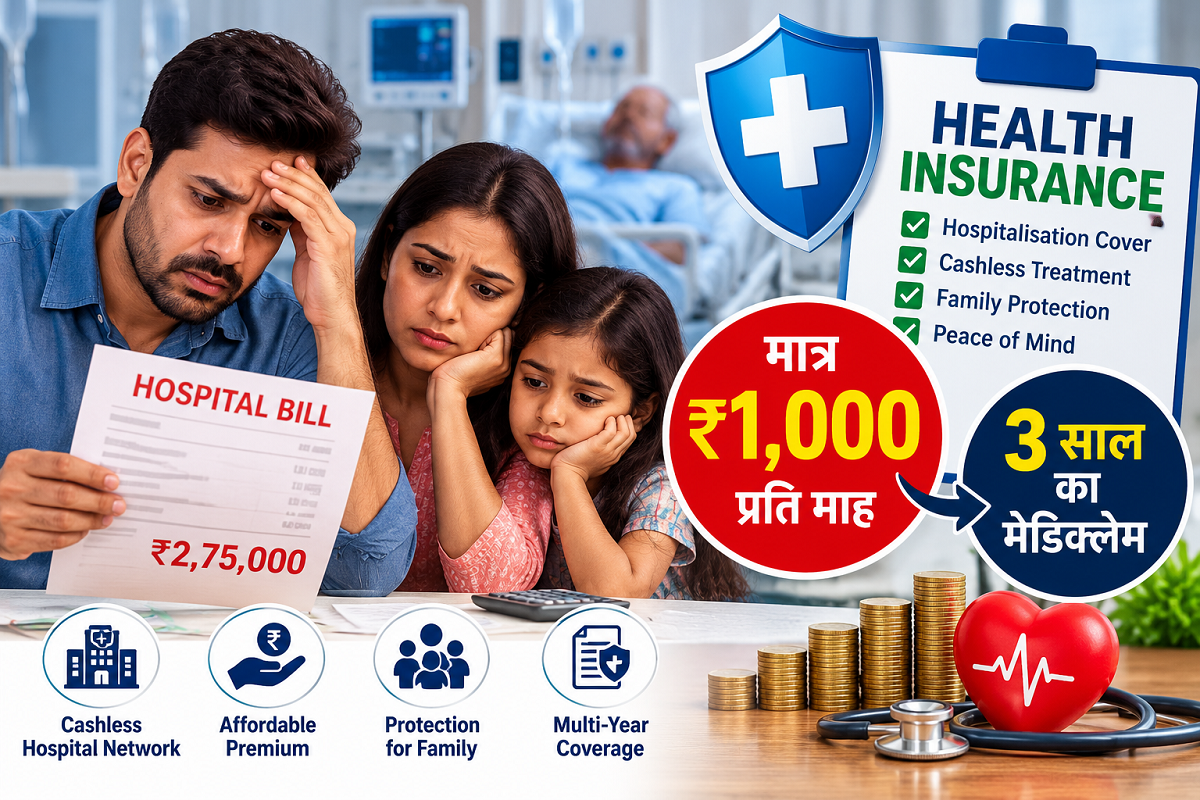
Health Insurance Tips 2026: Rising hospital bills have made health insurance an important financial consideration for Indian families. Even a short hospital stay can lead to substantial medical expenses, making it difficult for households to manage unexpected treatment costs without adequate financial protection.
However, paying a large health insurance premium in a single instalment can also put pressure on the family budget.
To make premium payments more manageable, some insurance companies offer monthly, quarterly or other instalment-based payment options.
These arrangements allow eligible policyholders to spread their premium payments across smaller amounts instead of paying the entire sum upfront.
For example, a three-year health insurance policy costing ₹36,000 would have an average monthly cost of ₹1,000 if the amount were divided equally over 36 months.
But does this mean anyone can buy a three-year mediclaim policy for just ₹1,000 per month? Not necessarily.
The actual premium, payment schedule, coverage benefits and additional charges depend on the insurance company, the selected policy and the applicant's circumstances.
Here is a detailed explanation of how instalment-based health insurance works, its potential benefits and the important conditions customers should check before buying a policy.
What Is EMI-Based Health Insurance?
EMI-based health insurance refers to an arrangement in which customers pay their insurance premiums through scheduled instalments instead of making one large upfront payment.
Traditionally, many health insurance policies have been purchased by paying an annual premium.
Some insurers also offer multi-year policies, where coverage can continue for two or three years under the terms of a single contract.
Depending on the insurer and product, customers may be offered different payment frequencies.
These can include monthly, quarterly, half-yearly or annual payments.
The main advantage of an instalment arrangement is that it may reduce the immediate financial burden of purchasing insurance.
However, the availability of instalment payments does not automatically mean that the overall insurance cost will be lower.
Can You Really Get Three Years of Health Insurance for ₹1,000 Monthly?
The ₹1,000 monthly figure is an illustrative calculation rather than a confirmed universal insurance offer.
Suppose a customer selects a health insurance policy with a total premium of ₹36,000 for three years.
If the cost is divided equally across 36 months, the calculation would be:
₹36,000 ÷ 36 months = ₹1,000 per month
This means the average monthly expense would be ₹1,000.
However, the actual payment arrangement may differ.
Some insurers may require annual payments even when the policy provides multi-year coverage.
Others may offer periodic instalments subject to specific conditions.
Additional charges, financing costs or payment-related terms may also affect the total amount payable.
Therefore, customers should verify whether a genuine ₹1,000 monthly payment option is available for their chosen policy.
They should also confirm the total premium payable over the entire policy period.
Health Insurance Premium Calculation: Monthly vs Annual Payments
The following table illustrates how different total premium amounts translate into average monthly costs over three years.
| Total Premium for 3 Years | Average Annual Cost | Average Monthly Cost |
|---|---|---|
| ₹24,000 | ₹8,000 | ₹667 |
| ₹30,000 | ₹10,000 | ₹833 |
| ₹36,000 | ₹12,000 | ₹1,000 |
| ₹45,000 | ₹15,000 | ₹1,250 |
| ₹54,000 | ₹18,000 | ₹1,500 |
These figures are mathematical illustrations only.
They are not quotations from insurance companies and do not establish that policies are available at these prices.
Actual premiums depend on age, health conditions, coverage amount, family size, policy features and other underwriting factors.
Why Are Instalment-Based Health Insurance Plans Becoming Popular?
For many households, monthly budgeting is easier than arranging a large lump-sum payment.
Salaried employees often receive a fixed monthly income and manage expenses such as rent, education fees, groceries and loan repayments.
A monthly premium arrangement may allow them to include health insurance within their regular household budget.
According to figures attributed to Policybazaar in the supplied report, approximately 13% of customers prefer paying health insurance premiums through monthly or quarterly instalments.
The report also mentions an average annual premium figure of approximately ₹17,500.
However, these figures have not been independently verified and may relate to a particular customer sample or reporting period.
The broader appeal of instalment-based payments is their potential to improve affordability from a cash-flow perspective.
What Are the Benefits of Multi-Year Health Insurance?
A multi-year health insurance policy generally provides coverage for a period longer than one year, subject to its terms.
For example, a three-year policy may remain active for the agreed policy period without requiring a fresh annual renewal contract.
This can offer several practical advantages.
1. Less Frequent Renewal Administration
Customers may not need to complete a separate renewal process every year during the policy term.
This can reduce the administrative effort involved in maintaining coverage.
2. Easier Long-Term Planning
Knowing the policy period in advance may help families organise their insurance arrangements.
Customers can review their protection needs and understand when the next renewal will be due.
3. Potential Premium Advantages
Some multi-year policies may offer pricing benefits or discounts compared with purchasing separate annual policies.
However, such benefits depend entirely on the insurer's product terms.
Customers should compare the total payable amount before assuming that a longer policy is cheaper.
4. Continuity of Coverage
A multi-year policy may help maintain insurance continuity during the contracted period, provided all applicable payment and policy conditions are satisfied.
However, customers using instalment payment arrangements must understand the consequences of missed payments.
Will the Premium Remain the Same for Three Years?
This is one of the most important questions to ask before purchasing a multi-year policy.
A three-year insurance contract does not automatically guarantee that every monthly payment will remain unchanged in all circumstances.
The premium structure depends on the contract and payment arrangement.
For example, a policy may have a predetermined total premium, but its payment schedule may include conditions that customers must follow.
Customers should check whether the quoted amount includes all applicable charges.
They should also verify whether the payment schedule is fixed for the full policy period.
Any potential changes must be assessed according to the policy wording and applicable insurance regulations.
A verbal assurance from an agent should not replace the written policy document.
Does Monthly Payment Make Health Insurance Cheaper?
Not necessarily.
Paying through instalments can make the expense easier to manage, but it does not automatically reduce the total premium.
Consider two hypothetical arrangements.
| Payment Option | Illustrative Total Cost |
|---|---|
| One-Time Payment | ₹36,000 |
| 36 Equal Payments of ₹1,000 | ₹36,000 |
| 36 Payments of ₹1,050 | ₹37,800 |
In the second arrangement, the total cost is the same as the lump-sum amount.
In the third example, the customer pays ₹1,800 more over three years.
This difference could arise from the terms of a particular payment arrangement.
These are hypothetical examples, not actual insurer quotations.
Before choosing instalments, compare the total amount payable under every available option.
What Should You Check Before Buying a Mediclaim Policy?
The payment amount is important, but it should not be the only factor influencing your decision.
A policy with a low premium may provide limited coverage or include conditions that increase out-of-pocket expenses.
Customers should examine several important features.
Sum Insured
The sum insured determines the amount of insurance protection available under the policy, subject to its terms.
Choose a coverage amount based on your healthcare needs and financial circumstances.
Waiting Periods
Some medical conditions and treatments may be subject to waiting periods.
Customers should understand when different benefits become available.
Pre-Existing Disease Coverage
Individuals with existing medical conditions should check the relevant disclosure requirements and coverage conditions.
Providing accurate health information during the application process is essential.
Room Rent Limits
Certain policies may restrict the room category or amount payable for hospital accommodation.
Such limits can affect the final claim settlement.
Co-Payment Requirements
A co-payment clause requires the policyholder to bear a specified portion of eligible expenses.
This may reduce the insurer's share of a claim.
Hospital Network
Check whether suitable hospitals in your area are included in the insurer's cashless treatment network.
Network availability and cashless approval conditions should be verified before treatment.
Exclusions
Every insurance policy has exclusions.
Customers should understand which treatments, expenses or situations are not covered.
What Happens if You Miss a Monthly Premium Payment?
Missing an instalment may have consequences depending on the policy's payment terms and applicable regulations.
The insurer may provide a grace period or other provisions, but customers should not assume that coverage will continue indefinitely without payment.
If required instalments are not paid within the permitted period, coverage or claim eligibility may be affected according to the contract.
Therefore, customers should understand the exact due dates and consequences of non-payment.
Setting payment reminders or using an authorised automatic payment facility may help avoid missed instalments.
Who May Benefit From Instalment-Based Health Insurance?
Instalment payments may be useful for people who prefer predictable monthly expenses.
Salaried professionals, younger policyholders and families managing several financial commitments may find this approach convenient.
However, suitability depends on personal circumstances.
Someone who can comfortably afford a lump-sum payment may prefer to compare that option with instalment arrangements.
Customers should also consider whether they can reliably maintain the payment schedule throughout the policy period.
The best payment method is not necessarily the one with the smallest initial payment.
It is the arrangement that provides suitable coverage at a manageable total cost.
Important Questions to Ask Before Purchasing
Before finalising a health insurance policy, customers should obtain clear answers to the following questions:
- What is the total premium payable for the entire policy period?
- Is monthly or quarterly payment officially supported?
- Are there additional charges for instalment payments?
- Is the premium schedule fixed for the policy term?
- What happens if an instalment is delayed?
- What is the sum insured?
- Are there waiting periods, exclusions or co-payment conditions?
- Which hospitals offer cashless treatment under the policy?
- What are the renewal conditions after the multi-year term ends?
Reviewing these details can help customers avoid misunderstandings after purchasing insurance.
Frequently Asked Questions
Can I buy health insurance for ₹1,000 per month?
Some policies may have premiums or instalment arrangements around this amount, but availability depends on the insurer, coverage and applicant details. ₹1,000 is not a guaranteed price.
Can I purchase a three-year mediclaim policy?
Some insurers offer multi-year health insurance products. Customers should check the available policy periods and payment options.
Is EMI-based health insurance different from regular health insurance?
The main difference is the premium payment arrangement. Coverage features depend on the underlying insurance policy.
Will I get cashless hospital treatment?
Cashless treatment depends on the insurer's hospital network, policy coverage, approval process and other applicable conditions.
Is a three-year policy always cheaper?
No. Customers should compare the total premium and benefits of multi-year and annual policies.
Can the premium change during the policy period?
This depends on the policy contract, pricing arrangement and applicable rules. Customers should confirm the exact terms in writing.
What happens if I miss an instalment?
The consequences depend on the policy and payment conditions. Customers should check the grace period and possible impact on coverage.
Final Thoughts
Health insurance can provide important financial protection against eligible medical expenses, particularly when hospital bills are difficult to manage from household savings.
Monthly and quarterly premium options may make insurance payments more convenient for families that prefer to spread expenses over time.
A three-year policy costing ₹36,000 would have an average expense of ₹1,000 per month, but this calculation does not mean every customer can purchase such a policy at that price.
The actual premium and payment arrangement depend on the insurer, the applicant and the selected coverage.
Before purchasing any mediclaim plan, compare the total payable premium, coverage benefits, waiting periods, exclusions and instalment conditions. A low monthly payment should never be the only reason for selecting a health insurance policy.
Disclaimer: This article is intended for general financial awareness. Premium examples are illustrative and do not represent a verified insurance quotation or recommendation of a specific product. Insurance coverage and payment conditions are governed by the insurer's official policy documents and applicable regulations.