
LIFESTYLE
Hair Transplant Facts: 5 Common Misconceptions About Hair Regrowth, Pain and Results Explained
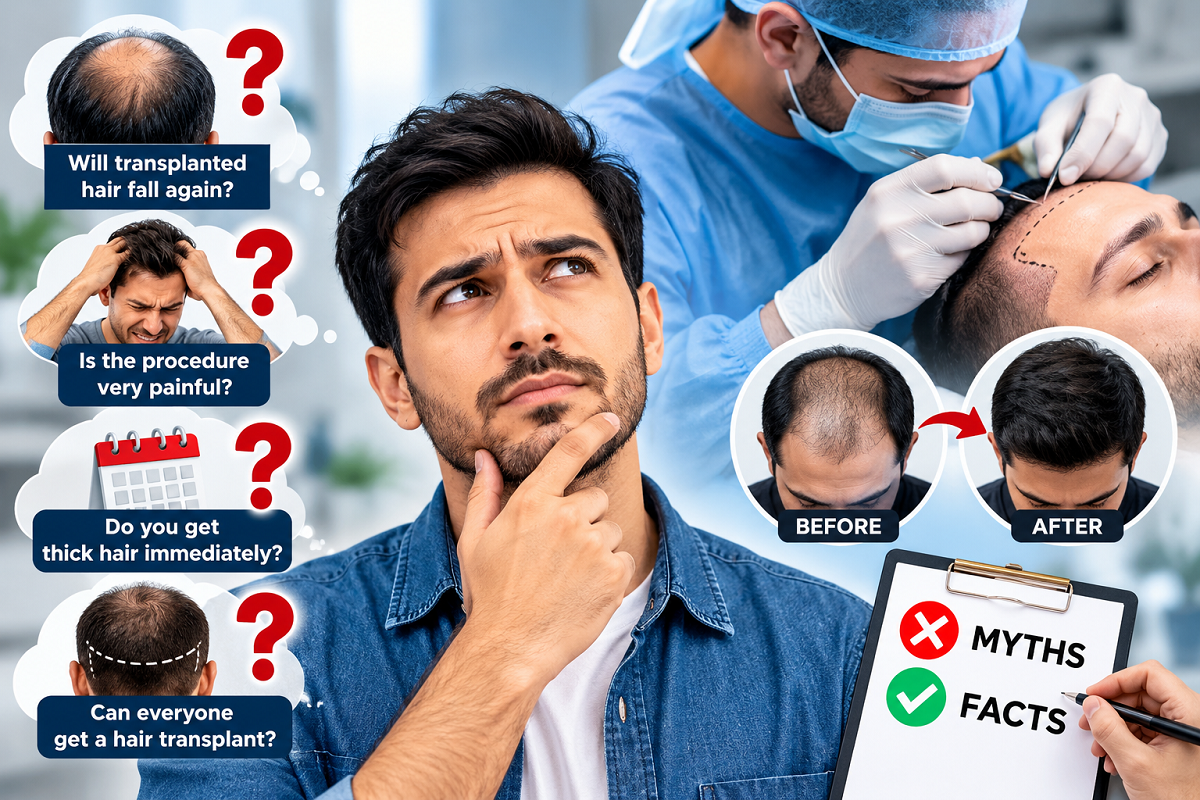
Hair Transplant Guide 2026: Hair loss can affect people at different stages of life, sometimes beginning in their twenties or thirties. While genetics remains one of the leading causes of progressive hair thinning, hormonal changes, certain medical conditions, nutritional deficiencies and other factors can also contribute to the problem.
For individuals experiencing significant hair loss, hair transplantation has become a recognised surgical option for improving hair coverage. Modern procedures can produce natural-looking results in suitable candidates, but they also involve limitations, recovery time and potential complications.
Unfortunately, misleading claims about hair restoration continue to circulate, leaving many people confused about what the procedure can realistically achieve.
Some believe transplanted hair can never fall out, while others expect a full head of hair immediately after surgery. There is also considerable confusion about pain, recovery and eligibility.
Understanding the medical facts behind these assumptions can help patients make better-informed decisions before considering treatment.
1. Myth: Hair Transplantation Permanently Stops All Hair Loss
One widespread misconception is that undergoing hair transplantation guarantees freedom from future hair loss.
In reality, the procedure redistributes existing hair follicles from one part of the scalp to another. It does not eliminate the underlying causes of baldness.
Surgeons generally collect healthy follicles from the back or sides of the scalp, where hair is often more resistant to the effects of androgenetic alopecia, commonly called pattern hair loss.
These transplanted follicles may continue producing hair for many years. However, the natural hair surrounding the transplanted area can still become thinner over time.
Ageing, genetic predisposition and hormonal influences may contribute to further hair loss even after a successful procedure.
Some patients may therefore require ongoing medical treatment or additional procedures to maintain a balanced appearance.
Important fact: Hair transplantation can provide long-lasting improvement, but it cannot guarantee that every transplanted follicle will survive or prevent future thinning of existing hair.
2. Myth: Hair Transplant Surgery Is Extremely Painful
Fear of severe pain discourages some individuals from exploring hair restoration surgery.
However, contemporary hair transplant procedures are generally performed under local anaesthesia, which numbs the treatment area and reduces discomfort during surgery.
Two commonly discussed approaches include Follicular Unit Extraction (FUE) and Direct Hair Implantation (DHI).
In FUE, individual follicular units are removed from the donor area and transplanted into areas affected by hair loss.
DHI is a term commonly used for an implantation approach involving specialised instruments. It is not necessarily a completely separate method of harvesting hair follicles.
Patients may experience discomfort during anaesthetic injections, and some pressure or unusual sensations may occur throughout the procedure.
Following surgery, temporary swelling, scalp tenderness, redness and mild discomfort are possible.
Although these symptoms often improve within several days, recovery experiences differ from person to person.
Complications such as infection, bleeding, scarring or poor graft survival can also occur.
Important fact: Hair transplant surgery is usually manageable with appropriate anaesthesia and medical care, but describing it as completely painless or risk-free would be misleading.
3. Myth: A Full Head of Hair Appears Immediately After Surgery
Another common misunderstanding concerns the time required to see visible improvement.
Hair transplantation does not deliver instant density. Instead, transplanted follicles must settle into their new location before producing sustained growth.
During the first few weeks, many patients notice that the visible shafts of transplanted hairs begin to shed.
This temporary shedding is generally expected and does not necessarily indicate that the transplanted follicles have failed.
Some patients may also experience temporary thinning of nearby existing hair, sometimes described as shock loss.
Expected Hair Growth Timeline After Transplantation
| Recovery Period | What Patients May Notice |
|---|---|
| First 2–4 weeks | Temporary shedding of transplanted hair shafts |
| Around 3–4 months | Early signs of new hair growth |
| Around 6–9 months | Increasing coverage and noticeable improvement in density |
| Around 9–12 months | More developed results and improved overall appearance |
| Up to 12–18 months | Continued maturation in some patients, particularly in crown areas |
These periods are approximate rather than guaranteed milestones.
Hair growth varies according to individual healing, follicle survival, the treatment area and the surgical technique used.
Patients should follow their surgeon's instructions regarding scalp washing, medication, exercise restrictions and follow-up appointments.
Important fact: Hair transplantation requires patience, and the final cosmetic outcome may take a year or longer to become apparent.
4. Myth: Anyone Experiencing Baldness Can Get a Hair Transplant
Hair transplantation is not appropriate for every person experiencing hair thinning.
A successful procedure requires a sufficient supply of healthy donor follicles, usually obtained from the back or sides of the scalp.
If the donor area is too thin or the available follicles are insufficient, achieving satisfactory coverage may be difficult.
Doctors also consider the patient's age, medical history, scalp condition, type of hair loss and expectations before recommending surgery.
Individuals experiencing rapidly progressing hair loss may be advised to stabilise their condition with appropriate medical treatment before undergoing transplantation.
Similarly, patients with certain inflammatory scalp disorders or untreated medical conditions may require further evaluation.
People with temporary hair loss caused by nutritional deficiencies, medication effects or illness may benefit more from addressing the underlying problem than from surgery.
A dermatologist can help determine whether the hair loss is permanent, progressive or potentially reversible.
Important fact: A medical assessment is essential because eligibility depends on more than the amount of visible baldness.
5. Myth: Every Hair Transplant Produces the Same Results
Hair transplantation outcomes can differ significantly between patients.
The success of a procedure depends on several medical and technical considerations, including donor hair availability, the quality of follicular grafts and the extent of existing hair loss.
The surgeon's qualifications, experience and treatment planning are particularly important.
Correct graft handling, appropriate placement angles and careful hairline design all contribute to a natural-looking appearance.
Scalp health and adherence to postoperative instructions also influence healing and overall results.
Hair characteristics such as thickness, curl and colour contrast with the scalp can affect the appearance of density.
Patients should understand that transplantation redistributes a limited number of follicles rather than creating an unlimited new supply of hair.
Consequently, people with advanced baldness may not achieve the same density they had before losing their hair.
Important fact: Results should be evaluated according to individual circumstances, not promotional photographs or unrealistic promises.
What Should You Check Before Choosing a Hair Transplant Clinic?
Before making a decision, patients should consult a qualified dermatologist or appropriately trained hair restoration surgeon.
The consultation should include an assessment of the cause of hair loss, donor hair availability, potential benefits and possible risks.
It is also important to understand who will perform the surgical steps, what technique will be used and what postoperative support the clinic provides.
Patients should ask about realistic coverage, scarring, infection risks, recovery requirements and the possibility of needing further treatment.
In some cases, a doctor may recommend non-surgical options, including medications such as minoxidil or finasteride, depending on the patient's diagnosis and medical suitability.
These treatments also have limitations and potential side effects and should be discussed with a healthcare professional.
Final Thoughts
Hair transplantation can be an effective option for selected individuals dealing with permanent hair loss, but it is not an instant or universally suitable solution.
Understanding the differences between temporary shedding and permanent follicle loss, recognising the recovery timeline and maintaining realistic expectations are essential before proceeding.
Rather than relying on social media claims or advertisements promising guaranteed results, patients should seek professional medical guidance and carefully evaluate the available treatment options.
Medical Disclaimer: This article is intended for general educational purposes and should not replace advice from a qualified medical professional. Anyone considering hair transplantation should consult a dermatologist or experienced hair restoration surgeon for an individual assessment.