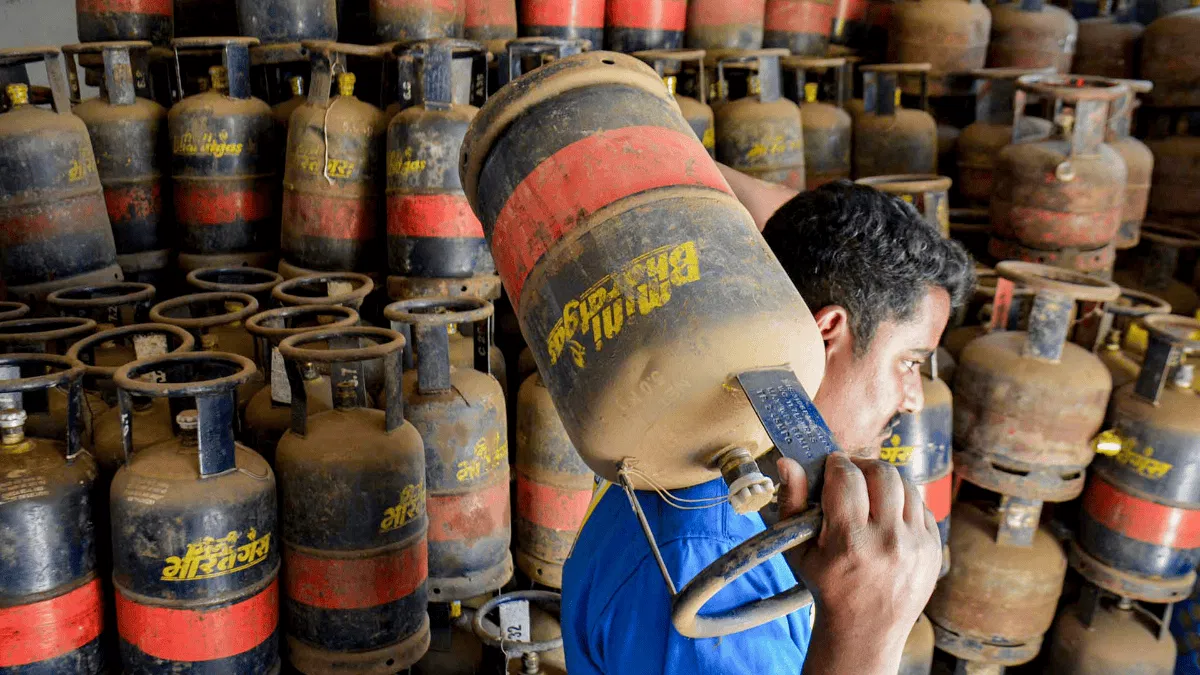
The Central Government has announced a major relief for commercial and industrial LPG consumers by restoring the supply of non-domestic packed LPG to its normal level. The decision comes after the easing of geopolitical tensions in West Asia, which had earlier disrupted global energy supplies and prompted temporary restrictions on LPG distribution in India.
With the latest move, all sector-specific restrictions on commercial LPG allocation have been withdrawn. The decision is expected to benefit a wide range of users, including hotels, restaurants, manufacturing units, street food vendors, small businesses, and other commercial establishments that rely heavily on LPG for their daily operations.
Commercial LPG Supply Returns to Pre-Crisis Levels
During the recent West Asia conflict, the government introduced temporary measures to safeguard domestic cooking gas supplies. To ensure uninterrupted availability for households, commercial and industrial LPG distribution was regulated, and sector-wise restrictions were imposed on non-domestic consumers.
As regional conditions have now improved, the government has decided to restore commercial LPG supplies to the levels that existed before the crisis. Businesses that had been facing supply shortages and operational difficulties are expected to receive cylinders without the earlier restrictions.
The decision is likely to improve fuel availability across multiple industries while reducing concerns about supply disruptions.
Bulk LPG Distribution Also Gets a Boost
In addition to restoring commercial cylinder supplies, the government has also relaxed restrictions on bulk LPG distribution.
At the height of the West Asia crisis, bulk LPG supplies had been suspended to prioritize domestic household consumption. Under the latest policy revision, bulk LPG supply has now been partially reinstated.
The government has permitted restoration of bulk LPG supply up to 50% of the consumption level that existed before the crisis. This is expected to provide significant relief to industries that depend on large-scale LPG consumption, including hospitality businesses, manufacturing plants, commercial kitchens, and institutional users.
Improved bulk availability may also help businesses stabilize operations that were affected by earlier supply limitations.
More Feedstock Available for Petrochemical Industry
The government has also revised the allocation of C3-C4 gas streams, which are used both for domestic LPG production and as raw materials in petrochemical manufacturing.
During the supply crisis, a larger share of C3-C4 gas was diverted toward household LPG production to ensure adequate cooking gas availability for consumers across the country. As a result, petrochemical manufacturers experienced reduced access to these critical feedstocks.
With the latest policy changes, a greater proportion of C3-C4 gas will once again be supplied to petrochemical and industrial sectors. This is expected to improve the availability of raw materials, support higher industrial production, and ease supply constraints for downstream industries.
Domestic LPG Consumers Will Not Be Affected
Despite restoring commercial and industrial supplies, the government has assured consumers that household LPG availability will remain unaffected.
Officials have stated that domestic cooking gas will continue to receive priority, and the country's indigenous LPG production will be maintained at no less than 40,000 metric tonnes (40 TMT) per day.
This measure is intended to ensure that families continue to receive uninterrupted LPG supplies while allowing industries to gradually return to normal fuel consumption levels.
Why Were Restrictions Introduced?
The temporary restrictions were implemented after geopolitical tensions in West Asia disrupted global energy markets and created uncertainty over fuel supplies.
To safeguard essential household requirements, the government invoked emergency measures under the Essential Commodities framework. During this period, C3-C4 gas streams were largely redirected toward domestic LPG production, ensuring that residential consumers did not face shortages.
However, this emergency strategy reduced the availability of raw materials for petrochemical companies and limited LPG supplies for commercial users, creating operational challenges across several industries.
Now that international conditions have improved, the government has decided to roll back those temporary measures.
Businesses Expected to Benefit
The restoration of commercial LPG supplies is expected to provide relief to numerous sectors, including:
- Hotels and restaurants
- Catering businesses
- Food processing industries
- Manufacturing units
- Street food vendors
- Small commercial establishments
- Petrochemical companies
- Institutional kitchens
Improved fuel availability could help businesses operate more efficiently while reducing concerns over supply interruptions experienced during recent months.
Commercial LPG Prices Have Risen Sharply This Year
Although supply restrictions have now been eased, commercial LPG prices remain significantly higher than earlier this year.
In Delhi, the price of a commercial LPG cylinder has increased from ₹1,691.50 in January to ₹3,113.50, reflecting multiple price revisions during the year.
The sharp rise has largely been attributed to global energy market volatility, higher transportation costs, supply-chain disruptions, and geopolitical tensions in the Gulf and Middle East following regional conflicts.
Key Takeaway
The government's decision to restore commercial LPG supplies and remove sector-wise restrictions marks an important step toward normalizing fuel distribution across India. Industries, hotels, restaurants, and small businesses that rely on LPG are expected to benefit from improved availability, while petrochemical manufacturers will also gain better access to essential raw materials. At the same time, authorities have assured that domestic LPG consumers will continue to receive uninterrupted supplies, balancing household needs with the recovery of commercial and industrial demand.