
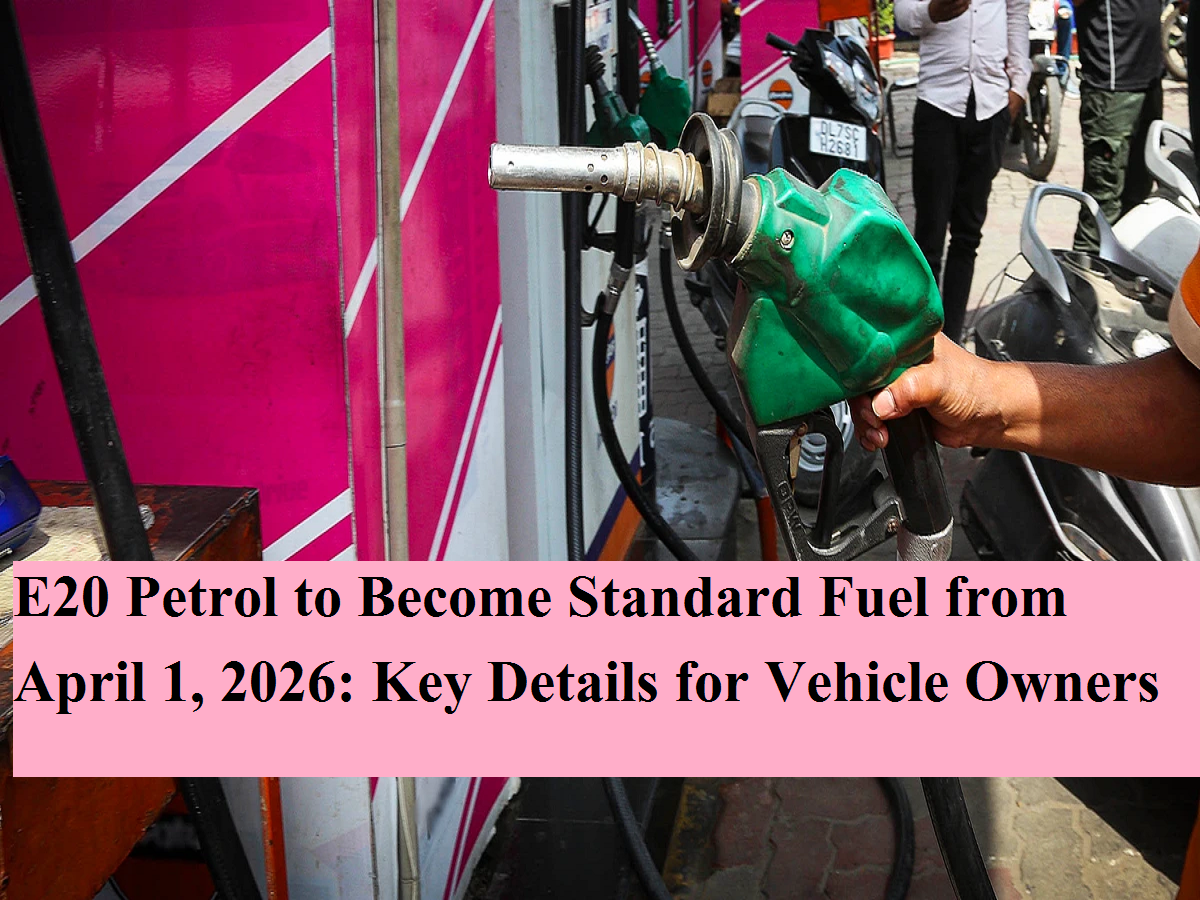
A major transformation in India’s fuel landscape is set to take effect from April 1, 2026. Petrol pumps across the country will begin supplying ethanol-blended petrol known as E20 as the standard fuel. Oil marketing companies have been directed to ensure nationwide availability in line with updated government regulations.
This shift marks a significant step in the country’s clean energy roadmap and aims to reduce dependence on crude oil imports while supporting domestic agriculture.
What Is E20 Petrol?
E20 fuel is a blend consisting of 20 percent ethanol and 80 percent conventional petrol. Ethanol is a renewable biofuel typically produced from agricultural crops such as sugarcane and corn.
By increasing ethanol blending in petrol, the government seeks to:
- Reduce crude oil imports
- Improve energy security
- Lower foreign exchange outflow
- Support farmers through higher crop demand
- Cut harmful emissions
India had already achieved 10 percent ethanol blending ahead of schedule in mid-2022. Building on that progress, the target was raised to 20 percent blending by the financial year 2025–26. The nationwide implementation from April 2026 formalizes this transition.
Fuel Quality Standards and RON 95 Requirement
Under the new mandate, petrol supplied across the country must meet a minimum Research Octane Number (RON) of 95.
RON measures a fuel’s ability to resist engine knocking — a phenomenon that occurs when fuel combusts unevenly inside the engine cylinder. Knocking can reduce efficiency and cause long-term engine damage.
Ethanol naturally has a high octane rating of around 108. When blended with petrol, it improves the overall octane level of the fuel. Setting RON 95 as the minimum benchmark ensures:
- Smoother combustion
- Better engine performance
- Enhanced protection for modern engines
The fuel must comply with quality standards set by the Bureau of Indian Standards, as per official guidelines.
Economic Benefits of Ethanol Blending
Ethanol blending has already delivered measurable economic gains. According to official estimates, reduced crude oil imports due to blending have helped save over ₹1.40 lakh crore in foreign exchange since 2014–15.
As E20 becomes the standard fuel, these savings are expected to grow further. Lower dependence on imported oil strengthens macroeconomic stability and reduces vulnerability to global price fluctuations.
Additionally, higher demand for ethanol creates steady income opportunities for farmers and boosts the rural economy.
Environmental Impact
Ethanol burns cleaner than traditional petrol. Increased blending can help reduce certain harmful vehicular emissions and contribute to improved air quality.
The transition to E20 aligns with broader efforts to promote sustainable mobility and reduce carbon intensity in the transportation sector.
Will Your Vehicle Support E20?
Most vehicles manufactured after 2023 are designed to be compatible with E20 fuel. Owners of these newer models are unlikely to face major performance issues.
However, vehicles produced before E20 compatibility norms were introduced may experience certain changes, including:
- Slight reduction in fuel efficiency (estimated 3 to 7 percent in some cases)
- Possible faster wear of specific engine components
- Occasional starting or maintenance concerns
Older fuel systems were not originally engineered for higher ethanol content, which can affect rubber and metal components over time.
Conversion Options for Older Vehicles
To address compatibility concerns, some manufacturers have begun offering E20 conversion kits for select models.
For example, Royal Enfield has introduced conversion kits for certain BS3 and BS4 motorcycles, including:
- Royal Enfield Bullet
- Royal Enfield Classic
- Royal Enfield Thunderbird
These kits are designed to help engines adapt to ethanol-blended fuel and minimize the risk of component damage.
Vehicle owners are advised to check their owner’s manual or consult authorized service centers to confirm E20 compatibility before the nationwide rollout.
What Should Motorists Do Now?
With the April 2026 deadline approaching, motorists should:
- Verify whether their vehicle is E20 compatible
- Consult manufacturers regarding recommended upgrades
- Monitor official fuel station updates
- Stay informed about maintenance guidelines
Early preparation can ensure a smoother transition once E20 becomes the standard fuel.
Final Takeaway
The nationwide adoption of E20 petrol from April 1, 2026 represents a significant milestone in India’s fuel policy. The move promises long-term economic savings, reduced oil dependency, support for farmers and environmental benefits.
While most modern vehicles are prepared for the transition, owners of older vehicles should assess compatibility and explore conversion options if necessary.
Being informed today will help motorists adapt confidently to this major shift in the country’s fuel ecosystem.
Disclaimer: This article is for informational purposes only. Vehicle owners should refer to official government notifications, fuel suppliers and manufacturer guidelines to confirm E20 compatibility and related requirements before making any decisions.