ASTROLOGY
Dussehra 2026 Date: October 20 or 21? Check Vijayadashami Puja Muhurat and Ravan Dahan Timings
Dussehra 2026 Date and Time: One of India's most important Hindu festivals, Dussehra, also known as Vijayadashami, is approaching. As preparations begin across the country, many devotees are wondering whether the festival will be observed on October 20 or October 21 this year. Questions about the most auspicious time for Vijayadashami Puja and the traditional burning of Ravana's effigy are also attracting attention.
According to the Panchang details cited for 2026, Dussehra will be celebrated in most parts of India on Tuesday, October 20, 2026. However, certain Vijayadashami rituals in West Bengal are expected to take place on Wednesday, October 21.
The festival celebrates the victory of good over evil and holds deep religious and cultural significance. Here is a detailed look at the Dussehra date, Dashami Tithi, city-wise Vijay Muhurat and expected Ravan Dahan timings.
Dussehra 2026: Will Vijayadashami Fall on October 20 or 21?
The date of Vijayadashami is determined according to the Hindu lunar calendar, particularly the Dashami Tithi of Shukla Paksha during the month of Ashwin.
In 2026, the Dashami Tithi extends across two consecutive days, which has created confusion regarding the festival date.
As per the calendar information provided, most regions will observe Dussehra on October 20, 2026, while some religious traditions in West Bengal will mark Vijayadashami ceremonies on October 21.
The difference arises because Hindu festivals are sometimes observed according to specific Tithi conditions, regional customs and the timing of religious rituals.
Devotees should therefore consult their local Panchang or temple authorities before finalising important ceremonies.
Dashami Tithi 2026: Starting and Ending Time
According to the New Delhi Panchang timings mentioned in the available information, the Dashami Tithi will follow this schedule:
- Dashami Tithi Begins: October 20, 2026, at 12:50 PM
- Dashami Tithi Ends: October 21, 2026, at 2:11 PM
- Main Dussehra Celebration: Tuesday, October 20, 2026, in most regions
- Vijayadashami Rituals in Parts of West Bengal: Wednesday, October 21, 2026
Although the lunar date continues into October 21, the festival observance may differ depending on regional religious practices.
Vijayadashami 2026: City-Wise Vijay Muhurat Timings
Vijay Muhurat is regarded as an especially favourable period on Dussehra. According to Hindu tradition, performing prayers, beginning meaningful activities and worshipping tools or weapons during this period is considered auspicious.
The following are the reported city-wise Vijay Muhurat timings for October 20, 2026.
| City | Vijay Muhurat |
|---|---|
| New Delhi | 1:59 PM – 2:45 PM |
| Mumbai | 2:19 PM – 3:06 PM |
| Pune | 2:16 PM – 3:02 PM |
| Bengaluru | 2:02 PM – 2:49 PM |
| Chennai | 1:52 PM – 2:39 PM |
| Hyderabad | 1:57 PM – 2:44 PM |
| Kolkata | 1:17 PM – 2:03 PM |
| Jaipur | 2:06 PM – 2:51 PM |
| Chandigarh | 2:00 PM – 2:46 PM |
Important: These timings are based on the supplied Panchang information and have not been independently verified. Local astronomical calculations and religious calendars may provide slightly different timings.
Ravan Dahan 2026: At What Time Will Ravana's Effigy Be Burned?
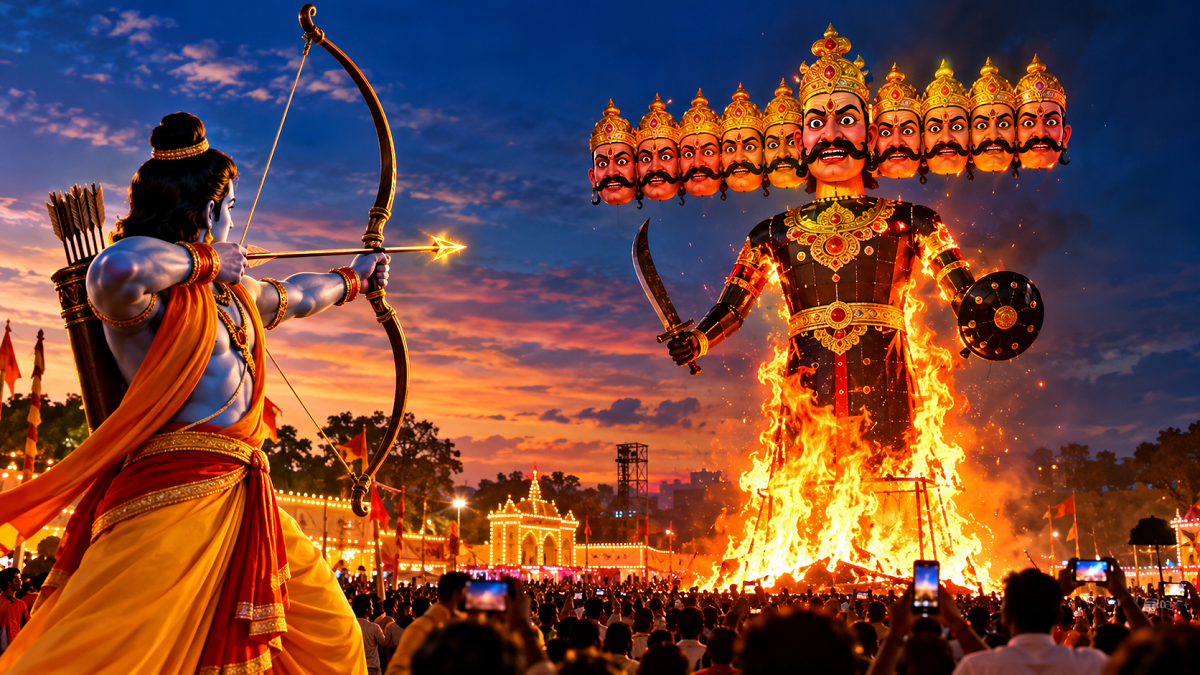
Ravan Dahan is among the most eagerly awaited events associated with Dussehra celebrations. Large effigies of Ravana, Meghnad and Kumbhkaran are traditionally set ablaze during public celebrations, symbolising the defeat of evil.
In many cities, the ceremony takes place after sunset, often following performances of the Ramayana or Ramlila.
For October 20, 2026, the expected sunset time in Mumbai is approximately 6:12 PM. Consequently, several local celebrations may schedule Ravan Dahan during the evening.
However, there is no single nationwide time for the ceremony.
The exact schedule depends on the city, local sunset, religious traditions, safety arrangements and the programme prepared by the event organisers.
People planning to attend public Ravan Dahan celebrations should check announcements from their local Ramlila committees or municipal authorities.
Why Is Dussehra Celebrated? Religious Significance Explained
Dussehra represents the triumph of righteousness, courage and truth over wrongdoing.
According to the Ramayana, Lord Rama defeated Ravana, the king of Lanka, after a fierce battle. This victory is remembered as an important symbol of Dharma overcoming Adharma.
The festival also honours Goddess Durga's victory over the demon Mahishasura. This association is particularly significant during Durga Puja celebrations in eastern India.
Although customs differ from one state to another, the central message remains the same: goodness and justice ultimately prevail over evil.
Important Rituals Performed on Vijayadashami
Several traditional ceremonies are associated with this festival.
Vijayadashami Puja: Devotees offer prayers to Lord Rama and Goddess Durga, seeking blessings for prosperity, happiness and protection.
Shastra Puja: Weapons, tools and instruments used in professional or daily activities are worshipped in accordance with family and regional traditions.
Ravan Dahan: Communities gather to witness the symbolic destruction of Ravana's effigy, often accompanied by cultural performances and festive celebrations.
Durga Visarjan: In West Bengal and several other regions, devotees bid farewell to Goddess Durga through immersion ceremonies, marking the conclusion of Durga Puja festivities.
Dussehra 2026: What Devotees Should Remember
With Vijayadashami approaching, families and communities are preparing for prayers, festive gatherings and traditional celebrations.
Based on the supplied calendar, October 20 is the main Dussehra observance date across much of India, while some ceremonies will continue on October 21.
Those planning to perform Vijayadashami Puja should follow the appropriate Vijay Muhurat for their city. Similarly, anyone attending Ravan Dahan should confirm the actual event timing with local organisers rather than relying on a general sunset estimate.
Disclaimer: Festival dates and auspicious timings may vary according to regional Panchang calculations and religious traditions. The dates and times in this article are based on the supplied information and should be checked against a locally applicable Panchang before performing religious ceremonies.