NEWS
Child Lock 2.0: Now the internet will be shut down on children's phones after 10 p.m. Do you know what Minor Mode is?
Minor Mode: The Indian government is considering implementing Minor Mode on smartphones. Learn about Child Lock 2.0, the proposed internet shutdown on children's phones at 10 p.m., and its rules.

Internet control on children's phones
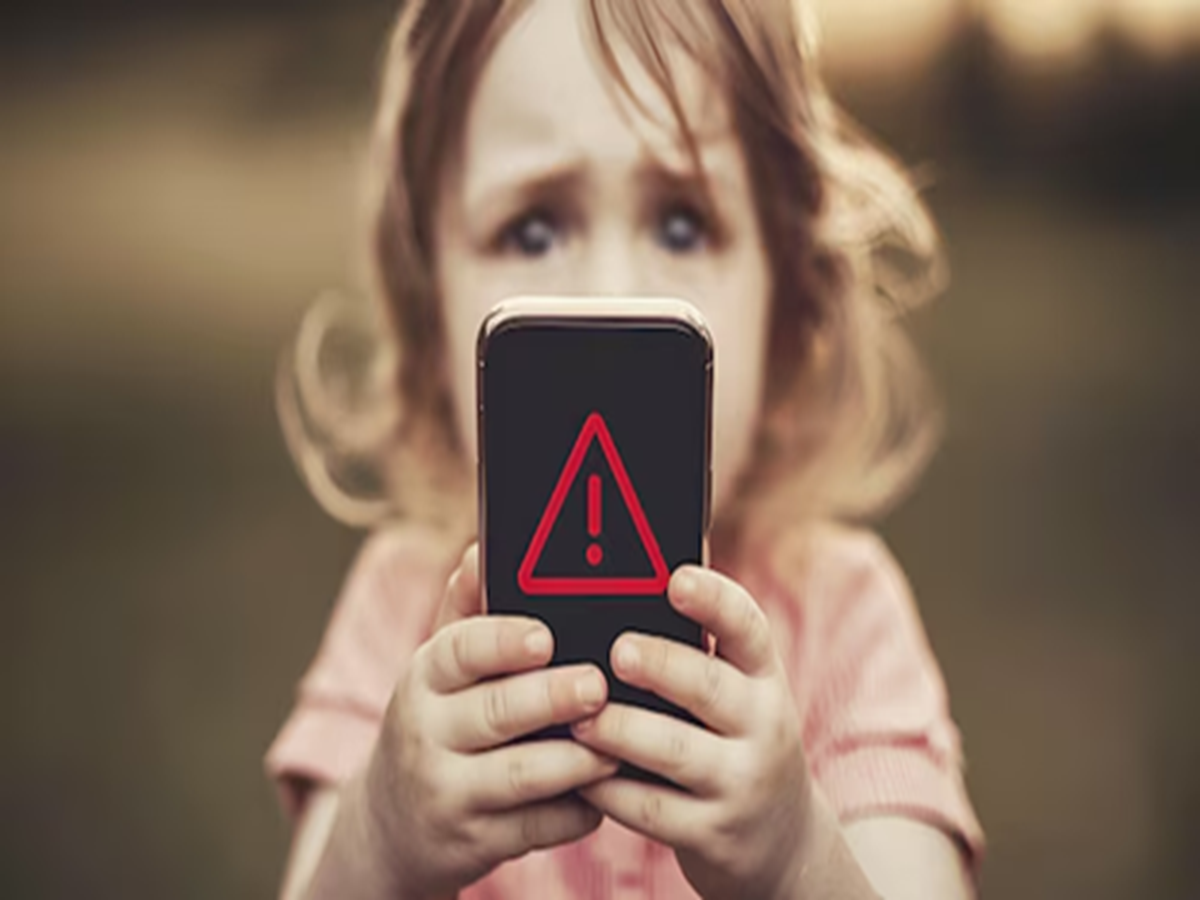
Children with phones in their hands, watching reels for hours on end. This picture is prevalent in almost every household today. Now, governments around the world are preparing to curb this, and that too directly from within the phone itself. According to sources, the Indian government is also considering a system that would require a dedicated "minor mode" in every smartphone sold in India in the future. This means that the phone manufacturer will have to ensure the safety of children. However, no draft rules or official notification have been issued on this issue yet. The matter is at the consideration stage.
What is minor mode after all?
Simply put, Minor Mode is a separate, secure environment within the phone. When the phone is in this mode, children can only see and do things that are appropriate for their age. Parents can also decide which apps are downloaded and which are not. The number of hours the phone will be used daily is also predetermined. Late at night, the phone or social media can be automatically shut down. Harmful content is filtered. However, features like educational apps and emergency calls are not disabled, so children are not left stranded in times of need.
Are these settings not available on the phone yet?
These settings are already built into smartphones, and that's the most interesting part of this whole story. Apple iPhones already have built-in features like Screen Time, Family Sharing, Child Accounts, and Communication Safety. Apple recently strengthened these features further. Now, age-appropriate safety settings are automatically activated as soon as a child's account is created, even if parents haven't completed the setup.
Age ratings like 13+, 16+, and 18+ have also appeared on the App Store. Google's Family Link on Android phones does much the same thing. It lets parents control their children's screen time, app downloads, and content.
So why does the government need a new rule?
The difference is just one word: choice and compulsion. Currently, all these features are at the discretion of parents. Most people don't even know such settings exist on their phones or don't bother to turn them on. Each company's features are hidden in different places. Apple has one, Samsung and Xiaomi have another. In cheaper phones, these features are often weak or incomplete.
The government wants Minor Mode to be consistently easy and visible on every phone. It also wants mobile companies and app developers to incorporate child-safety features from the outset, not wait until later.
Where did the government's concern begin?
This concern did not arise suddenly. In the Economic Survey 2026 presented in Parliament in January this year, the government had described the increasing digital addiction among children as a serious public health problem.
The survey clearly stated that unfiltered content is affecting children's behavior, attention span, and future goals. The survey also recommended mandatory age limits for social media platforms. It also suggested educational-only digital devices and a digital diet for children.
Several states are already moving in this direction. Karnataka has formed a committee to examine the possibility of restricting mobile phone use by children under 16. The Andhra Pradesh Child Rights Commission has recommended a ban on smartphone use by children under 13. The Bihar government is formulating a policy on children's screen time based on the NIMHANS report.
What did China do that is being discussed?
China's internet regulator has proposed a rule mandating a "minor mode" on every smartphone, app, and app store. This includes age-specific screen time limits: children under 8 are limited to 40 minutes a day, children between 8 and 16 are limited to one hour, and teenagers between 16 and 18 are limited to two hours a day.
The internet is completely blocked from 10 p.m. to 6 a.m. Apps are automatically shut down after the time limit is reached. Parents can grant certain exemptions if they wish. This restriction does not apply to educational or emergency apps.
Not just China, Britain is also considering a digital curfew for teenagers. France will mandate that every connected device has pre-installed parental controls from 2022, with the option to activate them for free the first time you turn on your phone. Australia has already blocked social media accounts for children under 16.
What could happen next in India?
If this proposal moves forward, draft rules will first be issued, seeking public and industry feedback. Then, it will be decided whether the responsibility for creating minor modes lies with phone companies or with operating system makers like Google and Apple.
There's also the possibility of corporate opposition, as last year several companies, including Apple, objected to the mandate to pre-install a communication companion app on phones. Privacy is a major issue. How will age verification be implemented and who will protect children's data? This is bound to be debated. For now, it's clear that this debate about children and smartphones has moved from the doorstep of homes to the government's desk. A major decision on this issue is likely in the coming months.