
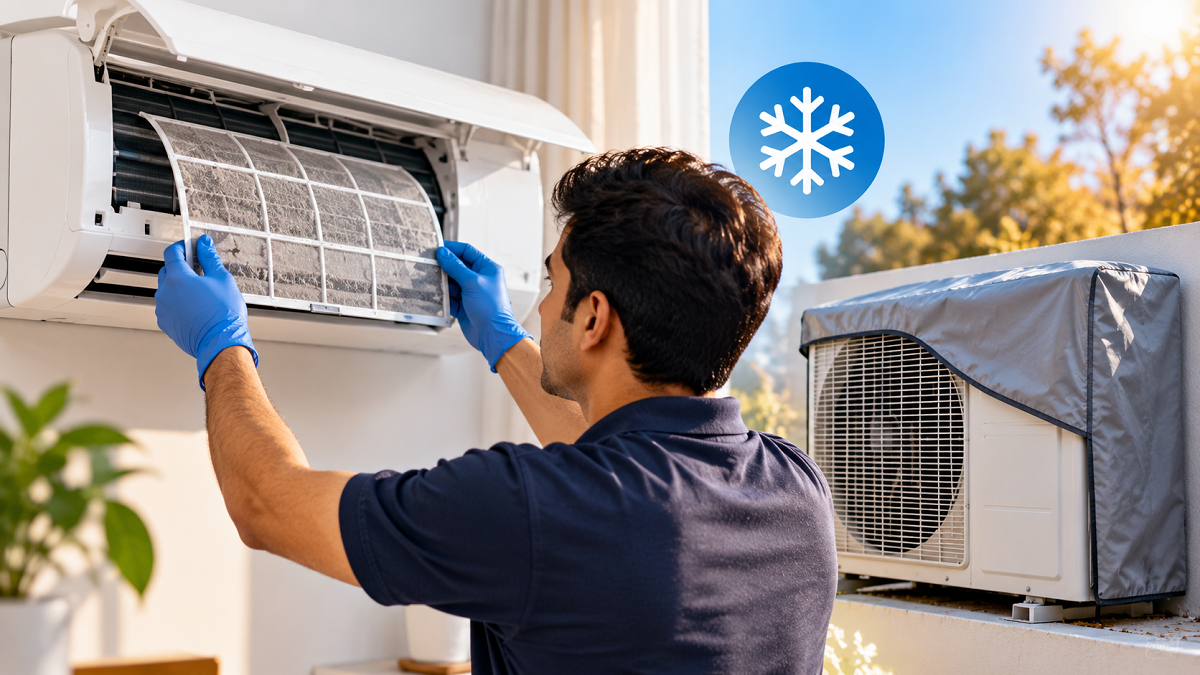
AC Maintenance Tips 2026: As temperatures begin to fall towards the end of October, many households are preparing to stop using their air conditioners for the winter season. With cooler mornings and evenings becoming more common, AC units in several homes may remain unused for the next four to five months.
However, simply switching off your air conditioner and covering it until summer may not be the best approach. Leaving an AC unused without proper cleaning and maintenance can allow dust, moisture, and dirt to accumulate inside the system.
This can lead to unpleasant smells, reduced cooling performance, and possible maintenance problems when the appliance is switched on again.
Taking a few simple precautions before storing your AC for winter can help protect its components and keep it in better condition for the next cooling season.
Here are four important air conditioner maintenance steps every household should consider before leaving an AC unused for several months.
1. Clean the AC Filters and Remove Trapped Moisture
One of the most important tasks before shutting down an air conditioner for winter is cleaning its air filters.
During regular operation, AC filters collect dust, pollen, and other airborne particles. If these filters remain dirty for several months, they may contribute to unpleasant odours and restricted airflow when the unit is used again.
Start by switching off the appliance and following the manufacturer's instructions for accessing the filter.
Carefully remove the reusable air filters and clean them using the method recommended in the user manual.
Some filters can be washed with water, while others require dry cleaning or replacement.
Allow washable filters to dry completely before reinstalling them.
If your AC has a fan-only or self-drying function, use it according to the manufacturer's guidance to help remove residual moisture from the indoor unit.
It is also worth checking whether the condensate drain is blocked or showing signs of water accumulation.
Important: Never cover an air conditioner while its components are wet. Trapped moisture may encourage mould growth and create unpleasant smells inside the unit.
2. Remove Dust and Debris From the Outdoor AC Unit
The outdoor unit of a split air conditioner is continuously exposed to environmental conditions, including dust, leaves, rain, and airborne debris.
Over time, these materials may accumulate around the unit and interfere with proper airflow.
Before leaving the AC unused for winter, inspect the area around the outdoor unit.
Remove loose leaves, branches, and visible dirt from accessible external surfaces using a soft brush or dry cloth.
Make sure that the surrounding space is free from unnecessary objects that could block ventilation.
Avoid spraying water directly onto electrical components or using high-pressure water on delicate condenser fins.
These fins can bend easily, potentially affecting the system's efficiency.
If the outdoor unit requires deep cleaning or technical servicing, contact a qualified AC technician rather than attempting to dismantle it yourself.
Regular attention to the outdoor unit can help maintain proper airflow and reduce the risk of avoidable maintenance issues.
3. Choose a Suitable AC Cover to Prevent Dust and Moisture Problems
Many people cover their air conditioners during winter to protect them from dust and dirt. While this can be helpful, using an unsuitable cover may create problems.
An airtight plastic sheet can trap moisture around the appliance, especially if the unit has not dried completely.
For this reason, homeowners should choose a cover recommended by the AC manufacturer.
If a cover is permitted, it should fit properly and provide suitable protection without trapping moisture.
Special care is necessary when covering the outdoor unit because ventilation and drainage requirements vary between AC models.
Some manufacturers advise against completely covering outdoor units, particularly where the appliance may be operated during winter.
It is also important to inspect openings around the refrigerant pipes where they enter the wall.
Small gaps can allow insects or rodents to enter, potentially damaging insulation or electrical wiring.
Any gaps should be sealed using suitable materials without interfering with drainage, piping, or electrical safety.
Safety Tip: Never operate an air conditioner while a storage cover is fitted. Remove the cover before restarting the unit.
4. Disconnect Power Safely and Remove Remote Batteries
Another important winter maintenance step involves the air conditioner's electrical supply.
Many users believe that pressing the power button on the remote completely disconnects the appliance from electricity.
However, some AC systems continue receiving standby power even when they are not actively cooling.
If the appliance will remain unused for several months, follow the manufacturer's instructions regarding seasonal shutdown.
Where permitted and safe, switch off the dedicated isolator or circuit breaker after the appliance has completed its shutdown process.
For plug-connected models, disconnect the plug safely if the manufacturer recommends doing so.
However, some air conditioners require power during cold weather for protective functions. Therefore, the manufacturer's instructions should take priority over general advice to disconnect electricity.
Another simple precaution is removing the batteries from the AC remote control.
Batteries left inside a remote for extended periods may leak and damage its internal contacts.
Store the batteries appropriately and keep the remote in a clean, dry location.
If you notice damaged wiring, loose electrical connections, or signs of overheating, arrange an inspection by a qualified technician before using the appliance again.
What Should You Check Before Using the AC Next Summer?
After several months of inactivity, an air conditioner should be inspected before regular operation resumes.
Check the filters, outdoor unit, drainage arrangements, and visible electrical connections.
Make sure any protective covers have been removed and that the indoor and outdoor units have adequate airflow.
If the appliance produces unusual noises, smells, or fails to cool properly, stop using it and seek professional assistance.
A maintenance inspection may be particularly useful for older AC units or appliances that have not been serviced for a long time.
Why Is Winter AC Maintenance Important?
Proper seasonal maintenance can help extend the useful life of an air conditioner and reduce avoidable problems.
Dust accumulation can restrict airflow, while trapped moisture may contribute to mould and unpleasant odours.
Similarly, blocked drainage arrangements and neglected outdoor units can create problems when cooling resumes.
Taking preventive measures before winter can help homeowners avoid unnecessary inconvenience during the first hot days of summer.
Although regular cleaning cannot prevent every technical failure, it can improve the overall condition of the appliance and make seasonal restarts easier.
Final Words
If you are planning to stop using your air conditioner during winter, do not simply switch it off and forget about it.
Cleaning the filters, checking the outdoor unit, choosing the correct cover, and following safe electrical shutdown procedures are four practical steps worth taking.
A little AC maintenance before winter can help protect your appliance, reduce dust and moisture-related problems, and prepare it for the next summer season.
Disclaimer: AC maintenance procedures vary by brand and model. Always follow the manufacturer's instructions and consult a qualified technician for electrical repairs, refrigerant-related work, or internal servicing.